
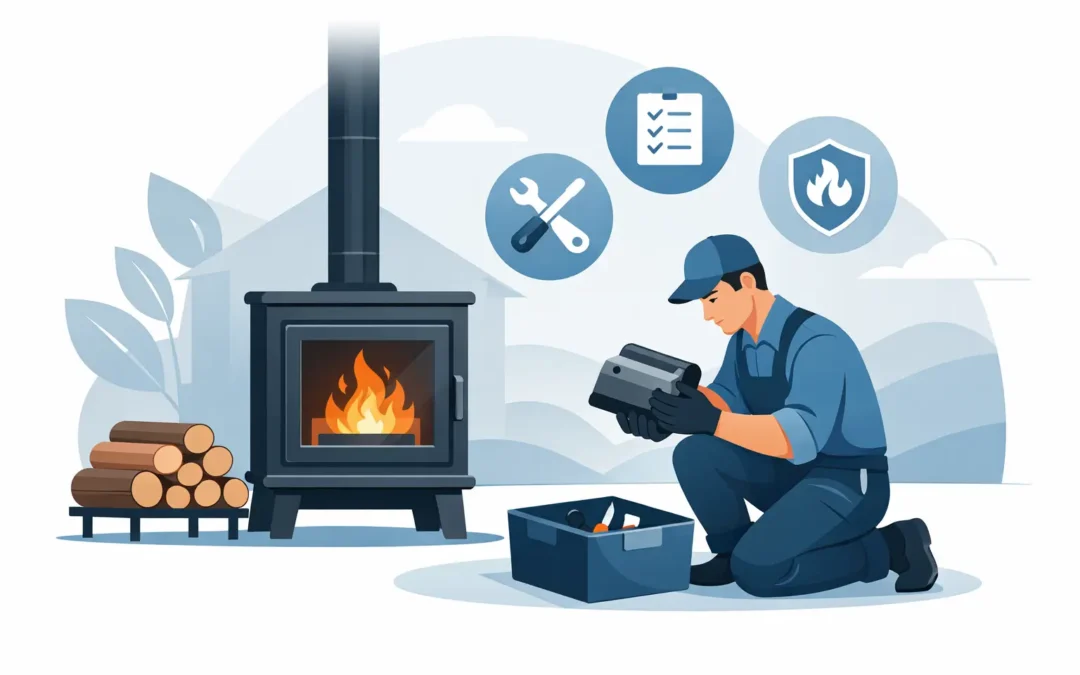
A wood burner service review should tell you far more than whether the stove still lights. A proper visit looks at the appliance, the flue and the way the system is working in your home. For households across Leicestershire, that means a safer fire, fewer smoke problems and a clear idea of any work that needs doing before the colder months arrive.
A stove can look perfectly sound from the sitting room while seals are leaking, internal parts are worn or the flue is beginning to restrict. These faults do not always stop the stove from working straight away. They can, however, affect efficiency, increase the risk of fumes entering the room and lead to more costly repairs if left alone.
Wood burner service review: what should be checked?
A thorough service starts with the condition of the stove itself. The engineer should inspect the door, glass, handle, hinges and air controls, checking that they operate properly and close as they should. The firebricks, baffle plate and grate are also examined. These components take the most heat and wear, so cracks, distortion or missing pieces can alter how the stove burns.
Door rope seals deserve particular attention. Their job is to control the amount of air entering the firebox. When a seal becomes flattened, hard or loose, the stove may burn too quickly and become difficult to control. This can mean wasted fuel, excessive heat and a less efficient appliance. Replacing a worn rope seal is usually a straightforward repair, but it needs to be the correct size and fitted properly.
The flue outlet and connecting flue pipe should be checked for signs of corrosion, loose joints or tar deposits. Any staining around joints, strong smoky smells or black residue outside the stove can point to a problem worth investigating. With a lined chimney or twin wall flue system, the visible sections are only part of the picture. The route, terminals and supports all matter.
A service is also a sensible time to assess ventilation. Modern homes can be much more airtight than older properties, especially after new windows, insulation or other improvements. A solid fuel appliance needs enough air to burn safely. If a room feels smoky when an extractor fan is running, or the fire struggles unless a window is open, the issue may be airflow rather than the stove itself.
Sweeping and servicing are not the same job
Chimney sweeping removes soot, ash and combustible deposits from the flue. Stove servicing checks the appliance and its accessible connections for wear, damage and safe operation. Most wood burner owners need both, but they are not interchangeable.
For regular wood use, an annual chimney sweep is a sensible minimum in many homes. The right frequency depends on how often the appliance is used, the type and moisture content of the logs, the flue setup and how the stove is operated. Burning wet wood or regularly slumbering a stove overnight can create heavier deposits and may mean the flue needs attention more often.
A sweep may uncover an issue that calls for a service, such as a damaged baffle or deteriorating rope seal. Equally, a stove service may reveal clues that the flue needs closer inspection. This is why using one experienced local provider for sweeping, diagnosis and repairs can save time when a problem is found.
What a good service report should tell you
A useful service review is clear about what was checked, what condition it was in and whether any action is recommended. You should not be left guessing whether a comment is urgent, advisory or simply something to keep an eye on.
Small items, such as tired door seals or a cracked firebrick, are often manageable repairs. Other findings need a more cautious approach. A damaged flue liner, evidence of smoke leakage, an unstable chimney pot or a blocked terminal should be dealt with before the appliance is used again. If the cause is not visible, a CCTV chimney inspection can provide a proper view inside the flue rather than relying on guesswork.
A trustworthy engineer should explain the reason for any recommended work in plain language. There is a difference between sensible preventative maintenance and being sold work you do not need. Ask what the fault affects, whether the stove can be used safely in the meantime, and what could happen if it is left. Straight answers are a good sign.
Signs you should book before your usual service date
Do not wait for the annual appointment if the stove starts behaving differently. Smoke entering the room, a smell of fumes, a door that will not seal or a fire that is suddenly difficult to control all deserve attention. A carbon monoxide alarm sounding is an immediate warning: stop using the appliance, ventilate the property, leave if anyone feels unwell and seek urgent advice.
There are other less dramatic signs too. Blackened glass can be normal to a degree, but constant heavy staining may indicate poor fuel, restricted airflow or incorrect operation. A lazy flame, poor draw, tar around the stove pipe or excessive soot can all suggest a flue or combustion issue. Birds nesting in chimneys is another common local problem, particularly in spring, and a blocked flue must never be used.
Downdraught can be frustrating as well as unpleasant. It may be caused by the chimney height, nearby buildings or trees, wind direction, ventilation changes or an unsuitable terminal. Fitting a cowl can help in some cases, but it is not a universal answer. The chimney and stove setup need to be assessed first so the right solution is chosen.
Fuel and daily use affect service results
Even a well-maintained wood burner will perform poorly if it is fed the wrong fuel. Burn dry, properly seasoned wood with a moisture content of 20% or below. Wet logs produce more smoke and deposits, give off less heat and make it harder to keep the glass and flue clean.
Avoid treating the stove as an incinerator. Household rubbish, painted or treated timber, MDF, chipboard and unsuitable fuels can release harmful fumes and leave damaging deposits. They may also invalidate an appliance warranty or create problems when the flue is inspected.
How you light and run the stove matters as well. A hot, clean start helps establish draw and warms the flue more effectively than a smoky, slow burn. Once established, use the air controls as the manufacturer intended. Closing them down too far for long periods can encourage tar build-up. The appliance manual remains the best guide for your particular model, especially where replacement parts and service intervals are concerned.
Choosing someone to carry out the work
Look for a chimney and stove professional who can deal with the whole system, not just one visible part. Training, relevant registration, appropriate insurance and clear pricing all count. If work involves installing or altering a stove, flue liner or twin wall system, use a competent installer who understands the applicable building requirements.
It also helps to choose someone who is prepared to investigate rather than make assumptions. Smoke issues may involve the flue, ventilation, chimney height, fuel or the appliance. A quick fix can be tempting, but the right diagnosis is what protects your home and avoids repeat call-outs.
At Thurnby Chimney Sweeps, we take a practical approach: inspect what can be seen, explain what cannot without further checks, and recommend work only where there is a clear safety or performance reason. Whether your stove needs routine care, a sweep, a flue inspection or help with a persistent smoke problem, dealing with it early is usually the simplest route back to a warm, dependable fire.