
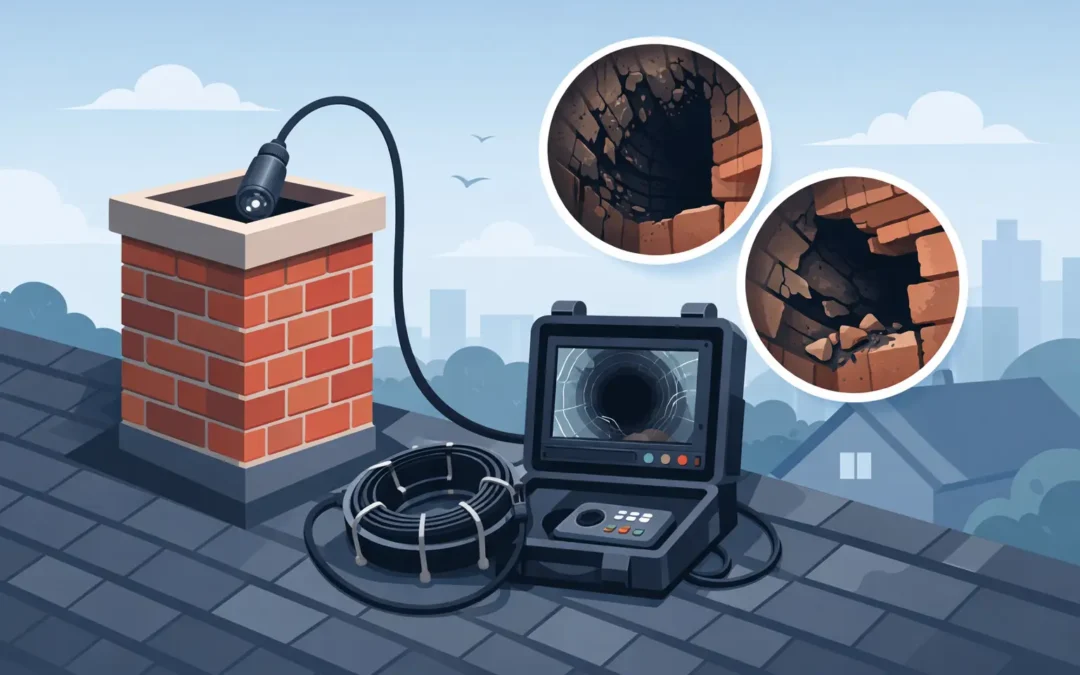
A chimney can look perfectly sound from the fireplace opening and still have problems further up the flue. That is exactly where a cctv chimney inspection earns its keep. When smoke is not drawing properly, bits of masonry are falling, a bird nest keeps causing trouble, or you have moved into a house and do not know the chimney’s condition, a camera inspection gives a clear view of what is going on inside.
For homeowners, that matters because guessing is expensive. You can sweep a flue, fit a cowl, or even replace parts of a system, but if the real issue is hidden damage, poor lining, a blockage or an old disused opening letting debris in, the problem will simply come back. A proper inspection helps identify the fault before money is spent in the wrong place.
What is a CCTV chimney inspection?
A CCTV chimney inspection is a visual check of the inside of the chimney or flue using a specialist camera. The camera is fed through the flue so the engineer can inspect the internal condition rather than relying on what can be seen from the hearth or the pot.
This is especially useful with modern stove setups, older brick chimneys, lined flues and properties where the chimney’s history is unclear. Many faults sit out of sight. Cracked liners, collapsed parging, tar build-up, heavy soot deposits, old bird nests and masonry obstructions are common examples.
It is not a replacement for sweeping where sweeping is needed. In many cases, the flue should be swept first so the camera can get a proper view. Soot and loose debris can hide defects, so a clean flue gives a much more accurate inspection.
When a CCTV chimney inspection is worth having
Some customers book a camera inspection because there is an obvious problem. Others do it because they want peace of mind before using a fire or stove. Both are sensible.
If smoke is spilling back into the room, if your stove is sluggish to light, or if there is a strong smoky smell even when the appliance is not in use, the flue may have a restriction or damage that a normal visual check cannot confirm. The same applies if you hear debris falling, suspect a bird nest, or notice damp staining around the chimney breast.
A cctv chimney inspection is also a good idea when buying an older property. Plenty of houses in Leicestershire have chimneys that have been altered over the years. Fireplaces may have been closed off, liners added or removed, and appliances changed without a clear record of what was done. Before connecting a stove or reopening a fireplace, it helps to know exactly what you are working with.
The inspection can also be useful after a chimney fire. Even if the appliance seems to be working afterwards, intense heat may have damaged the liner or internal structure. That sort of defect is not something you want to leave to chance.
What the camera can reveal
The biggest benefit of CCTV is simple – it replaces guesswork with evidence. Instead of assuming the flue is blocked or damaged, you can see the condition inside.
Blockages and restrictions
Bird nests are one of the most common causes of blocked chimneys, especially in unused flues or seasonal fireplaces. Cameras also find fallen masonry, old closures, thick soot build-up and pieces of damaged liner. Even a partial blockage can upset the draw and cause smoke problems.
Cracks and liner damage
Flue liners do not last forever. Clay, pumice and stainless steel systems can all deteriorate in different ways. A camera may reveal splits, corrosion, joints that have failed or sections that have moved out of place. If a liner is compromised, heat, smoke and gases may escape where they should not.
Tar and creosote build-up
Wood that is too wet, poor burning habits and undersized or cold flues can all lead to heavy tar deposits. These are not just messy. They can increase the risk of chimney fire and reduce performance. A camera inspection helps show how severe the build-up is and whether sweeping alone is likely to solve it.
Poor workmanship or unsuitable alterations
Not every chimney has been worked on properly in the past. We sometimes see offset issues, badly fitted liners, awkward voids, old register plates, and fireplace alterations that affect how the system performs. A camera allows those defects to be identified without pulling everything apart first.
CCTV chimney inspection before fitting a stove
If you are planning a new wood-burning or multi-fuel stove, a camera inspection is often a sensible first step. It tells you far more than a quick look up the opening ever could.
An older chimney may appear usable but still be unsuitable for a direct connection. There may be damage, narrowing, previous liner failure or bends that affect what can be installed safely. Knowing that before work starts helps avoid delays and surprise costs midway through the job.
It also helps with choosing the right remedy. In some homes, the flue may simply need sweeping and minor work. In others, a new liner or further repairs are the safer option. It depends on the age of the chimney, what fuel will be used, and the condition found during inspection.
Why sweeping and inspection often go together
People sometimes assume that if they have had the chimney swept, there is no need for a camera inspection. Sometimes that is true. If the flue is straightforward, in regular use and causing no concern, sweeping may be enough.
But where there are persistent problems, a history of blockages, signs of damage or uncertainty about the internal condition, sweeping and CCTV work well together. Sweeping removes soot, nests and loose debris. The camera then checks whether there is anything further going on behind that surface layer.
That combination is often the quickest route to a proper answer. Instead of repeatedly treating the symptom, you can identify the underlying fault and sort it properly.
What happens during the inspection
A professional inspection should be practical and methodical. The aim is not to overcomplicate the job. It is to establish the flue’s condition and explain what was found in plain English.
Access may be from the fireplace opening, the stove connection point or another suitable part of the system. Once the camera is in place, the engineer checks for continuity, obstructions, defects and any obvious signs that the flue is not safe or not performing as it should.
What happens next depends on the findings. In some cases, the result is reassuring and no further work is needed. In others, the inspection may point to sweeping, bird nest removal, cowl fitting, chimney lining or repair work. That is why using a company that understands both maintenance and remedial work is helpful – you are not left with a problem and no practical next step.
Choosing the right person for a CCTV chimney inspection
This is not just about owning a camera. It is about knowing what the camera is showing. A poor inspection can miss the real issue or recommend unnecessary work.
Look for someone with proper chimney and solid fuel experience, not just general drainage or property inspection equipment. Chimneys have their own fault patterns, and the advice needs to reflect real working knowledge of flues, appliances and ventilation.
For local homeowners, that usually means choosing a qualified, established service that can explain the findings clearly and carry out any follow-on work to the right standard. Thurnby Chimney Sweeps takes that straightforward approach – inspect the flue properly, explain what is there, and recommend only what is needed.
The value of knowing, rather than assuming
A camera inspection is not always necessary, and a good tradesperson should say so when that is the case. But when there is doubt about a chimney’s condition, it is one of the most useful diagnostic tools available.
It can prevent wasted money, reduce safety risks and help you make sensible decisions about repairs, lining or appliance use. Most of all, it gives you a clearer picture of what is happening inside a part of the house you cannot normally see.
If your chimney has been causing concern, or you simply want confidence before using it again, getting the flue properly checked is often the most practical place to start. A clear view inside the chimney can save a lot of trouble later.