
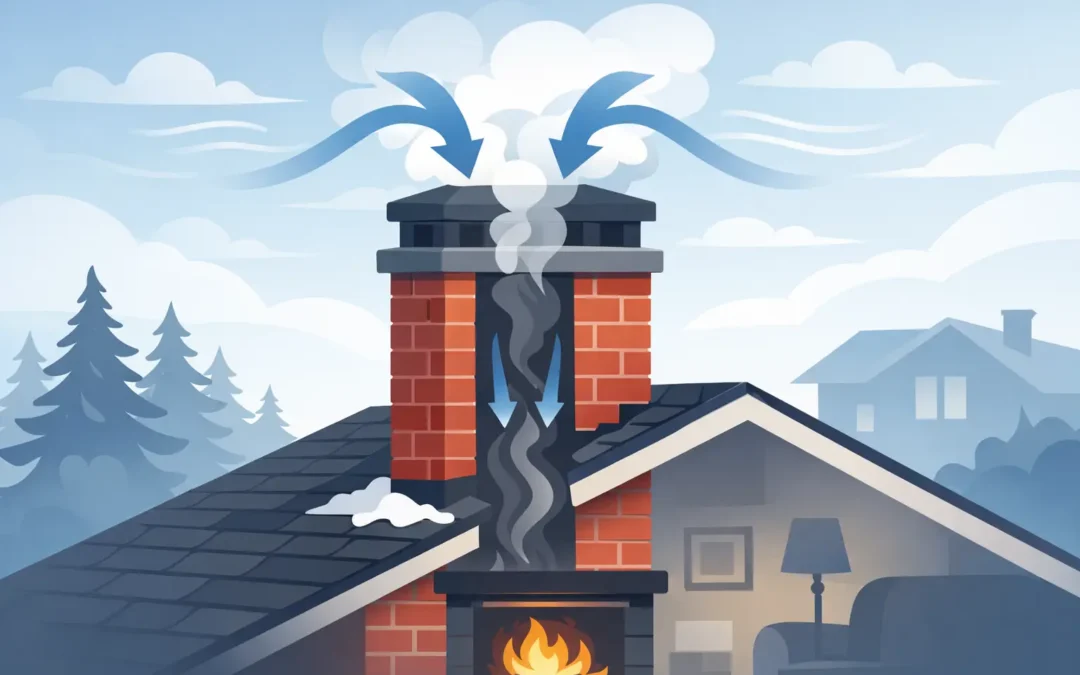
You usually notice a chimney downdraught before you see it. Smoke starts spilling into the room when you light the stove, the fire struggles to get going, or you catch that cold, sooty smell drifting back indoors. If you are searching for how to stop chimney downdraught, the first thing to know is this – it is a real flue problem, not just a nuisance, and the right fix depends on what is causing it.
Downdraught happens when air moves the wrong way down the chimney instead of rising up and out. In a healthy flue, hot gases from the fire create an upward pull. When that pull is weak, interrupted or overpowered by outside wind or pressure conditions inside the house, smoke and fumes can be pushed back into the property. Sometimes the answer is simple. Sometimes it points to a design or maintenance issue that needs proper attention.
What causes chimney downdraught?
There is no single cause, which is why guessing can waste both time and money. In many homes, downdraught is linked to one of four things: a cold flue, a blockage or restriction, poor chimney height or terminal design, or air pressure problems inside the property.
A cold chimney is one of the most common reasons a stove smokes on lighting. If the flue is very cold, especially after mild weather or a long period without use, the heavier cold air inside the chimney can sit like a plug. Until that column of air warms up, the smoke has nowhere to go but back into the room.
Blockages are another regular culprit. Soot build-up, bird nests, fallen debris and damaged liners can all reduce the flue’s ability to draw properly. Even when the chimney is not fully blocked, a partial restriction can upset the flow enough to create repeated smoke issues.
Then there is the effect of wind. Some properties are simply more exposed than others. If the chimney stack sits lower than nearby roofs, trees or higher parts of the building, gusts can hit the top of the stack in a way that forces air back down. We see this quite often on bungalows, extensions, and houses where rooflines create awkward wind patterns.
Modern homes can also create pressure issues indoors. If extractor fans, tumble dryers or tightly sealed windows are pulling air out of the house, the stove may struggle to get the air it needs. The home then tries to make up that pressure difference from anywhere it can, including the chimney.
How to stop chimney downdraught safely
The best way to stop chimney downdraught is to match the fix to the fault. A cowl can help in one property and do very little in another. Opening a window might improve one stove instantly and make no difference elsewhere. That is why a proper diagnosis matters.
Start with the simplest checks
If the problem mainly happens when lighting the stove, try warming the flue first. A few minutes of careful pre-heating can help establish the draw before the main fire gets going. Some stove owners do this with a firelighter or a small amount of kindling placed to encourage the heat upwards quickly. The aim is to break that cold plug in the flue.
It is also worth checking whether the problem improves when a nearby window is opened slightly. If it does, that points towards an air supply issue in the room rather than an outside chimney fault. This does not mean you should rely on an open window as the long-term answer, but it is a useful clue.
If you have not had the chimney swept recently, that should move high up the list. A blocked or heavily sooted flue will never perform as it should, and downdraught can be one of the first signs that something is not right.
Make sure the chimney and flue are clear
A professional sweep does more than remove soot. It can also identify bird nests, fallen masonry, tar build-up and signs of damage inside the flue. In some cases, a CCTV inspection is the sensible next step, especially if the problem is ongoing or the history of the chimney is unclear.
This is particularly important with older properties and chimneys that have been unused for years. We often find that what appears to be a downdraught issue is actually a restriction caused by an old nest, a collapsed liner, or internal roughness that is slowing the flow of gases.
Check the cowl and terminal type
When people ask how to stop chimney downdraught, they often go straight to buying a chimney cowl. Sometimes that is the right move. Sometimes it is not.
A suitable anti-downdraught cowl can improve performance by reducing the effect of gusting wind at the chimney pot. But cowls are not one-size-fits-all. The wrong design can restrict the flue, worsen the draw, or be unsuitable for the type of appliance you have. Open fires, wood-burning stoves and gas appliances all have different requirements.
The important part is choosing the correct terminal for the fuel type, the flue size and the actual cause of the problem. If wind is the issue, a well-fitted anti-downdraught cowl may help a great deal. If the real issue is poor ventilation or an internal blockage, fitting a cowl alone is unlikely to solve it.
When the problem is the house, not just the chimney
Many homeowners are surprised to find that the chimney is only half the story. A stove needs the room to supply enough air for combustion. If that air is not available, the flue cannot work properly.
This often shows up in homes that have had newer doors, windows or insulation fitted. Draught-proofing is good for energy bills, but it can change how the house breathes. Add an extractor fan in the kitchen or utility room, and negative pressure can build up quickly.
If opening a window helps the stove burn more cleanly or stops smoke coming back, the appliance may need a dedicated air vent or the existing ventilation may need reviewing. This is not something to ignore. Smoke spillage and poor combustion can create carbon monoxide risks as well as making the stove unpleasant to use.
How to stop chimney downdraught in exposed locations
Some homes are simply harder work than others. Properties on hills, open countryside sites, or streets with unusual rooflines often suffer more with wind-related downdraught. In those cases, the height and position of the chimney become more important.
A stack that terminates too low in relation to the roof can fall into an area of turbulent air. Nearby trees, neighbouring buildings or extensions can have the same effect. Here, the long-term fix may involve altering the chimney terminal, increasing the height of the stack, or reviewing the flue set-up more broadly.
That is where experience counts. It is easy to keep swapping cowls and hoping for the best, but repeated trial and error can end up costing more than having the chimney assessed properly in the first place.
Signs you should call a professional
If smoke enters the room regularly, if the stove has become harder to light, or if you notice persistent fumes or strong soot smells, it is time to get the system checked. The same applies if you have already tried the obvious steps and the problem keeps returning.
A qualified chimney professional can assess whether the issue is caused by sweeping needs, nesting, terminal design, ventilation, flue damage or installation faults. In some cases, more than one factor is involved. That is common with older chimneys, where a slight blockage, poor air supply and an exposed roof position all combine to create unreliable draw.
For homeowners across Leicestershire, this is exactly the sort of issue that needs a practical, honest answer rather than guesswork. At Thurnby Chimney Sweeps, downdraught problems are approached by looking at the full system – appliance, flue, terminal and airflow in the room – so the fix is based on evidence, not assumptions.
A quick word on safety
Downdraught is not just about smell or inconvenience. If smoke and combustion gases are coming back into the room, the appliance is not venting as it should. That means the fire is not operating safely or efficiently.
Never keep using a stove that is consistently spilling smoke indoors. Make sure you have a working carbon monoxide alarm in the same room as the appliance, keep up with regular sweeping, and have any ongoing draw problems looked at before they become a bigger risk.
Some chimney issues can be solved with a straightforward sweep or the right cowl. Others need a closer look at ventilation, flue condition or installation details. Either way, the good news is that downdraught is usually fixable once the real cause is identified.
If your stove only works with a window open, if smoke puffs back on windy days, or if the room smells of soot even when the fire is out, do not just put up with it. A chimney should carry smoke away cleanly and reliably. When it does not, a proper check now is far better than a winter of poor fires and worry.