
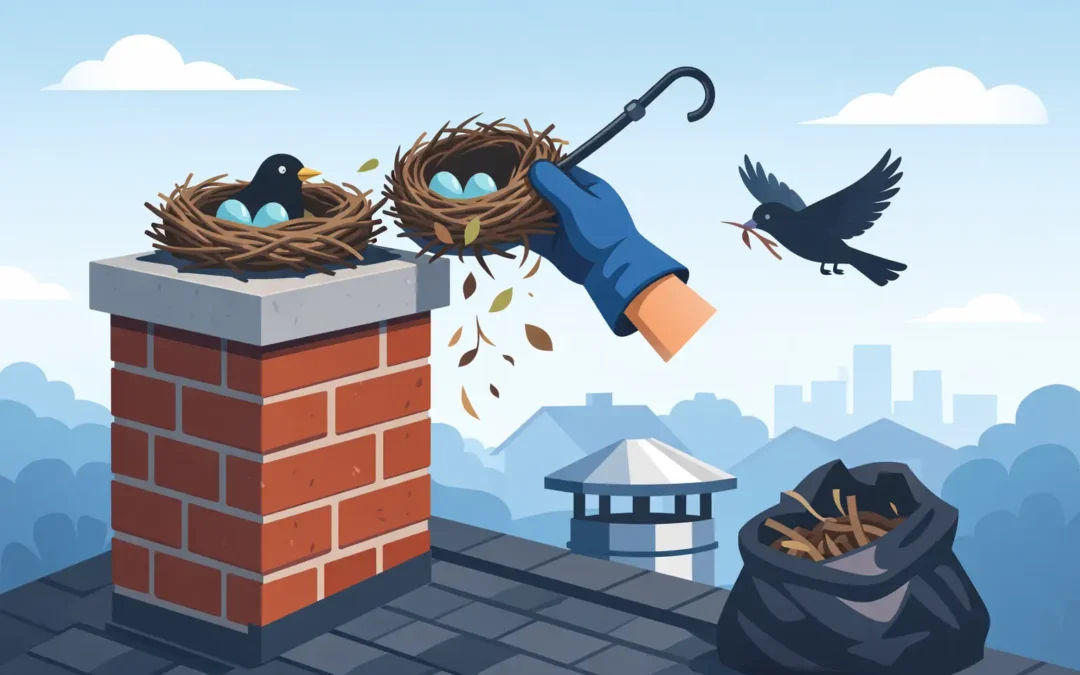
You usually notice a blocked flue at the worst possible moment – when the stove will not draw properly, smoke starts drifting back into the room, or you hear scratching and rustling above the fireplace. In many cases, the cause is simple: a bird has chosen your chimney as a nesting spot. Bird nest removal chimney work is not just about clearing a nuisance. It is about restoring safe airflow and making sure your fire, stove or open fireplace can be used properly again.
For homeowners in Leicestershire, this is a common seasonal problem, especially in spring and early summer. Jackdaws are often the main culprits, and they are persistent. Once they find an open pot, they can fill a flue with twigs surprisingly quickly. A few bits of nesting material may not sound serious, but in a working chimney it can lead to smoke problems, poor combustion and a real fire hazard.
Why bird nests in chimneys are a serious issue
A chimney is designed to carry smoke and gases safely out of the property. When a nest blocks part or all of that route, the system stops doing its job properly. The result can be smoke backing up into the room, carbon monoxide risk, unpleasant smells and soot build-up where it should not be settling.
There is also the issue of heat. Dry nesting material inside a flue can ignite. That risk changes depending on the appliance, the condition of the flue and how severe the blockage is, but it is never something to ignore. Even if you are not using the fireplace at the time, a blocked chimney can still cause ventilation issues and damp, stale odours inside the home.
The other point many people do not realise is that bird activity can be a sign of a chimney needing wider attention. If a pot is open enough for regular nesting, it may also benefit from a correctly fitted cowl or guard. If debris has been left sitting for a while, the flue may need sweeping and checking before it is safe to use again.
Signs you may need bird nest removal from a chimney
Sometimes the signs are obvious. You look up and see twigs sticking out of the pot. More often, the warning signs start indoors. Smoke may spill into the room when you light the stove. The fire may struggle to stay lit. You may notice bits of twig or debris falling into the fireplace opening, or hear birds moving around in the flue.
Noise is often the first clue in spring. Scratching, flapping and chirping coming from the chimney breast or fireplace usually means birds are active in the flue. If the nest is already built, there may also be a strong smell, especially if damp material has collected or the blockage has been there for some time.
It is worth saying that not every drawing problem is caused by nesting material. Downdraught, heavy soot deposits, poor flue design and lack of ventilation can all produce similar symptoms. That is why a proper inspection matters. Guesswork is not much use when the issue involves smoke and combustion gases inside the home.
Can you remove a bird nest from a chimney yourself?
This is where many problems start. It can be tempting to prod the blockage from below or try to clear it from the roof. In practice, that can make the situation worse. A partly dislodged nest can compact further down the flue and create a tighter blockage. Climbing onto a roof without the right equipment is also an obvious safety risk.
There is a legal and welfare side to consider too. In the UK, active nests with eggs or chicks are protected. That means timing matters. If a nest is currently in use, removal may need to wait until the birds have left and the nest is no longer active. A professional will know how to assess that properly and advise on the lawful next step.
Even where the nest can legally be removed, the flue should still be checked afterwards. Twigs, feathers and compacted debris often leave residue behind, and that can affect draw or increase fire risk if not cleared fully. In some cases, a CCTV inspection is the best way to confirm the flue is completely open and in sound condition.
How professional bird nest removal chimney work is carried out
A proper job starts with identifying what is in the flue, how severe the blockage is and whether the nest is active. The method used depends on the type of chimney, appliance and access. Some nests can be removed from the fireplace opening using the correct rods and specialist tools. Others may need work from the top of the stack.
The aim is not simply to punch a hole through the blockage. It is to remove the material safely and cleanly, without damaging the flue and without leaving debris behind. Once the nest is out, the chimney normally needs sweeping to clear soot, dust and loose matter that has built up around it.
If there is any doubt about the flue condition, a camera inspection can help pick up hidden issues such as fractures, heavy tar deposits or narrowing within the liner. That is especially useful if the chimney has been out of use for a while, or if the draw was poor even before the nest went in.
After removal, prevention is the next step. A suitable chimney cowl or bird guard can make a big difference, but it needs to be the right one for the flue. Fit the wrong type and you can create new draw problems. It depends on the appliance, the fuel used and the way the chimney performs in normal conditions.
Bird nest removal chimney and stove safety
If your property has a wood-burning or multi-fuel stove, a blocked flue is more than an inconvenience. Stoves rely on consistent draw to burn cleanly and vent gases safely. A nest can upset that balance quickly. You may see lazy flames, blackened glass, smoke leakage or difficulty getting the fire going.
Modern stoves are efficient, but that efficiency depends on the whole system being in good order. The appliance, liner, terminal and ventilation all work together. When one part is obstructed, performance drops and safety concerns rise. That is why bird nest removal should not be treated as a stand-alone fix if the stove has also been affected.
In some cases, the right answer is removal, sweeping and a cowl fitting on the same visit. In others, especially where there are repeated issues or signs of damage, further remedial work may be needed. A no-nonsense inspection gives you a clearer picture than a quick temporary fix.
When to book bird nest removal from a chimney
As soon as you suspect a blockage, it is sensible to stop using the fire or stove until the flue has been checked. Carrying on regardless can force smoke and dangerous gases back into the room, and it can turn a manageable job into a more serious one.
Spring is the busiest time for nesting issues, but autumn calls are common as well. That is often when people light the stove for the first time in months and discover the chimney is not drawing. If your appliance has been idle over summer, having the chimney checked before regular winter use is a sensible move.
For households with a history of repeat nesting, prevention is usually cheaper and less disruptive than dealing with the same blockage year after year. A properly fitted bird guard or cowl, backed up by regular sweeping, can save a lot of hassle.
Thurnby Chimney Sweeps often sees cases where the original problem was not the nest itself, but the lack of ongoing chimney maintenance around it. Once the flue is clear and protected, the whole system tends to perform more reliably.
Choosing the right help
With bird nest removal, experience matters. You want someone who understands chimney systems, not just someone willing to pull debris out of a flue. The job needs to be done safely, legally and thoroughly, with the chimney left ready for use or with clear advice if further work is needed.
For homeowners, the main thing is peace of mind. You should know whether the flue is clear, whether the appliance is safe to use and what can be done to stop the problem returning. Straight answers, fair pricing and proper trade knowledge count for a lot when the issue affects fire safety in your home.
If you have heard movement in the chimney, noticed smoke backing up, or found twigs and debris in the fireplace, do not leave it to sort itself out. A blocked flue rarely improves on its own, and a timely check now is usually far easier than dealing with smoke, damage or a chimney fire later.