
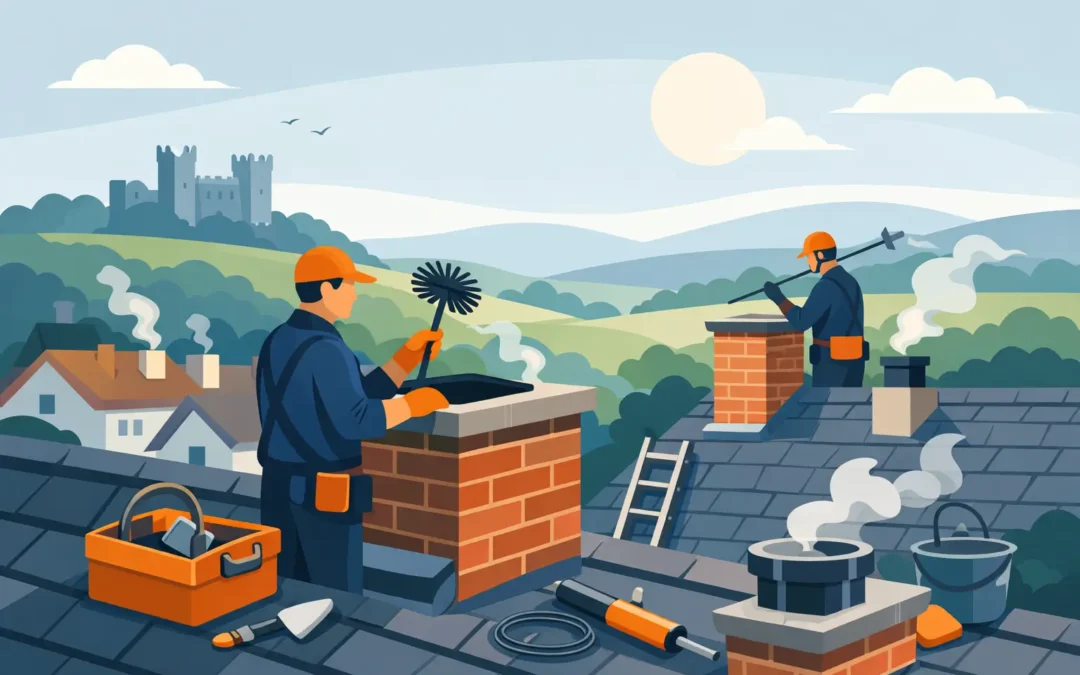
A chimney can look perfectly sound from the fireplace while soot, tar or a hidden obstruction is building up higher in the flue. That is why regular Leicestershire chimney maintenance is not simply a winter job. It is practical care that helps protect your home, your stove or open fire, and the people living in it.
For most households, the priority is straightforward: keep the flue clear, make sure the appliance is burning properly, and deal with faults before they become a smoky living room, a costly repair or a fire risk. A qualified local chimney professional can take care of the work, but knowing what to look out for makes it easier to book the right service at the right time.
What good chimney maintenance covers
Chimney maintenance is more than having the chimney swept. Sweeping removes soot, ash, creosote and loose debris from the flue. It is essential, but it does not always identify every issue affecting how your chimney performs.
A proper maintenance plan may also include checking the stove and flue connection, assessing the condition of the chimney pot and flaunching, looking for signs of water ingress, and investigating poor draw or smoke blow-back. Where there is a concern inside the flue, a CCTV chimney inspection can show what cannot be seen from the hearth.
The work needed depends on the fuel you burn, how often you use the appliance and the age and condition of the chimney. A regularly used wood burner in a family home needs different attention from an occasional open fire in a period property. The aim is the same in both cases: a clean, safe route for fumes to leave the building.
How often should a chimney be swept?
There is no single date that suits every home, but an annual sweep is a sensible starting point for many households. If you burn wood or other solid fuel frequently through autumn and winter, the flue may need sweeping more often. Smokeless fuel generally produces less soot than wood, while burning wet or unseasoned logs can create much heavier deposits.
As a practical guide, arrange a sweep before the main heating season if the stove or fire has been used over the previous year. This gives you a clean flue before regular lighting begins and avoids the rush when colder weather arrives.
Do not wait for a visible problem. Soot falling into the fireplace, a lingering smoky smell, slower lighting, smoke entering the room or a weak flame can all point to a flue that needs attention. Birds nesting in spring and early summer are another common local cause of blockage, particularly on disused or lightly used chimneys.
Your stove needs attention too
A clean chimney cannot make up for an appliance that is not working as it should. Stove servicing checks key components such as door seals, glass, fire bricks, baffles and rope seals. Worn seals can allow too much air into the stove, making it difficult to control and potentially causing it to burn too fiercely.
Ash should be removed regularly, but it is worth leaving a small base in some stoves if the manufacturer recommends it. Glass blackening quickly can indicate damp fuel, poor burning technique or an air supply issue. It is not always a chimney fault, which is why a proper assessment is more useful than guesswork.
The warning signs not to ignore
Some chimney problems develop quietly. Others make themselves known the moment you light the stove. If you notice repeated smoke entering the room, stop using the appliance until the cause has been checked. Carbon monoxide has no smell or colour, so a working carbon monoxide alarm in the room is essential where solid fuel is used.
Look out for cracked or crumbling flaunching around the chimney pot, loose mortar, damp patches on chimney breast walls, staining around the fireplace and debris dropping into the hearth. Water entering from the top of the stack can damage liners, masonry and internal finishes over time. A cowl may help prevent rain entry and bird access in the right situation, but it must be chosen and fitted to suit the chimney. The wrong cowl can restrict the flue or make a downdraught problem worse.
Downdraught is particularly frustrating. You open the stove door and smoke rolls back into the room rather than rising up the flue. The cause may be a cold flue, nearby trees or buildings, wind direction, an unsuitable chimney pot, extractor fans or a lack of replacement air in a tightly sealed home. It depends on the property, so a one-size-fits-all fix is rarely the answer.
Why a camera inspection can save time
A CCTV inspection is useful when a sweep alone does not explain the problem. It can help locate a partial blockage, damaged liner, heavy tar deposits, old nest material or a restriction caused by poor installation.
It is also a sensible check before major chimney work, fitting a new liner or connecting a new stove to an existing flue. Rather than assuming that an old chimney is suitable, the condition can be assessed properly. This helps avoid spending money on an installation that will not perform safely or efficiently.
Seasonal care for chimneys in Leicestershire
Autumn is the busiest time for chimney work because people are preparing to use their stoves and fires again. Booking early is wise, especially if you have not used the appliance since the previous winter. A sweep before the first fire gives you confidence that soot and summer debris have been cleared.
During winter, use dry, suitable fuel and avoid slumbering a stove overnight unless the appliance instructions specifically allow it. Slow, smoky burning creates more tar and deposits in the flue. Burn seasoned wood with a moisture content of 20% or below, store it under cover with good airflow, and avoid burning household rubbish, treated timber or painted wood.
Spring is a good time to deal with nests, damaged cowls and weather-related issues found after winter. If a bird nest is suspected, do not light a fire to try to clear it. Nest material can ignite or compress further inside the flue. A professional removal and sweep is the safer route.
Summer is often the best period for larger work, including chimney lining, flue repairs, flaunching or fitting a twin wall flue system. The weather is generally kinder and there is less disruption to your heating routine. It also leaves time to make any improvements before the colder months return.
Choosing the right person for the job
Chimney work is safety-critical, so price should not be the only consideration. Ask what is included in the service and whether the person carrying out the work has relevant training and registration for the job. Sweeping, diagnosing a smoke problem and installing a solid fuel appliance are related, but they are not identical skills.
For a new stove, liner or twin wall flue, use an installer who understands the relevant building requirements and can advise on clearances, ventilation, hearths and safe termination of the flue. For a sweep, you should expect a clean working area, appropriate brushes and equipment, a check of the flue’s condition and clear advice if a further issue is found.
Thurnby Chimney Sweeps provides sweeping, servicing, inspections and chimney repair work across Leicestershire, helping homeowners avoid the inconvenience of finding separate trades for connected problems. Whether the issue is routine soot removal or a persistent draw fault, dealing with it early is usually simpler and less expensive.
A few common questions
Can I sweep my own chimney?
DIY chimney sweeping kits are available, but they cannot replace a full professional assessment where there may be damage, nesting material or heavy tar deposits. For an infrequently used appliance with a simple, accessible flue, some homeowners choose to carry out basic cleaning. Even then, regular professional inspection remains the safer choice.
Does a chimney liner last forever?
No. Liners wear over time, particularly if unsuitable fuel, damp wood or corrosive deposits have been used. The lifespan varies according to the liner material, installation quality and how the appliance is operated. A camera inspection is the clearest way to assess concerns.
Why does my chimney smell in warm weather?
Warm air can pull odours down a cool flue, especially where soot or tar deposits are present. A sweep may help, but persistent smells can also point to moisture, an unused flue or a ventilation issue. It is worth having the cause checked rather than covering the smell with air freshener.
A well-maintained chimney should stay in the background: it draws cleanly, keeps smoke where it belongs and lets you enjoy the warmth of your fire without worry. If something does not feel right, arrange a check before the next lighting rather than hoping the problem will clear itself.