
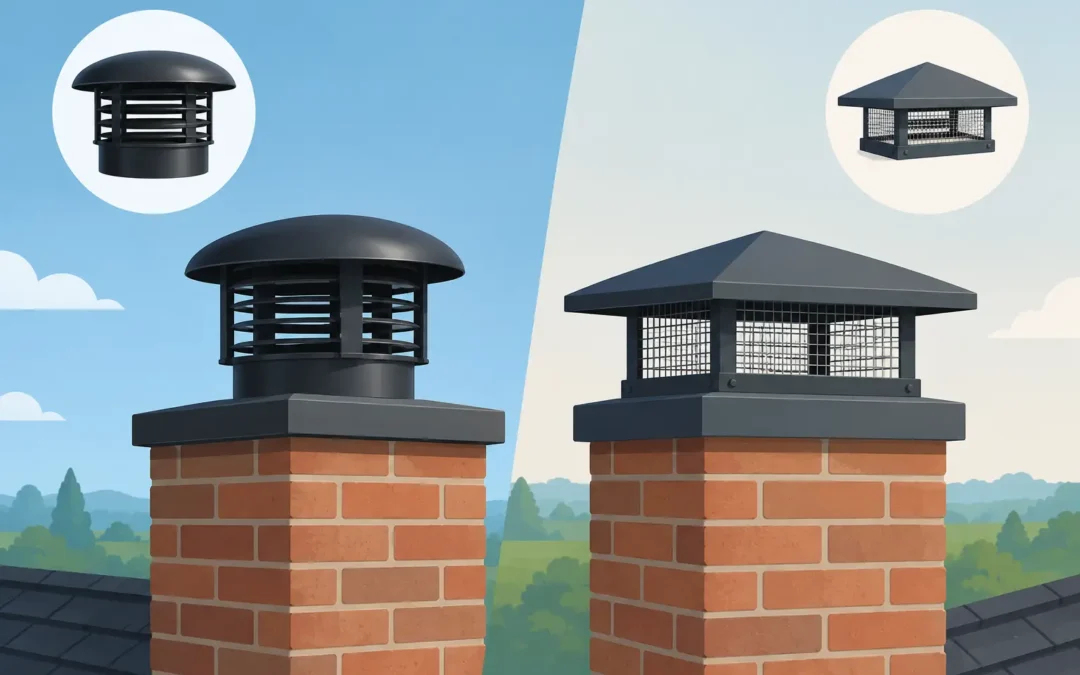
A chimney terminal may look like a small detail on the roof, but the wrong one can leave you with smoke blowing back into the room, rain entering the flue or repeat bird nest problems. When weighing up chimney cowl vs rain cap, the best choice is not simply the one that covers the chimney pot. It must suit the appliance, flue height, local wind conditions and the problem you are trying to solve.
For homes with wood-burning stoves, multi-fuel stoves and open fires, a terminal should be chosen with safety and proper draw in mind. A poorly selected or badly fitted cap can restrict the flue, collect soot or make an existing downdraught worse.
Chimney cowl vs rain cap: the practical difference
A rain cap is designed mainly to reduce the amount of rain falling directly into an open chimney pot. It normally has a simple hood above the flue outlet, leaving space around the sides for smoke and gases to escape. It is often a sensible option where weather protection is the main concern and the chimney otherwise draws well.
A chimney cowl is a broader term. Some cowls offer rain protection, but they may also be designed to improve draw, reduce wind-related downdraught or deter birds from entering the pot. Cowls come in several shapes, from straightforward static designs to purpose-made anti-downdraught terminals.
That overlap causes understandable confusion. Many people use the words interchangeably, and some products are described as both a cowl and a rain cap. The useful distinction is this: a rain cap is primarily weather protection, while a cowl may deal with weather, birds or airflow issues as well.
What a rain cap can and cannot do
A properly fitted rain cap can reduce direct rainwater entering an unused chimney or an appliance flue exposed to the weather. This may help limit dampness around the top of the stack and prevent water running straight down into the fireplace or stove system.
However, a little rain entering a working chimney is not usually the main cause of a damp problem. Chimney pots and flues have traditionally been exposed to the elements, and most rainwater should evaporate or drain harmlessly. If a chimney breast is persistently damp, the cause may instead be defective flashing, cracked rendering, damaged pointing, failed flaunching or a leaking chimney pot.
A rain cap will not fix a blocked flue, poor chimney height or a smoke problem caused by an extractor fan pulling air from the room. It should also never be used to close off a chimney that is still serving a live appliance. Any terminal on a working flue needs adequate free area for combustion gases to escape safely.
When a chimney cowl is the better answer
A cowl is usually worth considering when there is a clear, repeatable issue at the chimney top. A common example is birds nesting in an open pot. Jackdaws in particular can build substantial nests surprisingly quickly, dropping twigs and debris down the flue. This creates a blockage risk and can stop a fire or stove from drawing properly.
A bird guard or suitable cowl can prevent access, but it needs to be appropriate for solid fuel use. Fine mesh may look effective, yet it can become coated with soot and tar. Over time, that reduces the outlet area and creates a dangerous restriction. The right fitting needs a design and opening size suited to the type of appliance below.
Cowls can also help where wind pushes down the chimney rather than allowing the flue gases to rise. Symptoms often include smoke spilling into the room when lighting the stove, a smoky smell after gusty weather, or an appliance that works well on calm days but struggles when the wind changes direction.
In these cases, an anti-downdraught cowl may help. But it is not a guaranteed cure. Nearby trees, tall neighbouring buildings, roof shape, chimney height and the position of the flue can all affect airflow. Fitting a cowl without investigating the cause can be an expensive guess.
Signs that call for more than a rain cap
If your chimney has one simple weather-related issue and the fire draws properly, a rain cap may be all that is needed. If you are dealing with smoke, nesting birds or wind problems, a cowl may be more suitable.
It is sensible to have the flue checked first if you notice repeated smoke entering the room, a weak draw, staining around the fireplace, loose debris falling into the hearth, unusual smells or a stove that has become harder to light. These can point to a blockage, excessive soot build-up, a damaged liner or an issue with the appliance installation, rather than the need for a different terminal.
The risks of choosing by appearance alone
Cowls are often bought because they look like an easy fix. The chimney pot is accessible from the roof, the fitting appears straightforward and many options look similar from ground level. The reality is that terminals must be selected carefully, particularly on a solid fuel flue.
An unsuitable cowl can reduce draw and make lighting difficult. In worse cases, it can allow combustion products to spill into the room. Carbon monoxide is colourless and odourless, so every home with a solid fuel appliance should have a working carbon monoxide alarm in the correct location, tested regularly.
Weight matters too. Older chimney pots, loose mortar and damaged flaunching may not be in good condition. Adding a fitting to an unstable pot can cause further damage. High winds across Leicestershire can put real strain on a poorly secured terminal, so the condition of the chimney stack should be considered before fitting anything new.
There is also the matter of fuel. A terminal that performs acceptably on a gas appliance may not be suitable for a wood-burning or multi-fuel stove. Solid fuel produces soot and deposits that need room to escape and need to be removed during routine sweeping.
Why the flue should be inspected first
Before recommending a cowl or rain cap, a competent chimney professional should establish how the chimney is being used. Is it connected to an open fire, a lined stove flue, an older unlined chimney or no appliance at all? Does the problem happen only in certain wind directions? Has the issue started since an extension, new roof work or a change to the room ventilation?
Sweeping the flue is often the first practical step. It confirms whether soot, nest material or debris is affecting performance. Where the cause is not obvious, a CCTV chimney inspection can show the condition of the liner, identify obstructions and reveal faults that cannot be seen from the fireplace.
A smoke draw test may also be needed. This helps assess whether the flue is drawing correctly and whether air is being pulled down the chimney. In some properties, the answer may be improving ventilation, raising or altering the flue system, repairing the chimney stack or servicing the stove rather than fitting a cowl.
A sensible choice for common chimney problems
For a sound, working chimney that simply receives a lot of direct weather, a basic rain cap can be a practical choice. For recurring bird entry, use a terminal designed to keep birds out without restricting a solid fuel flue. For downdraught, choose a cowl only after the source of the airflow problem has been assessed.
If a chimney is no longer in use, it still needs to ventilate. Fully sealing an unused flue can trap moisture and lead to damp inside the property. A ventilated cap or terminal can keep out most rain and birds while allowing the chimney to breathe.
For a lined stove system, the terminal should match the flue manufacturer’s requirements and the appliance installation. This is especially relevant where a chimney liner or twin wall flue has been fitted. A neat-looking cap is no substitute for a correctly specified terminal.
Get the fitting checked before work starts
The right chimney top fitting should solve a defined problem without creating another one. That means checking the flue, the appliance, the stack and the effect of the wind around your home before deciding between a cowl and a rain cap.
Thurnby Chimney Sweeps can inspect, sweep and assess chimney and stove flue issues across Leicestershire, then recommend a suitable fitting where one is genuinely needed. A straightforward professional check can save repeated call-outs, protect your appliance and help keep your home safe and comfortable when the colder weather returns.