
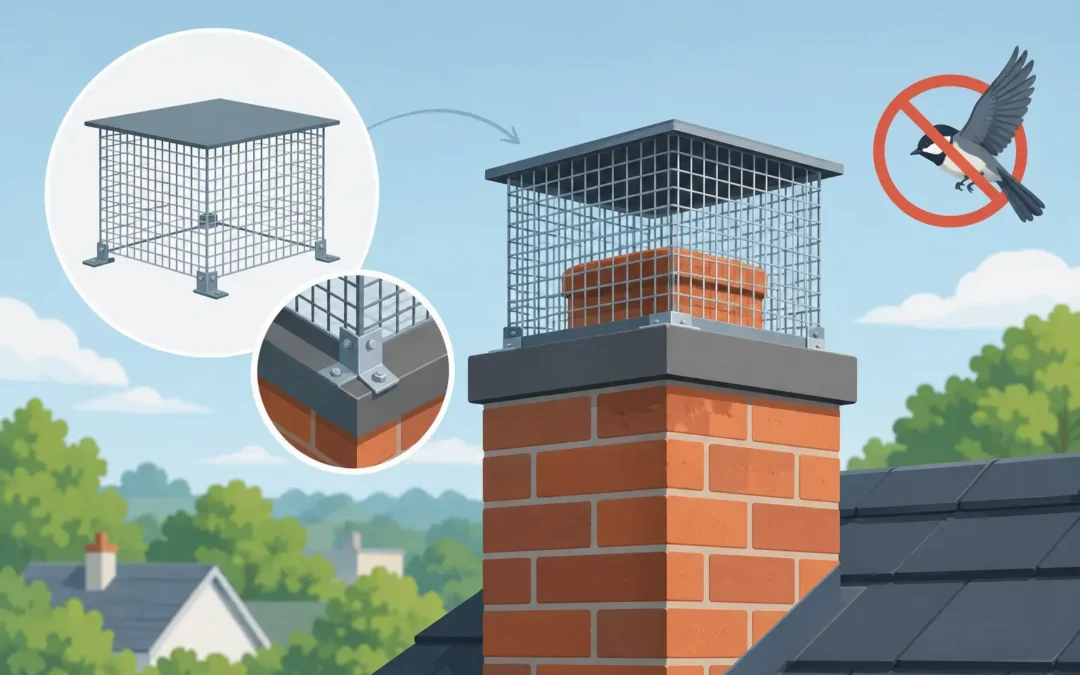
A bird guard can prevent a springtime nest from becoming a blocked flue, a smoke-filled room or an urgent call-out. But it is not simply a case of putting mesh over the top of a chimney. This chimney bird guard fitting guide explains what a guard needs to do, when one is suitable and why the fitting method matters just as much as the guard itself.
For homes across Leicestershire with open fires, wood burners and multi-fuel stoves, the right chimney terminal can provide useful protection. The wrong one, or one fitted poorly, can restrict the flue, collect soot or make an existing downdraught problem worse.
What a chimney bird guard is designed to do
A chimney bird guard is a protective mesh fitted at the top of a chimney pot or flue terminal. Its main job is to stop birds entering the flue and building nests. Jackdaws are a common problem locally, particularly in spring, although starlings and other small birds can also enter an unprotected pot.
Nesting material is not harmless. Twigs, moss, feathers and mud can narrow or fully block the flue. If a fire or stove is used with a blockage present, smoke and dangerous combustion gases may be unable to escape properly. Carbon monoxide is colourless and odourless, so this is a safety issue, not just an inconvenience.
A suitable guard should keep birds out while allowing smoke and gases to leave freely. That balance is why chimney terminals need to be selected with care. A guard that looks fine from ground level may not be appropriate for the appliance, fuel type or condition of the chimney.
When a bird guard is a good idea
A guard is often sensible when there is a history of birds nesting in the chimney, signs of nesting material in the fireplace or stove, or a chimney pot that is open and easy for birds to enter. It can also be a practical precaution after a professional nest removal, once the flue has been cleared and inspected.
It is particularly worth considering on chimneys that are not used regularly. An unused flue can look like a quiet, sheltered nesting spot. If you have more than one chimney pot, remember that each flue is separate. Protecting one pot does not protect the others.
However, a bird guard is not the answer to every chimney problem. If smoke is coming back into the room, the cause may be poor draw, a cold flue, the height or position of the stack, nearby trees or buildings, or a fault in the appliance installation. Adding a guard without diagnosing the issue can sometimes reduce the draw further.
Chimney bird guard fitting guide: choosing the right type
The best guard depends on what the chimney serves. An open fireplace, a lined stove flue and an unused chimney may need different terminal arrangements. The diameter of the pot, its shape and the state of the mortar around it also affect how securely a guard can be fitted.
For a working solid-fuel appliance, the mesh must have sufficient open area to avoid restricting the flue. Fine mesh may seem more effective against small birds, but it can clog quickly with soot and tar deposits. This is especially likely where wood is damp, fuel is poor quality or the appliance is being run slowly for long periods.
A cap-style bird guard can keep rain and debris out as well as birds, but it is not automatically better. Some chimneys benefit from a rain cap, while others need a different cowl designed to help with wind-related downdraught. The right choice depends on the chimney’s performance, not on a one-size-fits-all product.
Stainless steel guards are generally preferred for durability. Cheap galvanised guards can corrode over time, particularly when exposed to weather and flue gases. Whatever type is used, it must be purpose-made for chimney use and securely fixed rather than balanced or loosely wired in place.
The checks needed before fitting
Before a guard is fitted, the chimney should be assessed from both ends where possible. From inside, look for debris in the fireplace, stove or register plate area. A CCTV chimney inspection can show whether nesting material remains higher up the flue and whether there are cracks, old liners or other obstructions that need attention.
The chimney pot and flaunching also need checking. Flaunching is the mortar bedding around the base of chimney pots. If it is cracked, loose or washed away, the pot may not be stable enough for a guard to be fitted safely. A new cowl will not solve failing brickwork or loose pots.
For a stove, check the appliance manufacturer’s instructions and the flue system specification. The terminal must be compatible with the installation and allow the appliance to operate correctly. Where work affects a solid-fuel installation, it is sensible to use a competent, appropriately registered professional who understands the relevant requirements.
Why fitting from a ladder is rarely straightforward
Chimney work involves height, roof condition, weather and access. A roof that looks easy from the garden may have fragile tiles, a steep pitch, poor access or an unsafe landing point near the stack. Trying to fit a guard from an ordinary ladder can put both the person on the ladder and the chimney at risk.
Safe fitting normally means proper access equipment, a clear assessment of the roof and chimney, and suitable working conditions. High winds, rain, frost and slippery tiles all change the risk. A fitting should not be rushed because birds are active or because a guard has just been bought.
Once safely at the chimney, the existing terminal is removed if necessary, the pot is checked for soundness and the new guard or cowl is secured according to its design. Fixings should be resistant to corrosion and installed so they cannot work loose in bad weather. The fitter should also make sure the guard is seated properly and does not leave gaps large enough for birds to enter.
A clear flue matters after fitting too
A fitted guard still needs maintenance. Mesh terminals are exposed to soot, tar, weather and wind-blown debris. During routine chimney sweeping, the terminal should be checked for blockage, corrosion and secure fixings. This is particularly important for wood-burning and multi-fuel stoves because deposits can build up on the guard over time.
If your stove starts to smell smoky, becomes harder to light, produces weaker draw or sets off a carbon monoxide alarm, stop using it and arrange an inspection. Do not assume the guard is the only cause, but do treat it as a possible restriction until the flue has been checked.
Bird activity can also continue around a protected chimney. A guard prevents access to the flue, but birds may attempt to nest under loose flashing, in gaps around damaged brickwork or beneath eaves. These areas need separate attention and should not be sealed in a way that traps wildlife.
What to do if birds have already nested
Do not light a fire or stove if you suspect there is a nest in the chimney. Nest material can ignite, block the flue or cause fumes to enter the property. The safest first step is to have the chimney assessed and cleared by someone equipped to remove the obstruction without damaging the flue.
There may also be legal protections around active bird nests. If eggs or dependent young are present, removal may need to wait until the nest is no longer active. A professional can advise on the practical next step and arrange fitting of a suitable guard once the chimney is clear.
A sweep after nest removal is often advisable, even where the chimney has not been used. It confirms the flue is clear from top to bottom and provides a sensible opportunity to inspect the terminal, pot and surrounding mortar.
Get the guard and the diagnosis right
The cheapest mesh guard is not always the best value if it blocks easily, rusts after a season or masks a draw problem that needs proper attention. Equally, not every chimney needs an expensive specialist cowl. The sensible option is the one that suits the appliance, protects the flue and leaves it able to work as intended.
At Thurnby Chimney Sweeps, we see bird guards as part of wider chimney care, alongside sweeping, nest removal, CCTV inspections and cowl fitting. If you are unsure whether your chimney needs a simple bird guard or a more considered solution, have the flue checked before work is done. A clear, correctly protected chimney gives you far more confidence when it is time to light the fire.