
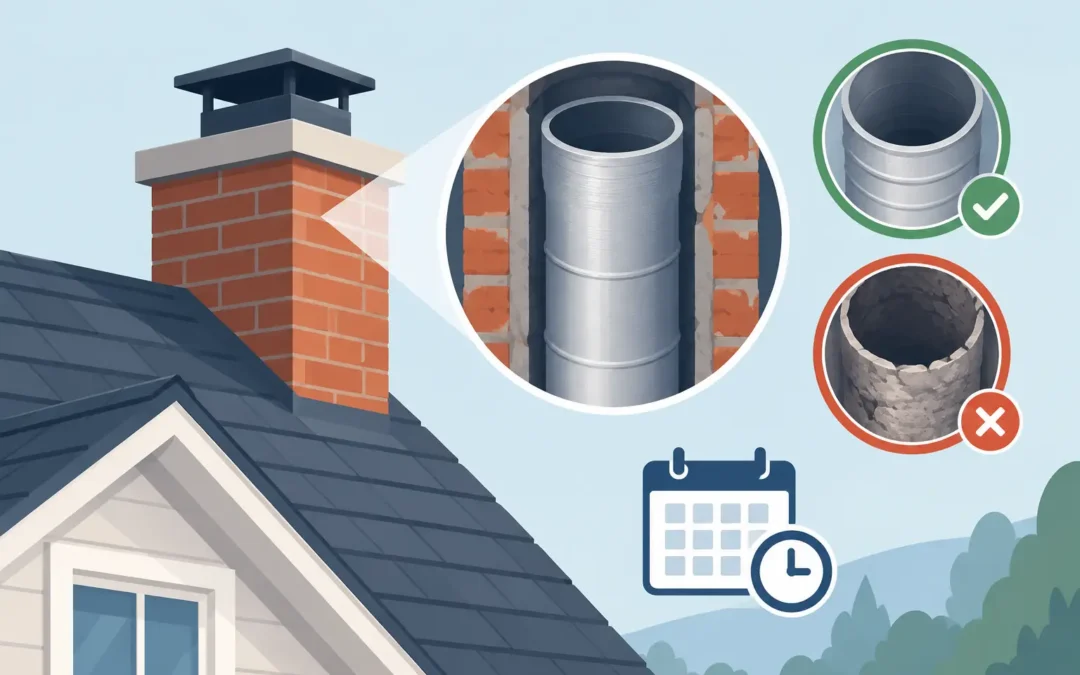
A flue liner is out of sight, but it should never be out of mind. Flue liner lifespan varies widely, and a liner that looks fine from the fireplace or stove end may be corroded, cracked or poorly connected higher up the chimney. For homeowners using solid fuel in Leicestershire, knowing when to inspect or replace a liner is part of keeping the home safe.
A sound liner carries smoke, gases and moisture safely away from the appliance. When it starts to fail, the problem is not simply poor stove performance. It can lead to smoke entering rooms, tar and condensate staining the chimney, dangerous gases escaping into the property, or a greater fire risk where heat reaches unsuitable parts of the structure.
How long does a flue liner last?
There is no single replacement date for every flue liner. The material, the appliance it serves, the quality of the original installation and how the stove or fire is used all make a difference.
As a broad guide, a quality stainless-steel flexible liner used with a correctly installed wood-burning or multi-fuel stove may last around 15 to 20 years. Some last longer, while others need attention sooner. Clay, pumice and ceramic systems can last for decades where they are suitable for the appliance and remain free from cracking or movement. Older chimneys may have no liner at all, or may contain a liner that is no longer suitable for modern solid-fuel use.
The key point is that age alone does not give a reliable answer. A ten-year-old liner that has been run hard on wet wood, seldom swept and exposed to repeated condensation may be in worse condition than a well-maintained liner that has been in service for much longer.
What affects flue liner lifespan?
The fuel makes a major difference. Burning properly seasoned wood with a moisture content of 20% or less produces a hotter, cleaner fire and less corrosive deposit inside the flue. Damp logs, poor-quality fuel and household rubbish create more soot, tar and acidic condensate. These deposits can attack stainless steel over time and increase the chance of a chimney fire.
How the appliance is operated matters too. Slumbering a stove overnight or restricting the air supply for long periods may seem economical, but it creates a cooler, dirtier flue. The resulting tar can build up quickly. A liner performs best when the stove is appropriately sized, has enough air, and is used as the manufacturer intended.
Installation quality is just as important. A liner needs to be the right diameter and grade for the appliance, correctly connected at the stove and chimney pot, adequately supported, and insulated where required. A poor installation can allow excessive cooling, movement or water ingress. It may also create weak points that are difficult to spot without a proper inspection.
Finally, external conditions play a part. Rain entering through an uncapped chimney, damaged flaunching around the chimney pot, and persistent condensation can all shorten a liner’s working life. Chimneys on exposed properties often need closer attention.
Signs your flue liner may need checking
A failing liner does not always announce itself with an obvious fault. That is why routine sweeping and periodic inspection are worthwhile. However, there are warning signs that should not be ignored.
Smoke or strong fumes in the room, especially when lighting the stove, can point to a blockage, poor draw or a damaged flue connection. Tar-like staining on chimney breasts, damp patches near the fireplace, flakes of liner material in the grate, or unexplained soot falling into the appliance can also indicate a problem.
A change in how the stove burns deserves attention. If it becomes difficult to light, regularly spills smoke, burns sluggishly or produces more tar on the glass than usual, the cause might be fuel or operating habits. It could also be a restriction or defect within the liner.
Carbon monoxide alarms are essential wherever solid-fuel appliances are used. If an alarm activates, leave the property immediately if it is safe to do so, get fresh air and follow the emergency advice supplied with the alarm. Do not use the appliance again until it has been checked by a competent person.
Why sweeping alone cannot confirm liner condition
Regular chimney sweeping removes soot and combustible deposits, and it gives the sweep a useful view of how the flue is performing. It does not always show whether a liner has split, corroded between joints, collapsed in one section or has been damaged where it passes through the chimney.
For that, a CCTV chimney inspection is often the sensible next step. A camera survey can show the internal condition of the liner, identify heavy tar deposits, locate obstructions and check whether the flue route is suitable. It is particularly useful when buying a property with a stove, after a chimney fire, before fitting a new appliance, or where there are persistent smoke and draw problems.
An inspection also avoids guesswork. Replacing a liner is disruptive work, so it is better to establish the actual fault and assess the whole system first. In some cases, the issue is a bird nest, a damaged cowl, water ingress or an unsuitable stove connection rather than the liner itself.
When replacement is the right option
A liner should be replaced when inspection shows holes, significant corrosion, fractures, deformation, failing joints or a size that is unsuitable for the appliance. It may also need replacing if a different stove is being fitted and the existing liner does not meet the new appliance manufacturer’s requirements.
Do not be tempted to keep using a known damaged liner because the stove still appears to work. Flue gases can escape through defects without producing dramatic symptoms, particularly higher up in the chimney where there is no visible sign indoors. A chimney fire can make existing weaknesses worse very quickly.
Replacement should be planned as part of the full installation, not treated as a length of pipe dropped down the chimney. The condition of the stack, pot, flaunching, register plate, stove pipe, terminal or cowl and ventilation should all be considered. This is where using a competent, appropriately registered installer gives homeowners a clearer picture of what is needed and why.
Can you extend a flue liner’s life?
You cannot make a liner last forever, but sensible use and maintenance can prevent premature failure. Burn dry, suitable fuel and avoid leaving the stove to smoulder for long periods. Empty ash as needed, use the appliance controls properly and have the chimney swept at the right interval for how often it is used.
For most wood-burning and multi-fuel appliances, an annual sweep is a sensible minimum. Heavily used appliances may need more frequent sweeping. Open fires, coal use and different fuel types can call for a different schedule, so ask for advice based on your own setup rather than following a one-size-fits-all rule.
Keep rain out where possible and deal with chimney defects promptly. A loose pot, failed flaunching or missing cowl can allow water into parts of the system that should remain dry. If the appliance has been unused for a long period, or you have moved into a house with an existing stove, arranging a sweep and inspection before lighting it is a sensible precaution.
A practical approach for homeowners
Keep a record of when the liner was installed, the make and grade used, any installation paperwork, sweeps and inspection findings. This information is useful if you sell the property, change the appliance or need to investigate a later issue.
If your liner is approaching the typical 15 to 20-year range, that does not automatically mean it needs replacing. It does mean a condition check is worthwhile, especially if the stove is used regularly. Thurnby Chimney Sweeps can assess the flue through routine sweeping and CCTV inspection, then explain plainly whether maintenance, repair or relining is the sensible next step.
A flue liner is there to do a quiet but safety-critical job. Treat changes in smoke, smell, staining or stove performance as a reason to get it checked, and you can keep small faults from becoming a larger job.