
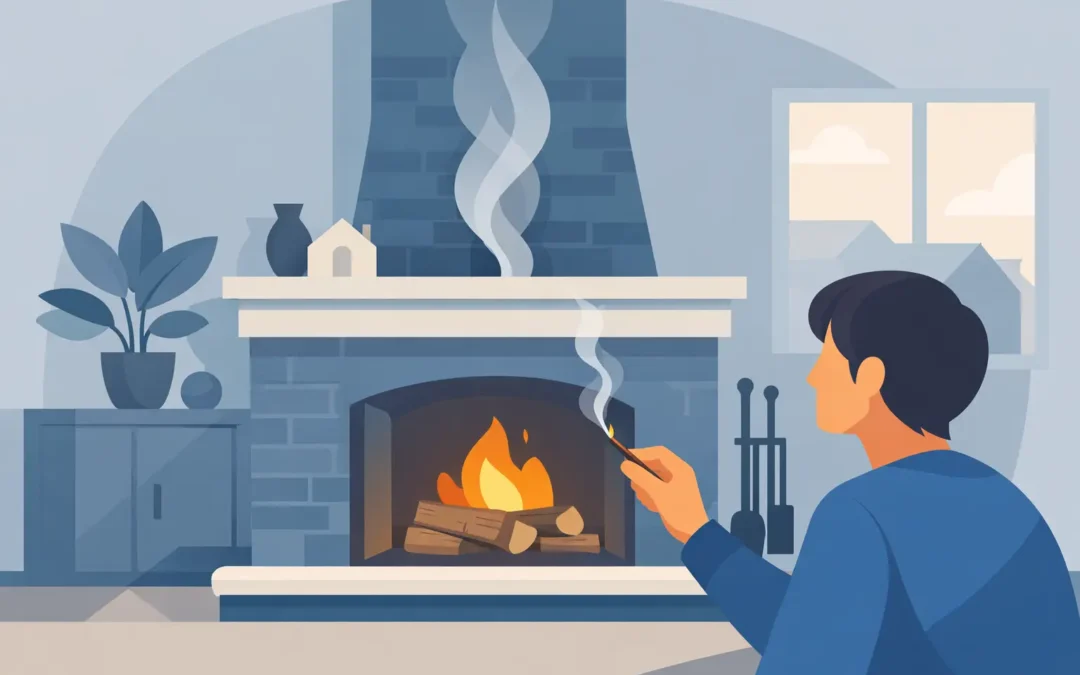
A fire that sends smoke into the room instead of up the chimney is more than an annoyance. It can leave soot on furnishings, trigger a carbon monoxide risk and tell you that the flue is not working as it should. Knowing how to test chimney draw before you light a full fire can help you spot a problem early, but a simple home check is not a replacement for proper sweeping, inspection or servicing.
Chimney draw is the upward pull that carries smoke and combustion gases from your fireplace or stove, through the flue and safely outside. It relies on a clear flue, enough height, a warm column of air and a good supply of replacement air in the room. When one part of that system is wrong, the fire may be difficult to light, burn poorly or spill smoke back indoors.
What a good chimney draw should look like
With a sound, clean chimney, smoke and fumes should move steadily into the appliance and up the flue once the fire is established. You should not smell smoke in the room, see it drifting from around stove doors, or need to leave a window wide open simply to keep the fire going.
Draw is often weakest at the start. A cold chimney can hold a plug of cold air, especially after mild weather or when the flue runs up an outside wall. This does not automatically mean there is a fault. However, repeated smoke spillage, a lazy flame or fumes entering the room need attention rather than guesswork.
If you have a wood burner or multi-fuel stove, check that the air controls are open as recommended by the manufacturer and that any flue damper is fully open before testing. Do not test a stove with the door open if its instructions say it must be operated with the door shut.
How to test chimney draw safely
The safest basic test is carried out with the appliance cold, the chimney unobstructed as far as you can see, and no fire burning. Make sure a working carbon monoxide alarm is fitted in the room first. If the alarm sounds, anyone feels unwell, or smoke enters the room, stop immediately, ventilate the area and do not use the appliance until it has been checked.
Start with a visual and airflow check
Open the stove air controls or fireplace throat, then look for obvious signs of trouble. Check that the chimney opening is clear of stored logs, ornaments and fireplace screens. For a stove, empty excessive ash that could affect the grate or air inlet, and make sure the baffle plate has not slipped out of position.
Look outside if it is safe to do so. A bird guard or cowl packed with leaves, nesting material or soot can restrict the outlet. Never climb onto a roof to investigate. Bird nests, damaged pots and loose cowls are jobs for a qualified professional with the right access equipment.
Next, hold a thin strip of tissue near the fireplace opening or just inside the open stove door, keeping well clear of hot surfaces. If the chimney is drawing, the tissue should gently pull towards the flue. This is only a rough indication. Air movement from an open door, extractor fan or draughty window can affect the result, so it cannot prove that the entire flue is clear.
Use a small smoke source with care
A smoke match, incense stick or purpose-made smoke pellet can give a clearer view of airflow. With the appliance cold and air controls open, hold the smoke source near the opening rather than pushing it into the flue. The smoke should be drawn upwards promptly.
Do not use burning paper, cardboard or household rubbish for this test. They can create sparks, unnecessary soot and a false result. Avoid smoke testing if you are unsure how your appliance works, if there are children or pets nearby, or if the room has poor ventilation.
If smoke hangs in the room, pushes back towards you or only rises when a window is open, stop there. Do not try to cure the issue by repeatedly lighting larger fires. A blocked flue or poor ventilation can become a serious safety problem very quickly.
Warm a cold flue before lighting the fire
If the smoke initially comes back into the room but begins to lift once the flue warms, you may simply be dealing with a cold air plug. This is common with some chimney arrangements and during changeable weather.
You can pre-warm the flue by lighting a small, clean firelighter at the back of the stove or fireplace, with the air controls open. Keep the appliance door as instructed by its manufacturer. Once the smoke is travelling upwards, build a small kindling fire gradually. Do not overload the firebox in an attempt to force draw.
For a stove, it can also help to crack a nearby window open briefly while lighting. Modern, well-sealed homes may not provide enough replacement air, particularly if an extractor fan is running in the kitchen or utility room. If opening a window consistently changes the way the stove burns, the room ventilation should be assessed properly.
What can affect chimney draw?
A chimney is not judged by one test alone. Wind direction, outdoor temperature, the type of appliance, flue height and the layout of the house all play a part. A chimney that works well on a frosty still morning may struggle in warm, damp or windy conditions.
Common causes of weak or unreliable draw include:
- soot build-up, tar deposits or a bird nest restricting the flue
- a cold flue or a chimney that is too short for the appliance and property
- an unsuitable, damaged or poorly insulated liner
- extractor fans or insufficient ventilation creating negative pressure indoors
- trees, neighbouring roofs or local wind patterns causing downdraught
- a poorly fitted cowl, or no cowl where one is needed
It depends on the symptom. A problem that only happens when the wind comes from one direction can point to downdraught around the chimney pot. A stove that smokes whenever the kitchen extractor is on may be competing for air. Persistent poor draw in all conditions is more likely to need a sweep, CCTV chimney inspection or a check of the flue design.
Signs you should stop using the appliance
Some issues should not wait until the next annual sweep. Stop using the fire or stove and arrange a professional inspection if smoke regularly enters the room, the carbon monoxide alarm activates, there is a strong tar or fume smell, or you suspect a nest or blockage.
You should also act if you hear debris falling in the flue, see staining around the fireplace, notice a loose chimney pot or cowl, or find that the stove glass blackens unusually quickly despite using dry, suitable fuel. These signs do not always mean the same fault, but they are all worth checking.
Carbon monoxide has no smell or colour. Headaches, dizziness, nausea, breathlessness and confusion while a solid fuel appliance is in use must be taken seriously. Get fresh air immediately, leave the property if necessary and seek appropriate emergency advice. Do not return to using the appliance until the cause has been found.
Why sweeping and inspection matter
A home draw test can show whether air appears to be moving in the right direction. It cannot tell you how much soot is inside the flue, whether a liner is cracked, whether the chimney is leaking, or whether the appliance installation meets the required standards.
Regular chimney sweeping removes combustible deposits and gives the sweep an opportunity to spot changes. For properties with recurring smoke issues, a CCTV chimney inspection can reveal obstructions, damaged liners, offsets and other defects hidden from view. In some cases, the practical answer may be bird nest removal, a correctly selected anti-downdraught cowl, improved ventilation or flue work rather than another change to how you light the fire.
Thurnby Chimney Sweeps can assess the full system, from the stove or fireplace to the chimney pot, so you are not left trying one temporary fix after another.
A chimney should let you enjoy the warmth of a real fire without wondering where the smoke is going. If the draw is uncertain, treat that uncertainty as a reason to get it checked before the next fire is lit.