
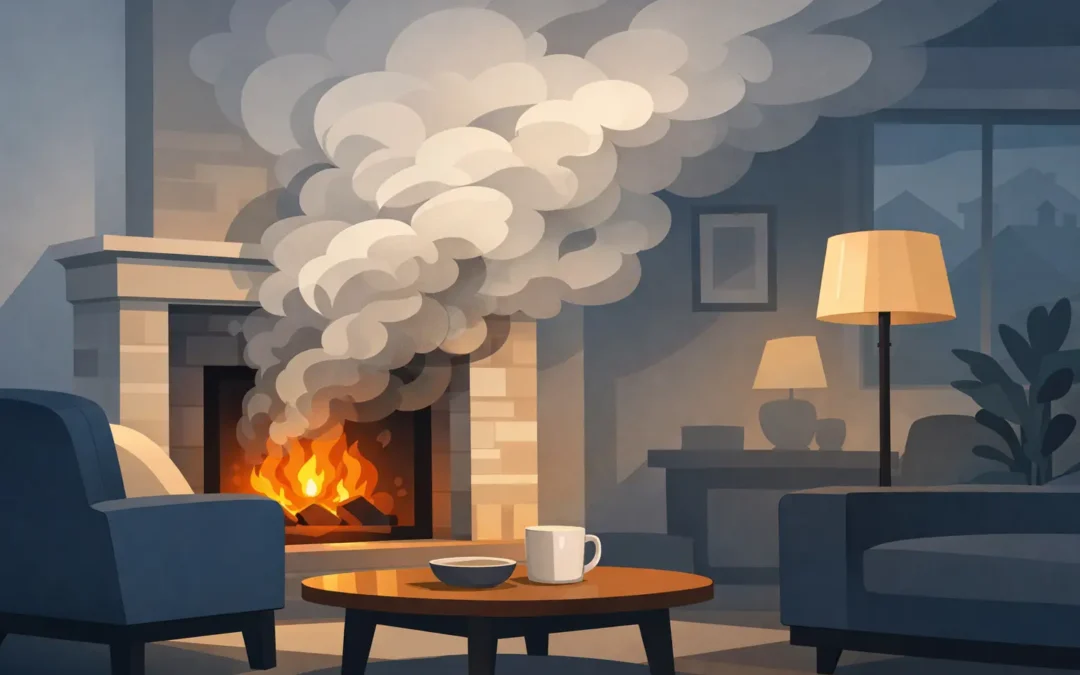
You light the fire, expect the room to warm up, and instead get that unmistakable smell of smoke drifting indoors. If you have smoke coming back into the room from the fireplace, something in the chimney system is not drawing properly. Sometimes the cause is simple. Sometimes it points to a blockage, poor ventilation, or a fault that needs attention before you use the fire again.
A smoky fireplace is not just unpleasant. It can stain walls and furnishings, aggravate breathing problems, and signal a safety issue with the flue. The key is to stop guessing and work through the likely causes in a sensible order.
Why smoke coming back into the room from the fireplace happens
Your fireplace works by creating an upward flow of hot gases through the flue. When that flow is weak, interrupted, or reversed, smoke spills back into the room instead of going safely outside.
In plain terms, the fire needs enough heat, enough air, and a clear route up the chimney. If one of those is missing, the draw suffers. That is why smoke problems can happen in an older open fire, a newer stove, or even a chimney that was fine last winter.
The most common causes are a blocked flue, a cold chimney, poor ventilation in the room, downdraught from wind conditions, unsuitable fuel, or a chimney design issue. In some homes, there is more than one cause at the same time.
Start with the obvious signs
Before assuming the worst, pay attention to when the smoke problem happens. If it is only when you first light the fire, that points to a cold flue or poor lighting technique. If it continues the whole time the fire is burning, the issue is more likely to be blockage, ventilation, or an ongoing draw problem.
It also matters whether the smoke is slight or heavy. A brief puff when the fire starts is very different from a room filling with smoke. If smoke is entering the room consistently, stop using the fireplace until the cause is identified.
A few simple clues can help narrow it down. A strong smoky smell when the fireplace is not in use can suggest old soot deposits, a partial blockage, or air pressure issues. Birds, fallen masonry, excess soot, and tar can all restrict the flue without fully blocking it.
A blocked or dirty chimney is one of the main causes
This is the first thing many homeowners need checked, and with good reason. Over time, soot, creosote and debris build up inside the flue. If the chimney has not been swept regularly, the passage narrows and the fireplace struggles to pull smoke upwards.
Bird nests are another common culprit, especially in spring and early summer. We see this regularly on domestic chimneys. A nest does not have to block the whole flue to cause smoke to spill back into the room.
If you notice bits of debris in the fireplace, unusual smells, poor draw, or smoke appearing where it did not before, a sweep and inspection is often the sensible next step. A proper chimney sweep does more than clean. It also helps spot the underlying problem before it becomes more serious.
A cold flue can send smoke back indoors
Chimneys that have not been used for a while can hold a plug of cold air. That cold air sits in the flue and pushes against the rising smoke when you first try to light the fire. The result is smoke coming back into the room before the chimney has warmed enough to draw properly.
This is especially common in colder weather, with external chimneys, or in taller properties. It can also happen if the fire is lit too slowly with insufficient heat at the start.
In some cases, pre-warming the flue helps. That might mean using a small amount of kindling first and making sure the initial flame is hot enough to start the upward draw. With stoves, using the correct air settings matters as well. If the flue struggles every time, not just occasionally, there may be more going on than a cold start.
Ventilation problems are more common in modern homes
A fire needs air from the room to burn properly. If the property is very airtight, the fireplace may not be getting enough make-up air. This can happen in homes with newer doors and windows, extractor fans, or other measures that reduce draughts.
The odd thing is that homeowners often improve insulation and draught-proofing, then find the fireplace starts smoking when it never used to. That does not mean the improvements were wrong. It just means the chimney system may now need better ventilation arrangements.
Extractor fans in kitchens and bathrooms can make this worse by pulling air out of the house and affecting pressure inside the room. In some situations, even opening a window slightly can change how the fire behaves. That is a useful clue, but it is not a long-term fix if the appliance or room ventilation is not right.
Downdraught can push smoke back down the chimney
Sometimes the flue is clean and the fire is lit properly, but the wind outside works against the chimney. Certain roof shapes, nearby trees, neighbouring buildings, hills, and exposed positions can all create turbulence. Instead of rising freely, smoke gets pushed back down.
This is known as downdraught, and it can be one of the more frustrating chimney problems because it often depends on weather conditions. The fireplace may behave perfectly on one day and smoke badly on another.
Where downdraught is the issue, the solution is usually not guesswork. It may involve checking chimney height, fitting a suitable cowl, or inspecting the flue setup more closely. The right fix depends on the property. What works on one chimney will not always suit the next.
Fuel and lighting method both matter
Wet or poor-quality wood creates more smoke and less useful heat, which makes it harder for the flue to establish a good draw. Overloading the fire, restricting airflow too much, or trying to burn unsuitable materials can all contribute as well.
For open fires, too little kindling at the start often causes problems. For stoves, shutting the air controls down too quickly can do the same. The fire needs enough heat early on to get the flue working as intended.
This is one of the few causes homeowners can often correct themselves, provided the chimney is otherwise sound. Even so, if changing fuel and lighting technique makes no difference, the problem probably lies elsewhere.
When smoke coming back into the room from the fireplace points to a bigger fault
Some smoke issues come down to the structure or condition of the chimney itself. A damaged liner, a flue that is the wrong size for the appliance, a poor connection, leaking joints, or defects in the chimney pot or flaunching can all interfere with performance.
These are not faults you can diagnose properly by looking into the fireplace with a torch. A CCTV chimney inspection is often the clearest way to see what is happening inside the flue. It can reveal cracks, obstructions, collapsed liners, and other defects that a standard visual check might miss.
This is particularly worth considering if the property has had building work, a new stove fitted, recurring smoke issues, or a chimney with an unknown history.
What you can check safely
There are a few sensible checks you can make before booking professional help. Make sure the damper, if fitted, is open. Check that vents are not blocked. Use dry, suitable fuel. Avoid lighting a large fire from a cold start. If extractor fans are running nearby, turn them off and see if the draw improves.
Beyond that, it is best not to poke around too far. Climbing onto the roof, trying to remove a nest yourself, or continuing to use a smoky fireplace is where small problems turn into larger ones.
If smoke enters the room more than once, if the fire is difficult to keep lit, or if there is any sign of blockage or bird activity, it is time to have the chimney assessed properly.
When to call a chimney professional
A trained chimney sweep or chimney engineer can usually tell quite quickly whether the issue is sweeping, ventilation, downdraught, nesting, or a fault in the flue system. That matters because the right answer is not always the cheapest-looking answer.
For example, fitting a cowl will not solve a heavy soot blockage, and sweeping alone will not fix a structural defect. The value of a proper inspection is that it gets to the cause, not just the symptom.
At Thurnby Chimney Sweeps, this is exactly the sort of practical problem we help homeowners with across Leicestershire. Whether it needs sweeping, nest removal, CCTV inspection, cowl fitting or further remedial work, the aim is the same – make the fireplace safe, working properly, and far less likely to smoke back into your home.
If your fire is sending smoke the wrong way, trust what it is telling you. Fireplaces do not usually start misbehaving for no reason, and the sooner the cause is checked, the easier it often is to put right.