
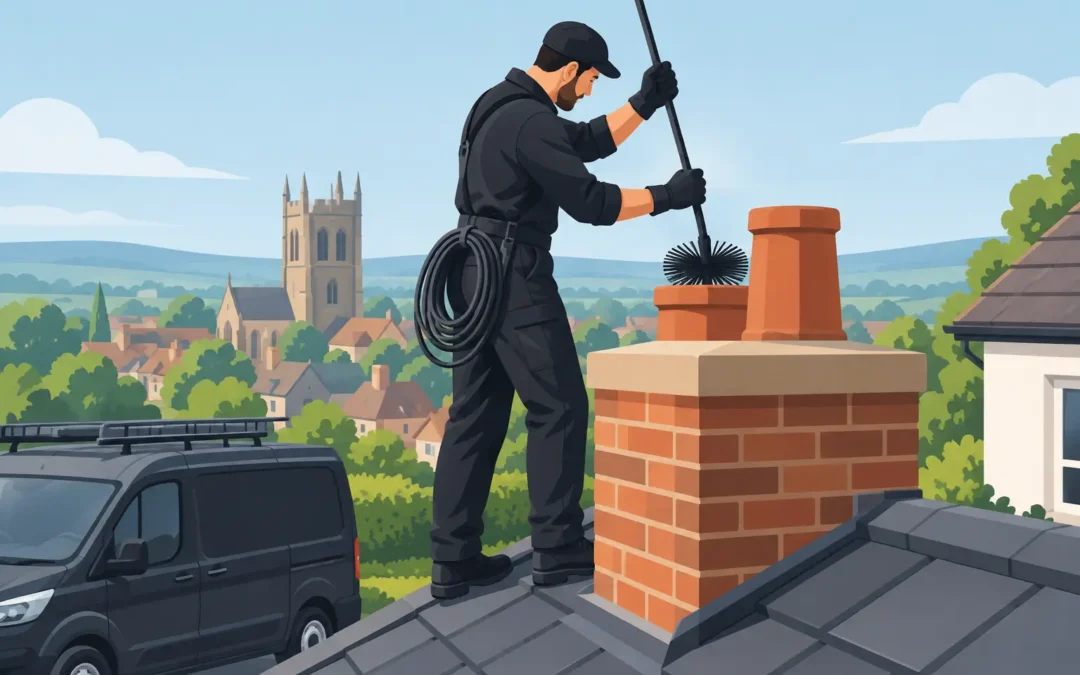
A fire that starts drawing smoke back into the room, an odd smell from the stove, or a chimney pot filled with nesting material can quickly turn a cosy evening into a worry. Booking a qualified chimney sweep in Leicestershire is not just about leaving the hearth looking tidy. It is about keeping the flue clear, spotting problems early and using your stove or open fire with greater confidence.
For homes with wood burners, multi-fuel stoves and open fires, regular sweeping is one of the most straightforward parts of looking after the property. It also gives you the chance to ask an experienced local professional about persistent smoke, poor draw, birds’ nests or a chimney that has not been used for some time.
Why chimney sweeping matters
Every solid fuel fire produces combustion deposits. Soot, ash and creosote can collect inside the flue over time. Creosote is especially worth taking seriously, as it is a combustible deposit that can build up where wood is burnt, particularly if the fuel is damp or the appliance is often run slowly.
A clear chimney allows combustion gases to leave the property as intended. A restricted flue can affect how well an appliance draws and may cause smoke or fumes to enter the room. In more serious cases, a build-up of deposits can contribute to a chimney fire.
Sweeping also provides an opportunity to identify obvious concerns that cannot be seen from the fireplace. A good sweep will assess the flue as part of the visit and let you know if there are signs that further investigation is sensible. That might mean a CCTV chimney inspection, a check on the chimney pot or cowl, or advice on a lining issue.
How often should you book a chimney sweep in Leicestershire?
There is no single timetable that suits every household. The right frequency depends on the appliance, the fuel used and how often you light it. As a sensible guide, a wood-burning or multi-fuel stove used regularly is commonly swept at least once a year. An open fire often needs more frequent attention, particularly during a busy heating season.
If you burn smokeless fuel, use your stove only occasionally or have recently had work carried out on the flue, the recommendation may differ. The safest approach is to discuss your actual usage with the sweep rather than treating an annual date in the diary as a substitute for proper advice.
You should also arrange a visit before using a chimney that has stood unused for a long period. Properties that have been bought, renovated or let out can have an unknown chimney history. Starting with a sweep and inspection gives you a clearer picture before the first fire is lit.
Signs your chimney or flue needs attention
Do not wait for a full blockage before calling someone out. A change in how your fire behaves is often the useful early warning. Arrange advice if you notice any of the following:
- Smoke spilling into the room when the stove door is opened or the fire is lit
- A persistent smoky or tar-like smell around the fireplace
- Falling debris, soot or bits of nesting material in the hearth
- A fire that is difficult to light or suddenly burns poorly
- Marks, staining or damp around the chimney breast
- A carbon monoxide alarm sounding – leave the property, seek appropriate emergency advice and do not use the appliance until it has been checked
Some of these signs have more than one possible cause. Poor draw, for example, may be related to a cold flue, the way the stove is being operated, an extractor fan affecting room pressure, a blocked terminal or an unsuitable chimney cowl. Sweeping is essential maintenance, but it is not a cure-all. Where the cause is unclear, proper diagnosis avoids paying for work that will not solve the problem.
More than a brush and rods
A professional sweep should protect the work area, use suitable equipment for the appliance and flue, and leave the room clean and usable once the work is complete. Just as importantly, they should be prepared to explain what they have found in plain language.
Chimney systems vary widely across Leicestershire. Older properties may have large, original brick flues, while newer extensions and stove installations may use insulated twin-wall flue systems. Some chimneys are lined, some have bends that need specialist equipment, and some have access points that affect how the work is carried out. The method should suit the system, not be chosen simply because it is quickest.
For difficult or hidden problems, a CCTV chimney inspection can be particularly useful. A camera survey can help identify a damaged liner, a partial obstruction, poor internal condition or an issue with the route of the flue. It can also prevent unnecessary guesswork where smoke problems persist after sweeping.
Bird nest removals are another common reason for a visit, especially in spring and early summer. Nests can seriously restrict a flue, but they must be dealt with responsibly and at the appropriate time. If you suspect nesting activity, avoid lighting the appliance and ask for advice before attempting to remove anything yourself.
Choosing a chimney sweep you can trust
Price matters, but the cheapest appointment is not always the best value if the work is rushed or concerns are missed. Look for a local provider who is clear about what the service includes, protects your home while working and can provide evidence of relevant training and professional registration.
For stove installations and alterations, competence is especially important. The appliance, hearth, flue route, ventilation and clearances all need to work together. A sweeping visit may reveal that a liner is deteriorating or that a cowl would help with weather-related downdraught. Those jobs require informed advice rather than a quick fix from someone who only offers a basic clean.
Thurnby Chimney Sweeps is family-run, ICS trained and HETAS registered, offering routine sweeping alongside stove servicing, CCTV inspections, cowl fitting, lining and flue work. That means homeowners can use one local team for a straightforward annual sweep and for the more technical issues that sometimes come to light.
Getting your home ready for the appointment
You do not need to do much preparation, but a few simple steps help the visit go smoothly. Allow the stove or fire to go completely cold beforehand. Remove ornaments, logs and loose items from around the hearth, and make sure there is clear access to the appliance.
If you have noticed a particular problem, mention it when booking. Tell the sweep whether the fire smokes at lighting, when the door is opened, only in windy weather or after an extractor fan is switched on. Those details can point towards a draw or ventilation issue that a routine sweep alone may not explain.
Keep records of the work carried out, especially if you have a stove, rent out the property or have recently installed an appliance. A receipt and any advice given after the visit are useful reminders of when the next service is due and what, if anything, needs monitoring.
Safer burning between sweep visits
The fuel you use has a direct effect on the condition of your chimney. Burn properly seasoned wood with a moisture content of 20% or less, and store it somewhere dry with good airflow. Wet wood creates more smoke and deposits, gives less heat and makes it harder to keep the stove glass and flue clean.
Avoid slumbering a wood burner for long periods. While every appliance is different, running it too slowly can lead to incomplete combustion and increased deposits. Use the appliance in line with the manufacturer’s instructions, have a working carbon monoxide alarm in the room and never block ventilation intended for the stove or fire.
A regular chimney sweep is a small job that can prevent a much larger problem. If your stove is due its annual clean, your chimney has started behaving differently or you are preparing to use an old fireplace again, arranging a qualified local visit now is the practical way to keep your next fire where it belongs – safely in the grate or stove.