
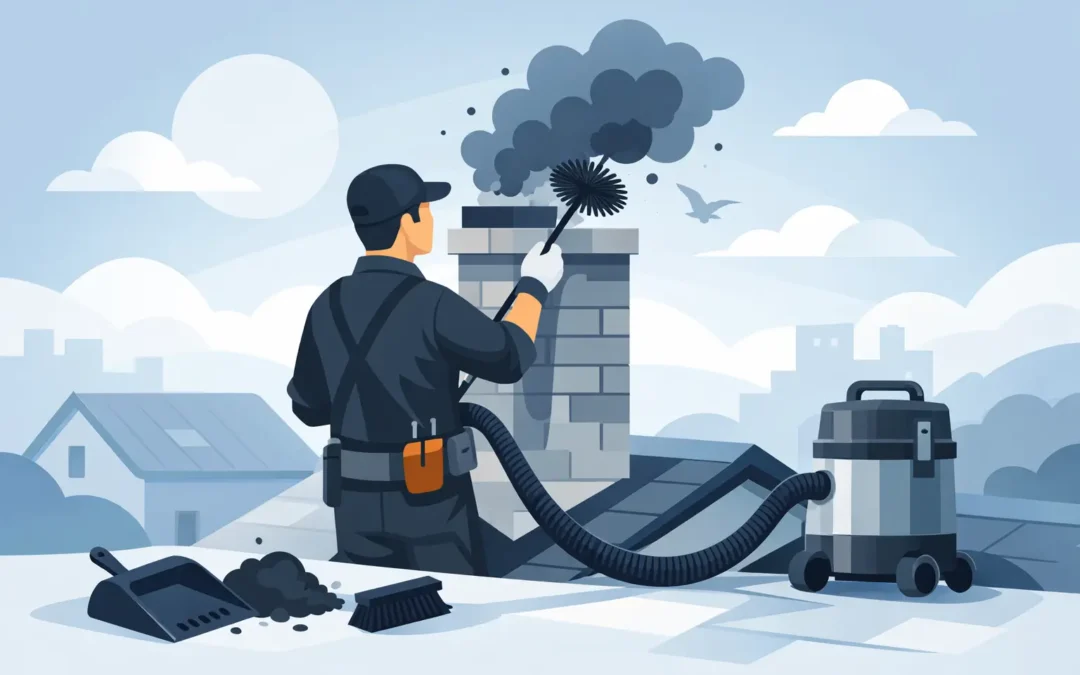
A black soot mark across the carpet is what many homeowners picture when they book a sweep. So, is chimney sweeping messy? It should not be. A properly carried out chimney sweep is a clean, controlled job, with the fireplace or stove area protected and soot removed using the right equipment. There may be a little dust around an appliance when covers are removed, particularly in an older fireplace, but a professional should leave the room tidy.
The bigger concern is not a small amount of dust. It is what is left inside a chimney that has not been swept: soot, tar deposits, debris and, in some cases, a bird nest or other blockage. Regular sweeping is a sensible part of keeping a wood burner, multi-fuel stove or open fire safe to use.
Is chimney sweeping messy when done professionally?
The honest answer is that sweeping deals with a dirty part of your home. Soot is fine, black and easily transferred if it is not contained. However, the job does not involve simply brushing a chimney and hoping the debris stays put.
A trained chimney sweep prepares the work area before starting. For an open fireplace, this normally means placing protective sheets around the hearth and using a suitable vacuum to control soot as it falls. With a stove, the doors are kept closed where possible and the flue is swept through the appliance or from above, depending on the chimney system and access. The ashpan and surrounding area are handled carefully, then the stove is cleaned and checked before the visit is finished.
Modern sweeping equipment makes a real difference. Professional-grade vacuums are designed for fine soot and ash, while correctly sized rods and brushes clean the flue without forcing debris into the room. The aim is simple: keep the dirt where it belongs, remove it safely, and leave your living space ready to use.
No reputable sweep should promise that an old, neglected chimney will behave exactly like a regularly maintained one. Heavy deposits, loose rubble, a failed liner or a blocked flue can create extra work. In those cases, the sweep should explain what they have found, take suitable precautions and discuss the next step rather than making a mess and moving on.
What can make a chimney sweep seem messy?
Most concerns come from one of a few common situations. A fireplace that has been unused for years may contain a large build-up of soot, old nesting material or bits of mortar. An open fire with no closing doors offers less containment than a sealed stove. Very fine ash can also be disturbed if the appliance has been emptied shortly before the appointment.
Occasionally, the issue is not sweeping at all. A stove or fireplace may be leaking smoke or soot into the room because of poor draw, an incorrectly fitted flue, damaged seals or a blockage. These faults need investigating. Sweeping can remove deposits, but it cannot cure every smoke problem on its own.
Bird nests are another example. They can contain twigs, feathers, mud and other material that should be removed carefully. If there is evidence of an active nest, the work may need to wait until it is legally and safely appropriate to proceed. A chimney cowl can often help prevent repeat problems once the flue is clear.
For homes with a wood-burning or multi-fuel stove, the fuel used matters too. Burning damp wood, treated timber, household rubbish or unsuitable fuels produces more deposits and can make both the appliance and chimney dirtier. Properly seasoned or suitably dry wood helps the fire burn more cleanly and reduces the amount of soot and tar that forms in the flue.
What a clean chimney sweep visit looks like
You should expect a clear, workmanlike process rather than a rushed job. The sweep will first look at the appliance, hearth and visible parts of the flue system. This can reveal obvious concerns such as cracked rope seals, loose firebricks, a damaged register plate or signs of staining around the stove.
The immediate area is then protected before cleaning begins. Brushes are selected to suit the flue size and type, whether it is a traditional brick chimney, a lined flue or a twin wall system. The flue is swept to remove soot and combustible deposits, with debris collected using appropriate equipment.
Afterwards, the fireplace or stove is checked and the working area is vacuumed and cleared. You should be told if there are problems that need attention, rather than being left to guess from a vague comment about the chimney being “a bit dirty”. Where a fault is suspected further up the flue, a CCTV chimney inspection may be the sensible next step. It can help identify damaged liners, obstructions or construction issues without unnecessary guesswork.
A professional sweep will also provide evidence that the chimney has been serviced, usually in the form of a certificate or service record. Keep this with your stove paperwork and household documents. It is useful for your own maintenance records and may be requested by an insurer following a chimney fire.
How to prepare your room before the sweep arrives
You do not need to wrap your whole lounge in plastic. A few simple steps make access easier and help protect belongings near the hearth.
Move ornaments, candles, logs, baskets and anything delicate away from the fireplace or stove. Clear a route from the door to the appliance, especially if the room has pale flooring or a large rug. If you have a stove, allow it to go completely cold before the appointment. Do not light it the night before if there is any chance it will still be warm.
It also helps to mention anything unusual when booking. Perhaps the fire smokes when the wind is in a certain direction, there is a smell after rain, or you have heard movement in the chimney. These details can point to a downdraft issue, water ingress, a nest or another fault that needs more than routine sweeping.
There is no need to empty every trace of ash unless you have been asked to do so. In fact, ash is best left undisturbed immediately before the visit, as it can become airborne when handled. Your sweep can remove it in a controlled way as part of the work.
How often should you have your chimney swept?
How often depends on the appliance, the fuel and how frequently you use it. A chimney serving a wood burner or multi-fuel stove that is used regularly through autumn and winter will usually need sweeping at least once a year. Some households benefit from more frequent visits, particularly where the fire is used most days or the fuel quality is inconsistent.
Open fires can produce plenty of soot and should not be overlooked simply because they are used only occasionally. Gas and oil appliances have different servicing requirements, but their flues still need suitable checks by the right qualified professional.
A sweep is also a good opportunity to spot maintenance issues before they become disruptive or expensive. Staining on a chimney breast, poor draw, crumbling flaunching, a loose cowl or deterioration in a liner can all affect how safely and efficiently the system works. Dealing with a small issue early is generally far easier than responding after smoke enters the room or a flue becomes blocked.
Choosing a sweep you can trust
The cleanest visit starts with choosing someone who treats chimney sweeping as safety work, not just a quick brush-through. Ask whether they are properly trained, what equipment they use to contain soot, and whether they can advise on faults they find. If your home has a stove, a liner or a more complex flue arrangement, it is particularly useful to use a provider with the knowledge to diagnose and carry out related work.
Thurnby Chimney Sweeps provides sweeping, inspections and practical chimney and stove support for homeowners across Leicestershire. The focus is on straightforward advice, careful workmanship and leaving your home as tidy as possible.
A chimney sweep does not need to turn your sitting room into a building site. Clear the area around the hearth, choose a qualified professional and raise any concerns before the visit. You can then enjoy your fire with far greater confidence, knowing the flue has been properly checked and cleaned.