
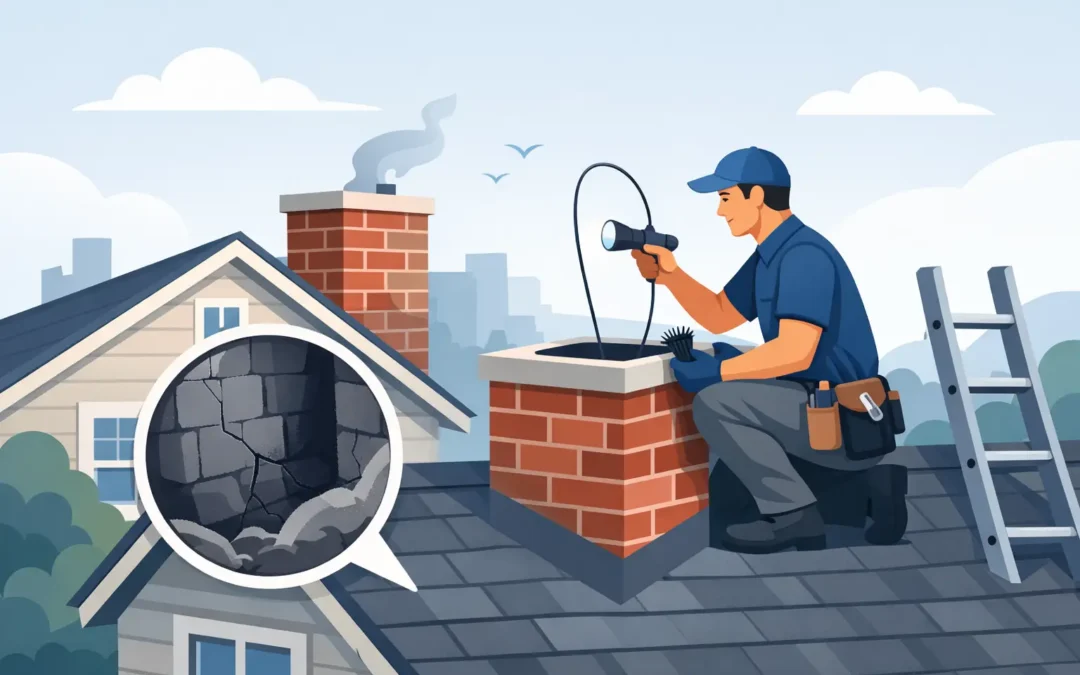
If you have ever lit your stove and wondered whether everything inside the chimney is actually safe, you are not overthinking it. Do I need a chimney inspection is a question many homeowners ask only after they notice smoke backing up, a strange smell, bits of debris in the hearth, or a change in how the fire burns. By that point, a small issue can already be turning into a bigger one.
A chimney inspection is not only for obvious faults. In many homes, the flue can look fine from the fireplace opening while problems sit higher up, out of sight. Cracked liners, soot build-up, bird nests, loose masonry, tar deposits and poor draw are not always visible without proper checks. That is why inspections matter – they help catch faults early, before they affect safety, performance or repair costs.
Do I need a chimney inspection if I already have it swept?
Quite often, yes. Sweeping and inspection are linked, but they are not the same thing.
A chimney sweep removes soot, creosote and other deposits from the flue. That is essential routine maintenance for open fires, wood burners and multi-fuel stoves. An inspection goes further. It is about the condition of the chimney system itself, including whether the flue is sound, whether there are blockages or damage, and whether the appliance is venting properly.
In simple terms, sweeping cleans the chimney. Inspection checks whether it is safe and working as it should.
For many households, regular sweeping is enough most of the time, especially if the chimney is performing properly and there are no warning signs. But there are situations where an inspection is the sensible next step rather than just another sweep.
When a chimney inspection is usually worth having
The most common time to book an inspection is when something has changed. If your fire or stove is not drawing properly, if smoke spills into the room, or if you notice a stronger smell from the fireplace, that points to a problem worth investigating. The issue might be a partial blockage, a damaged liner, a nesting bird, or a draught problem caused by the top of the chimney.
Another key time is after moving into a new property. Many homeowners inherit a fireplace or stove with very little paperwork and no clear idea when it was last serviced. In that case, an inspection gives you a proper starting point. It is a practical way to confirm the flue is suitable to use rather than relying on guesswork.
If you are reopening an old fireplace, fitting a stove, changing fuel type or relining a chimney, inspection also makes sense. What worked years ago for one appliance may not be suitable for another. Older chimneys in particular can hide defects that only show up once they are checked properly.
Storm damage is another reason. Heavy weather can dislodge pots, cowls and masonry, and debris can end up inside the flue. If your chimney has taken a battering, or you can see damage outside, it is worth having it assessed before continued use.
Signs your chimney may need checking sooner rather than later
Some problems are subtle, and others are more obvious. If smoke enters the room when lighting or refuelling a stove, that is a warning sign. The same goes for poor fire performance, slow ignition, excessive soot, or black staining around the appliance opening.
You might also hear birds in the chimney, notice falling debris in the fireplace, or detect a damp, tarry smell, especially in warmer weather. In some homes, staining on internal chimney breasts or damp patches higher up the stack can point to defects that need attention.
Not every symptom means major damage. Sometimes the fix is straightforward. But it is better to find out properly than keep using the appliance and hope the issue clears itself.
What happens during a chimney inspection?
That depends on the type of inspection needed and the symptoms involved. In some cases, a visual check alongside sweeping is enough to confirm the chimney is in good order. In others, a CCTV chimney inspection is the better option because it allows the flue interior to be seen in detail.
A proper inspection may look at soot and tar build-up, the condition of the flue liner, signs of cracking or leakage, obstructions, bird nest material, joints, bends and any narrowing within the flue. It can also help identify why a chimney is not drawing correctly, especially if the issue is not obvious from outside.
For homeowners, the value is simple. You get a clearer picture of what is actually happening inside the chimney, rather than a best guess based on surface signs.
Do all chimneys need the same level of inspection?
No, and that is where honest advice matters.
A regularly maintained chimney used in the normal way may not need an in-depth camera inspection every year. If it is swept on schedule, burning correctly and showing no signs of trouble, routine maintenance may be enough. On the other hand, an older chimney, a recently purchased property, or a flue with ongoing smoke issues may need a closer look.
There is also a difference between fuel types. Wood-burning and multi-fuel systems can produce deposits that build up over time, especially if the fuel is poor quality or not properly seasoned. Open fires can also create heavy soot. Gas appliances have their own inspection requirements and should be dealt with by the right qualified professional.
So when people ask, do I need a chimney inspection, the honest answer is: sometimes yes, sometimes not immediately, but certain situations should not be ignored.
Why inspections matter for safety, not just maintenance
Most people think of chimney work as general upkeep, like servicing a boiler or clearing gutters. But the risks are more serious than that.
A blocked or damaged flue can increase the chance of chimney fires. It can also lead to fumes and carbon monoxide not venting as they should. If a liner is cracked or the flue has deteriorated, heat and gases may travel where they should not. In the worst cases, that puts both the property and the people in it at risk.
That does not mean every chimney problem is an emergency. Plenty of faults are caught early and sorted before they become dangerous. But this is exactly why inspections are worthwhile – they give you the chance to deal with issues while they are still manageable.
Inspection versus repair – knowing the difference
Some homeowners worry that booking an inspection means signing up for expensive work. A reputable chimney professional should tell you plainly what is needed, what can wait, and what is not worth doing.
Sometimes the result of an inspection is simply reassurance. Sometimes it confirms the need for a sweep, a cowl, a bird guard, some flaunching repairs, a liner repair, or further work to solve downdraft. The point is not to create work. It is to get the diagnosis right first.
That is especially important when symptoms overlap. Smoke problems can come from blockage, poor fuel, a badly sized liner, air supply issues, weather conditions or terminal problems at the top of the stack. Without proper checks, it is easy to treat the wrong fault.
What should homeowners in older properties bear in mind?
Across Leicestershire, many homes have older chimney stacks and flues that have seen decades of use, alteration or neglect. Some have had fireplaces closed off and reopened. Others have had different appliances connected over the years. That history matters.
Older chimneys are often the ones that benefit most from a proper inspection because hidden wear is common. A flue may have no liner, an old liner may be failing, or the stack may have defects that affect performance in wet or windy conditions. If you live in a period property or know the chimney has had a patchy maintenance history, it is sensible to be more cautious.
At Thurnby Chimney Sweeps, this is why inspections are treated as part of good advice rather than a one-size-fits-all add-on. Some chimneys just need regular sweeping. Others need a closer look so the right work is done once, instead of guessing and paying twice.
So, do I need a chimney inspection?
If your chimney is used regularly, has developed any new issue, has not been checked in a long time, or comes with an unknown history, an inspection is often a wise move. If it is performing well and kept on a proper sweeping schedule, you may not need anything more than routine maintenance right away.
The key is not to wait for a serious problem. Chimneys rarely fail without giving some sort of clue first. A smell, a poor draw, smoke in the room, debris in the grate – these are all signs worth acting on.
If you are unsure, get it checked by someone qualified who can give you a straight answer. Peace of mind is useful, but knowing your chimney is safe to use is better.