
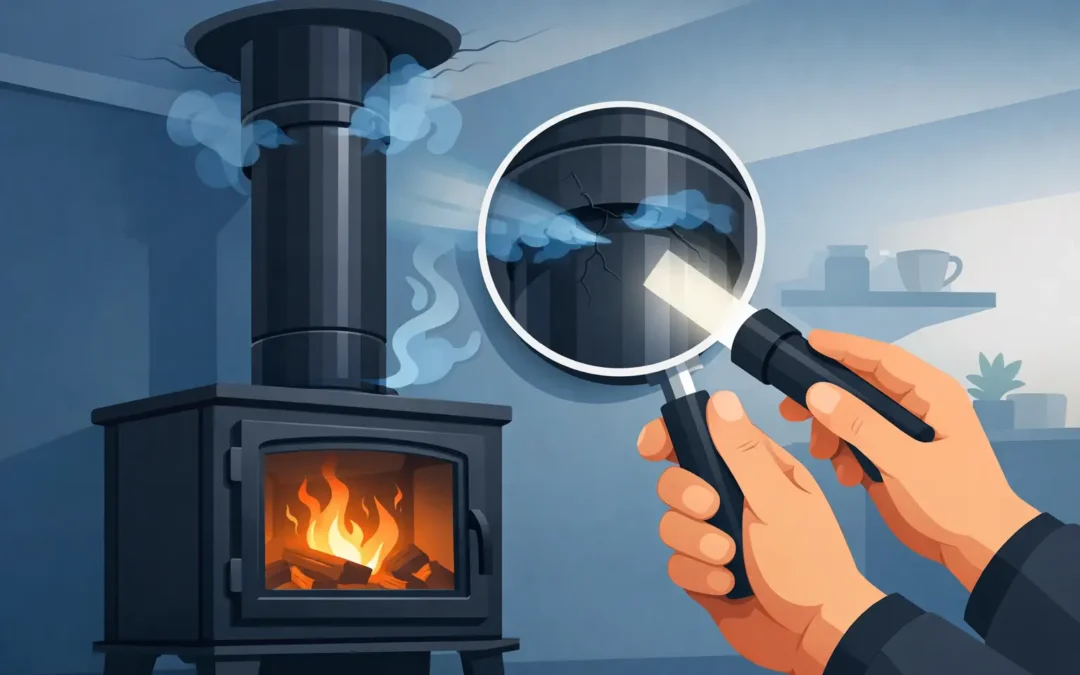
A flue leak is not always dramatic. You may only notice a faint smoky smell when lighting the stove, a dark mark near a flue joint, or an occasional puff of smoke into the room. Knowing how to identify flue leaks early can help protect your household from smoke, soot and potentially dangerous combustion gases.
With any wood burner, multi-fuel stove or open fire, the flue must carry fumes safely from the appliance to the outside. If there is a fault in the flue system, do not assume it will sort itself out after the next fire. Stop using the appliance until the cause has been checked.
What is a flue leak?
A flue leak is a gap, crack, failed seal or damaged section that allows smoke and flue gases to escape before they reach the chimney pot or terminal. It may occur at the connection between a stove and the flue pipe, at the register plate above an open fireplace, within a chimney stack, or in a flexible liner hidden inside the chimney.
Not every flue fault pushes smoke into the room. Where a chimney is under negative pressure, a small leak can draw cold air into the flue instead. This can weaken the draw, make the appliance harder to light and encourage soot or tar deposits. That is why a visual check alone cannot rule out a problem.
Signs that may point to a flue leak
Smoke or fumes in the room
Visible smoke escaping around the stove collar, flue-pipe joints, fireplace opening or register plate needs attention. It is most often noticed when first lighting a cold appliance, when refuelling, or if the fire is burning slowly.
A small amount of smoke can also be caused by a cold chimney, poor lighting technique, a blocked flue, a bird nest, insufficient ventilation or downdraught. The cause matters, but the immediate advice is the same: do not continue using an appliance that is spilling smoke into the room.
Soot marks, staining or residue
Look for fresh black or brown staining around flue-pipe joins, behind the stove, on the ceiling above a fireplace, or around a chimney breast. Soot deposits around a joint can indicate that smoke is escaping there.
On a twin-wall flue, signs of discolouration, leaking tar-like residue or a joint that appears to have moved should be investigated promptly. Tar and creosote are particularly common where wood has been burned damp, the appliance has been run too slowly, or the flue is not getting hot enough. They are combustible deposits as well as a sign that the system may not be operating as it should.
Persistent smoky or tar-like smells
A flue should not leave your living room smelling of smoke after normal use. A slight smell when a stove is new, after a long period unused, or when lighting an open fire can happen, but persistent odours are different.
A sharp smoky smell during use may indicate fume spillage or a leaking joint. A stale, tarry smell when the appliance is cold can point to deposits within the chimney, moisture in the flue, or a liner and chimney issue. It is worth arranging an inspection rather than masking the smell with air freshener.
Poor draw and difficult lighting
If smoke repeatedly comes back into the room when lighting the fire, the flue may not be drawing properly. You might find that the fire struggles unless a window is open, burns sluggishly, or sends smoke into the room whenever the door is opened.
This does not automatically mean there is a leak. Blockages, cold air in the chimney, extractor fans, a poorly positioned cowl and local wind conditions can all affect draw. However, an air leak in the flue or a damaged liner can be part of the problem, so it needs proper diagnosis.
A carbon monoxide alarm sounding
Carbon monoxide has no colour, smell or taste. You cannot identify it by looking for smoke or relying on how the room smells. A carbon monoxide alarm is therefore an essential safety measure for any room with a solid-fuel appliance.
If your carbon monoxide alarm sounds, treat it as real. Move everyone outside into fresh air, call the emergency services if anyone feels unwell, and do not use the appliance again until it has been checked. Symptoms of carbon monoxide exposure can include headache, dizziness, nausea, tiredness, confusion and breathlessness.
A carbon monoxide alarm is not a substitute for sweeping, maintenance or inspection. Fit one in accordance with the manufacturer’s instructions, check it regularly and replace it by its expiry date.
Where flue leaks commonly develop
The section of pipe you can see between a stove and chimney is a sensible place to start. Check whether joints look loose, corroded or poorly sealed, but do this only when the appliance is completely cold. Never touch a hot flue pipe.
Other faults are less obvious. A damaged register plate can allow fumes and soot into the room above a fireplace. Cracks in a chimney breast, failed mortar around the stack, or a deteriorating clay liner may cause issues further up the system. Flexible liners can also fail over time through corrosion, incorrect installation, chimney fire damage or unsuitable fuel use.
External signs may include staining on masonry, loose chimney pots, damaged flaunching or water getting into the chimney. Water and flue deposits make a poor combination: moisture can accelerate corrosion and lead to unpleasant odours indoors.
Safe checks you can make at home
You can carry out a basic observation check, but avoid DIY smoke testing, dismantling flue sections or trying to seal a suspected leak while guessing at the cause. A stove and chimney work as one system. A quick repair in the wrong place can hide a fault without making the installation safe.
When the appliance is cold, look for visible gaps, loose screws, corrosion, soot streaks and staining. Note when smoke or smells occur: only at lighting, during windy weather, when an extractor fan is running, or after refuelling. Those details help a sweep identify whether the issue is a leak, downdraught, ventilation problem or blockage.
Keep the appliance door seals, baffle and firebricks in good condition too. A failed door rope seal will not normally be a flue leak, but it can alter how the stove burns and make flue performance harder to judge.
When to stop using the appliance immediately
Stop using your stove, fire or boiler if smoke is entering the room, a carbon monoxide alarm sounds, you see a damaged or separated flue joint, or anyone in the property develops possible carbon monoxide symptoms. Ventilate the property if it is safe to do so and get outside into fresh air where there is any concern about fumes.
Do not relight the appliance simply to see whether the problem has gone away. Solid-fuel appliances can continue producing harmful gases even when the fire appears to be low. A professional inspection is the safer next step.
How a professional inspection finds the cause
A qualified chimney professional will examine the appliance connection, flue pipe, chimney and terminal, then assess whether the system is drawing correctly. The inspection may include a smoke test, checks for escaping fumes, and a CCTV chimney inspection where the suspected fault is inside the stack or liner.
This approach matters because similar symptoms can have different causes. For example, smoke at the stove door may be caused by a partial blockage rather than a leak. A recurring smoky room on windy days may need a solution for downdraught, while residue at a flue joint may require the joint to be refitted or the flue section replaced.
Sweeping is often part of the process, especially if soot or tar deposits are affecting the draw. But a sweep should not be used as a substitute for repairing a damaged liner, cracked flue pipe or faulty chimney structure.
Preventing flue problems
Use properly seasoned wood with a moisture content of 20% or below, follow your appliance manufacturer’s operating guidance, and avoid slumbering a stove for long periods. Burning wet wood or unsuitable fuel creates more soot and tar, increasing the chance of blockages and corrosion.
Have the chimney swept at suitable intervals for the fuel and amount of use, and arrange maintenance when you notice a change in performance rather than waiting for the next annual visit. After a chimney fire, storm damage or a suspected bird nest, do not use the appliance until the flue has been assessed.
For homeowners across Leicestershire, Thurnby Chimney Sweeps can inspect, sweep and diagnose chimney and flue concerns with practical advice on the repair or maintenance needed. A small soot mark or occasional smoky smell may have a straightforward cause, but acting early is the best way to keep a minor fault from becoming a safety issue.