
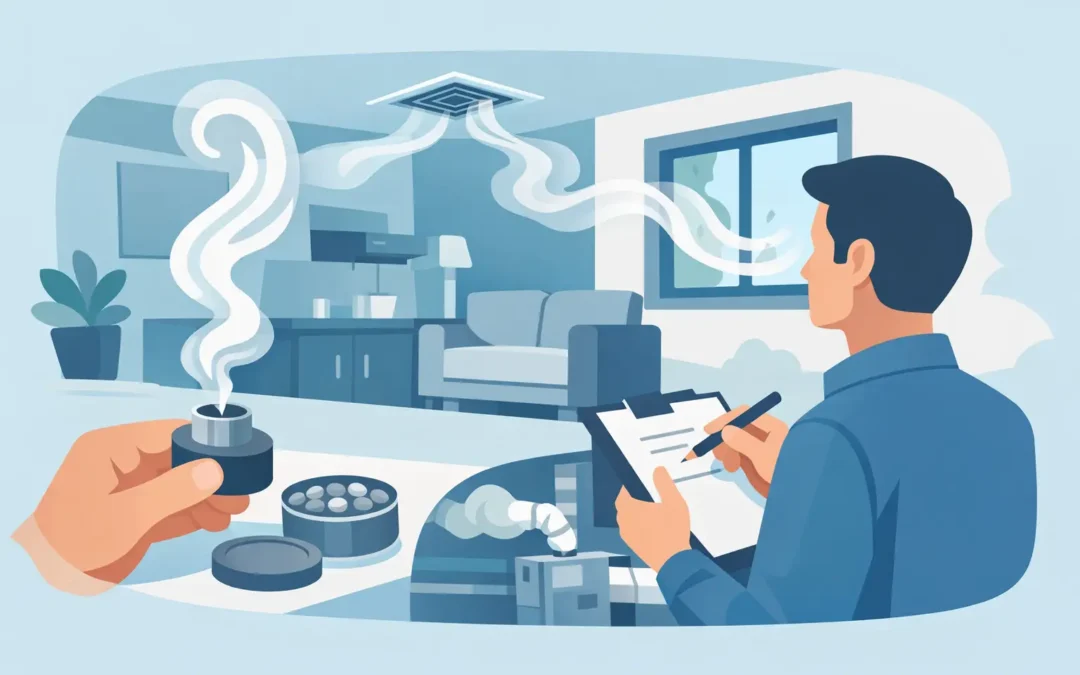
A stove that sends smoke into the room, a fireplace that struggles to get going, or a cold draught from the hearth can all point to a flue problem. A guide to smoke pellet testing helps explain what this simple diagnostic check can show, but also where a professional inspection is the safer option.
Smoke pellets are a useful way of making otherwise invisible air movement visible. Used correctly, they can help identify poor chimney draw, leaks around a flue, or air being pulled in from an unexpected direction. They do not replace chimney sweeping, servicing or a full flue inspection, but they can provide a valuable clue when something is not working as it should.
What is smoke pellet testing?
A smoke pellet is a small, controlled smoke-producing pellet used to trace the movement of air. Once lit, it gives off a dense, visible smoke for a short period. In chimney and stove work, that smoke can show whether the flue is drawing upwards, whether fumes are escaping into an unsuitable area, and whether a room has enough replacement air.
There are different smoke tests for different jobs. A simple test may be used to assess whether a chimney has a basic upward draw before lighting a fire. A more detailed test can help check the condition and route of a flue, including whether smoke is escaping through cracks, joints or a neighbouring chimney pot.
The result is not always straightforward. Chimneys are affected by wind direction, outside temperature, the height of the property, nearby buildings and how warm the flue is. A chimney that appears slow to draw on a mild, still day may perform very differently once it has warmed up. Equally, a flue that draws well at first can still have faults that need attention.
When a smoke test is useful
Smoke pellet testing is commonly considered when there is a recurring smoke or draught issue. You may notice smoke spilling from a wood burner when the door is opened, smells from the chimney when the stove is not in use, or a fire that is difficult to light and keep burning.
It can also be useful after building work, a new stove installation, chimney lining work or the fitting of an extractor fan. Modern homes can be more airtight than older properties, particularly after new windows, doors or insulation have been fitted. That can reduce the natural supply of air a solid fuel appliance needs to operate safely.
A test can help investigate:
- smoke entering the room when a stove or open fire is lit
- poor draw or downdraught at the fireplace opening
- suspected leaks from a flue or chimney breast
- smoke appearing from another fireplace or chimney pot
- the effect of kitchen, bathroom or utility extractor fans
- possible air supply and ventilation problems
If you have recently found a bird nest, fallen debris or signs of damp in the chimney, arrange for the flue to be checked and swept first. Testing a blocked or heavily sooted chimney is not a sensible shortcut.
How chimney smoke pellet testing works
For a basic draw check, the appliance should be cold and unlit, the flue clear, and any stove controls set as required for the test. The pellet is placed in a suitable non-combustible container or on an appropriate surface within the fireplace or stove. Once it is producing smoke, the tester watches where the smoke travels.
With a healthy draw, smoke should move up the flue rather than linger in the room. On a cold chimney, some smoke may initially hesitate or spill before the air in the flue begins to warm. This is one reason a result should be interpreted carefully rather than judged in the first few seconds.
For tests intended to check the flue itself, a professional may seal the fireplace opening and observe the chimney from outside, including the chimney stack and adjoining flues. This can reveal smoke escaping where it should not. It is more involved than a homeowner’s simple draw check and requires proper preparation, safe access and experience of how chimney systems are constructed.
Never use a smoke pellet while a fire or stove is burning. Do not leave one unattended, and do not assume that visible smoke is harmless simply because it is from a test pellet. Keep children and pets away, ventilate the room afterwards and follow the manufacturer’s instructions for the particular product.
What the smoke can tell you
The most encouraging result is a clear, consistent movement of smoke upwards through the flue, with no smoke entering the room or appearing from elsewhere in the property. Even then, it only confirms what happened under those particular conditions. It does not prove that a chimney is clean, correctly lined or suitable for every appliance.
Smoke spilling back into the room may indicate a cold flue, a blockage, inadequate air supply or a downdraught issue. It can also happen when an extractor fan is running nearby and is drawing air from the room faster than it can be replaced. Try switching off kitchen and bathroom extractors during a diagnostic check. If the behaviour changes, ventilation needs further investigation.
Smoke emerging from a crack in the chimney breast, loft space, cupboard, another fireplace or a neighbouring flue should be treated seriously. Stop using the appliance until the cause has been properly assessed. Leaks can allow combustion gases, including carbon monoxide, to enter parts of the home where they may not be noticed.
Smoke returning down the chimney from the pot can point to wind-related downdraught. The shape and position of the chimney, surrounding roofs, tall trees and nearby buildings can all influence this. In some cases, a suitable chimney cowl can help, but fitting a cowl without identifying the cause may not solve the problem. The wrong type can even restrict performance.
The limits of a DIY smoke pellet test
A carefully carried out basic test can be useful for spotting an obvious draw problem. It is not, however, a certificate of safety or a substitute for professional work. Chimneys often hide faults that cannot be seen from the fireplace opening, including damaged liners, failed mortar joints, internal obstructions and poor connections around a stove flue pipe.
A camera inspection is often a better next step where results are unclear or a fault is suspected. CCTV chimney inspection allows the inside of the flue to be viewed directly, helping identify deposits, nesting material, cracks, offset sections and lining issues. It avoids guesswork and helps ensure the correct repair is recommended.
There is also a difference between smoke testing an open fireplace and assessing a sealed stove installation. A stove system includes the appliance, flue pipe, register plate, liner or twin wall system, chimney terminal and room ventilation. Each part needs to be correct. A smoke pellet may highlight a symptom, but it cannot confirm that all installation requirements have been met.
Safety checks to make before using your appliance
If a smoke test has raised concerns, do not keep lighting the stove in the hope that it will improve. A chimney with poor draw can fill a room with smoke, while an unseen leak can create a carbon monoxide risk.
Make sure you have a working carbon monoxide alarm in the same room as any solid fuel appliance. Test it regularly and replace it in line with the manufacturer’s instructions. An alarm is not a replacement for maintenance, but it is an essential last line of warning.
Your chimney should also be swept at an appropriate interval for the fuel you burn and the amount the appliance is used. Wood, coal, smokeless fuels and pellets leave different residues, and heavily used stoves may need more frequent attention. A sweep can assess soot and creosote build-up, remove accessible blockages and flag concerns before they become more costly repairs.
When to call a chimney professional
Arrange a professional check if smoke enters the room repeatedly, you smell fumes when the appliance is not in use, or you see staining around the fireplace or chimney breast. The same applies if a carbon monoxide alarm activates, even if the alarm later stops sounding. Leave the property if you feel unwell or suspect carbon monoxide, and seek urgent advice.
For homeowners across Leicestershire, a qualified chimney professional can combine smoke testing with sweeping, CCTV inspection and a practical assessment of ventilation, cowls, liners and the appliance itself. That matters because the cause of a smoke problem is not always where the smoke first appears.
A smoke pellet can reveal that your chimney needs attention. Acting on that result promptly is what helps keep your home warm, safe and ready for the next fire.