
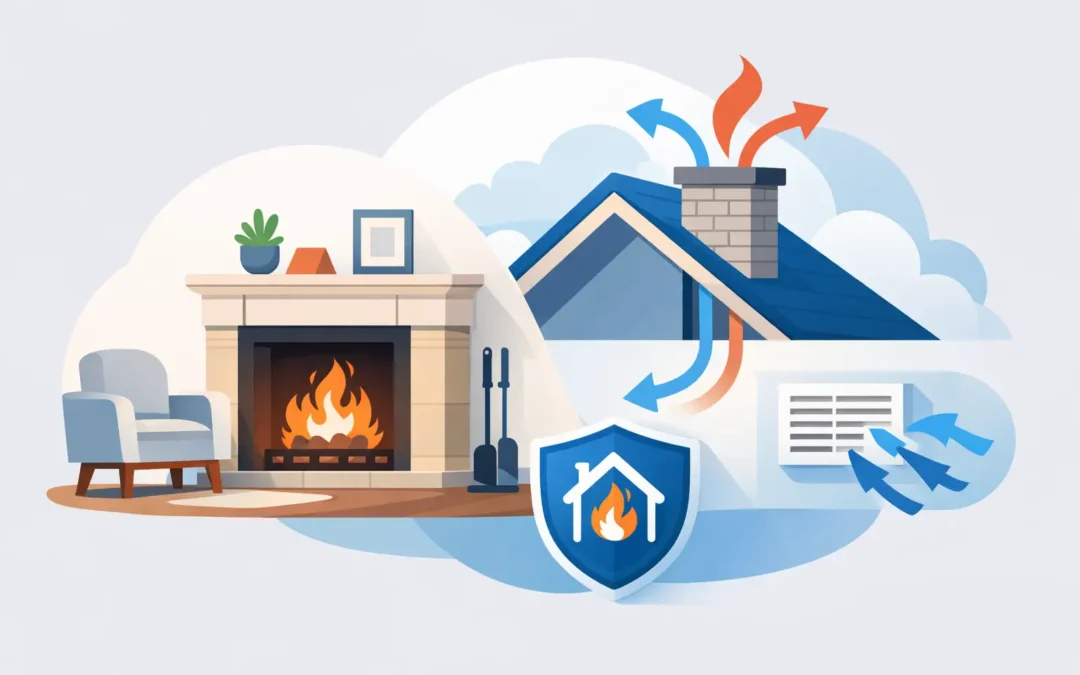
A fire that burns well should not fill the room with smoke, leave you feeling light-headed or make the house smell of fumes. Those are not minor annoyances to put up with. They can point to a ventilation or flue problem that needs sorting before the appliance is used again. This guide to fireplace ventilation safety explains what your fire needs to operate safely, what can interfere with it and when to call in a professional.
How fireplace ventilation keeps your home safe
Every open fire, wood burner and multi-fuel stove needs a reliable supply of air. Fuel needs oxygen to burn properly, while the chimney or flue needs to carry combustion gases safely outdoors. If either part of that process is compromised, smoke and carbon monoxide can be drawn back into the room.
Ventilation is not simply about opening a window when the fire is lit. A correctly designed system takes account of the appliance, the size and airtightness of the property, the flue height and route, and other equipment in the home. A newer, well-insulated property may need a permanent air vent where an older, draughtier house does not. This is particularly relevant when fitting a stove, replacing windows or carrying out insulation work.
A vent can feel cold in winter, but it should never be blocked, covered or stuffed with paper to stop a draught. That airflow may be essential to safe combustion. If it is making the room uncomfortably cold, ask a qualified installer to assess whether the vent and appliance arrangement are suitable rather than altering it yourself.
Combustion air and the flue do different jobs
It helps to separate two things that are often confused. Combustion air comes into the room or directly to some appliances so the fuel can burn. The flue takes smoke, soot, moisture and combustion gases away. Both must work properly.
A clear flue cannot make up for a lack of air, and a wall vent cannot make a blocked chimney safe. Poor draw, cold air, a partial blockage or an unsuitable flue design can all cause fumes to spill back into the property, even where an air vent is present.
Signs your fireplace may not be ventilating properly
Smoke entering the room when you light the fire is one of the clearest warning signs. A little smoke can occur while an open fire is being started, especially if the chimney is cold, but persistent smoke is not normal. Do not assume the problem will disappear once the fire gets hotter.
Look out for these other signs as well:
- A strong smoky smell in the room, even after the fire has gone out
- Black staining around the fireplace opening, stove door or air vent
- A fire that struggles to stay alight despite dry, suitable fuel
- Excessive soot, tar deposits or repeated blackening of stove glass
- A carbon monoxide alarm sounding, or anyone developing headache, dizziness, nausea or unusual tiredness
Downdraught can also be an issue, particularly in exposed locations or where nearby buildings, trees or rooflines disturb airflow around the chimney pot. It can be intermittent, which makes it tempting to ignore. A proper assessment may identify a need for flue repairs, a suitable cowl or changes to the chimney system. Fitting any cowl without diagnosing the cause first can make the problem worse.
Blockages can quickly become a ventilation problem
A chimney is not automatically clear because it was fine last season. Soot and creosote build up with use, and solid fuel deposits can narrow the flue over time. Bird nests, leaves, loose masonry and debris from damaged flaunching can obstruct it as well.
Bird activity is particularly common outside the main heating season. Never light a fire if you suspect a nest or blockage in the chimney. Apart from the fire risk, smoke and carbon monoxide may have nowhere safe to go. A sweep and, where needed, a CCTV chimney inspection can show what is happening inside a flue that cannot be checked from the fireplace alone.
Burning wet wood makes matters worse. Damp fuel produces more smoke and tar, which encourages deposits in the flue and reduces efficient combustion. Use properly seasoned wood with a moisture content of 20% or less, store it under cover with good airflow, and avoid burning household waste, painted timber or treated wood.
Carbon monoxide alarms are a second line of defence
Carbon monoxide has no smell, taste or colour. You cannot rely on noticing fumes before it becomes dangerous. A carbon monoxide alarm is essential in a room with a solid fuel appliance, but it is an alarm, not a cure for a ventilation fault.
Choose an alarm that meets the relevant British and European standard, install it in line with the manufacturer’s instructions and test it regularly. The exact location matters. It should be close enough to detect a problem but not positioned where normal appliance operation, steam or draughts could affect it. A professional installer can advise during a stove installation or service.
If the alarm sounds, move everyone outside into fresh air if it is safe to do so, call the emergency services or the appropriate gas emergency service where relevant, and do not use the appliance again until the cause has been investigated. Do not silence an alarm and relight the fire because the room seems clear.
Extractor fans and sealed homes need extra thought
Kitchen extractor hoods, bathroom fans, tumble dryers and whole-house ventilation systems can all affect air pressure inside a property. When they pull air out, they may compete with an open fire or stove for replacement air. In some homes, this can cause smoke to spill into the room or reduce the draw in the flue.
This does not mean you must never use an extractor fan. It means the appliance and ventilation need to be considered together. The risk depends on how airtight the house is, the output of the appliance, the type of flue and the strength of the extraction. Testing the stove with extract fans running is a sensible part of commissioning work.
Room-sealed appliances with an external air supply can reduce some of these issues, but they still need to be correctly selected and installed. Building Regulations, including the requirements around combustion appliances and ventilation, apply to this work. A registered installer can make sure the installation is appropriate for the property rather than relying on a one-size-fits-all solution.
Maintain the whole system, not just the hearth
Safe ventilation starts with regular chimney sweeping, but a sweep is also an opportunity to spot faults before they become a bigger job. Cracked liners, damaged brickwork, poor connections, loose pots and deteriorating flaunching can all affect how a chimney performs.
Have solid fuel appliances and their flues swept at a frequency that reflects how often they are used, the fuel being burned and the manufacturer’s guidance. A frequently used wood burner may need more attention than a fireplace used only on occasional winter evenings. Keep any sweeping or servicing records too. They are useful for your own maintenance planning and may be requested by an insurer.
Stoves also need routine care. Door seals, glass rope, baffles and internal firebricks wear out. If a stove is drawing too much air through worn seals, it can burn hotter than intended. If its air controls or flue connections are faulty, the appliance may not perform safely or efficiently.
For homeowners across Leicestershire, Thurnby Chimney Sweeps can assess the full picture, from routine sweeping and nest removal to CCTV inspections, cowls, liners and stove-related flue work. The right fix should be based on the fault found, not guesswork.
When to stop using the fireplace
Stop using the appliance straight away if smoke is entering the room repeatedly, you suspect a blockage, there is visible damage to the flue or chimney, or a carbon monoxide alarm activates. Let the fire go out safely. Do not pour water into a stove or fireplace unless there is an immediate fire emergency and you have been advised to do so, as sudden cooling can damage components and create further hazards.
If there is a chimney fire, call 999, get everyone out of the property and do not use the appliance again until the chimney has been inspected. A chimney fire can damage a liner or masonry even when it appears to have been contained.
A fireplace should add warmth and comfort to your home, not uncertainty. Keep vents clear, burn suitable fuel, take warning signs seriously and arrange qualified help before a small draw issue turns into a safety risk.