
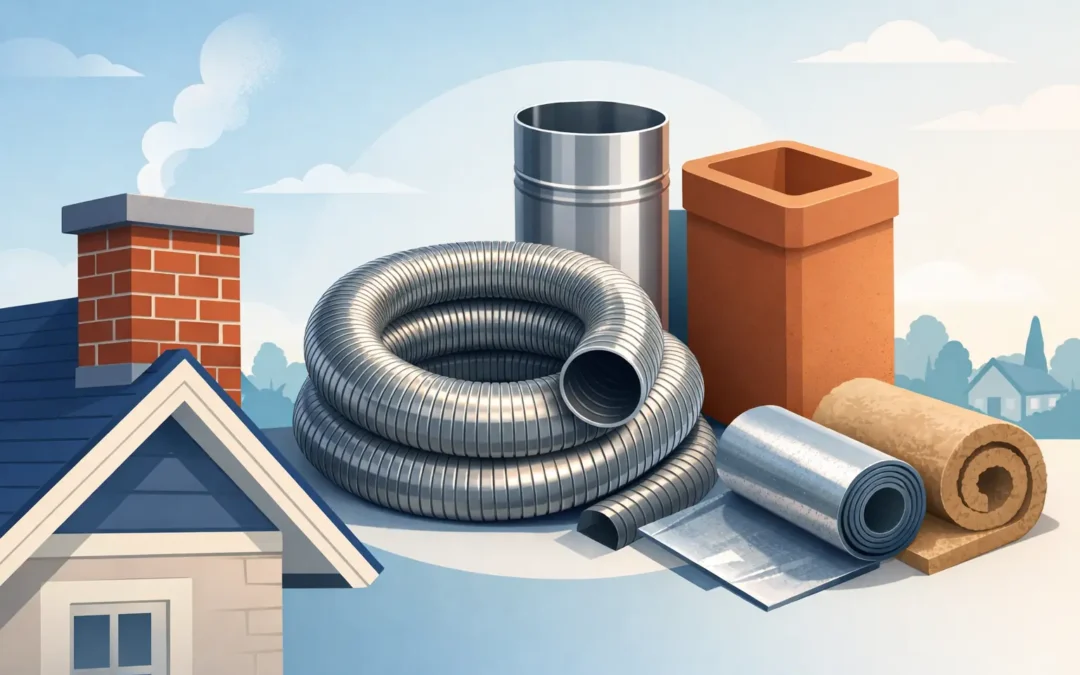
A chimney can look sound from the outside while the flue inside is cracked, oversized or no longer suitable for the stove connected to it. This guide to chimney liner materials explains the main options in plain English, so you can understand what is being proposed for your home and why.
A liner is not simply a tube pushed down a chimney. It is a safety-critical part of the whole appliance system. The right material, diameter, insulation and installation method help smoke and combustion gases leave the property properly, reduce the chance of tar build-up and protect the chimney structure. The wrong choice can lead to poor draw, smoke entering the room, premature corrosion or a liner that does not meet the demands of the fuel being burned.
Why a chimney may need lining
Older properties across Leicestershire often have chimneys built for open fires, not modern wood-burning or multi-fuel stoves. Their original clay or brick flues may be rough, too large for the appliance, damaged by age, or affected by years of soot and condensation.
A CCTV chimney inspection is the sensible starting point where there is any doubt. It can show cracks, missing mortar, changes in the flue route, ledges that collect debris, and evidence of previous liners. A sweep alone cannot always reveal the condition of the full flue length.
Lining may be recommended when fitting a new stove, following a chimney fire, where a flue is leaking smoke, or when the existing flue cannot be confirmed as suitable. It is not automatically required for every chimney, but it should never be treated as an optional extra when the inspection shows a fault.
Guide to chimney liner materials: the main choices
The best liner depends on the appliance, fuel, chimney shape and condition, access, and budget. A reputable installer will assess the full system rather than selecting the cheapest material by default.
Flexible stainless steel liners
Flexible stainless steel is the material most homeowners encounter when a stove is being fitted into an existing masonry chimney. It comes as a corrugated liner that can be lowered down a chimney with bends and slight offsets, making it practical for many period properties.
For wood-burning and multi-fuel appliances, a twin-skin stainless steel liner is generally the appropriate choice. The two common grades are 316L and 904L. Both are corrosion-resistant stainless steels, but they are not interchangeable in every situation.
A 316L liner is commonly used for dry, seasoned wood. It can be a sound, cost-effective option where the fuel quality is reliable and the appliance is used correctly. A 904L liner offers greater resistance to corrosion and is usually the better choice for multi-fuel use, coal-based smokeless fuels, or households where the fuel may vary. These fuels can produce more corrosive deposits, particularly if the stove is run slowly or the chimney is allowed to cool too much.
The trade-off is cost. A 904L liner costs more, but choosing a lower grade where it is unsuitable can be false economy. The liner may fail long before the rest of the installation should need attention.
Flexible liners have a limited service life, even when they are good quality and correctly fitted. Burning wet wood, leaving ash and deposits to build up, or allowing rainwater into the chimney will shorten that life. Regular sweeping and using dry wood with a moisture content of 20% or below are part of looking after the liner, not separate jobs.
Rigid stainless steel flue systems
Rigid stainless steel sections are most often used where there is no usable masonry chimney, such as a new stove installation in an extension, a property conversion or a room with an external flue route. They may also be used to repair or reline certain accessible sections of a chimney.
A twin-wall insulated stainless steel system keeps flue gases warmer than a single-wall pipe. This improves draw and reduces condensation, while allowing the required clearances from combustible materials to be maintained. It is purpose-made as a complete system, with matching components for bends, brackets, terminals and weather protection.
Rigid systems are usually more visible than a liner concealed within a chimney stack. That can affect the appearance of the outside of a property, especially in conservation-sensitive areas. However, they can be the safest and most practical answer where an existing chimney is unsuitable or absent.
Pumice liners
Pumice is a lightweight volcanic material used to create insulated chimney liner systems. Pumice liners are typically installed as interlocking sections within a new chimney construction, rather than dropped down an old, winding flue like a flexible stainless liner.
Their key advantage is insulation. A well-built pumice chimney warms quickly, encourages a good draw and can reduce condensation within the flue. Pumice also copes well with the high temperatures associated with solid fuel appliances.
This option is often considered for new builds, major renovations or chimney rebuilds. It is less likely to be the straightforward answer for an existing house with a narrow, irregular chimney, because installation can involve substantial building work. The initial cost may be higher, but it can offer a durable, well-performing chimney where the project allows for it.
Ceramic and clay liners
Clay and ceramic liners have been used in chimney construction for many years. You may find them in newer masonry chimneys or as the original liner within an existing stack. When they are correctly installed, intact and suitable for the appliance, they can provide a long-lasting flue route.
The difficulty comes with condition and continuity. Clay sections can crack, joints can fail, and older installations may not have been designed for the higher flue gas temperatures or smaller flue sizes associated with a modern stove. A camera survey is needed before relying on an existing clay-lined chimney.
Ceramic systems can be a good choice in purpose-built chimneys, but they are not usually the easiest retrofit option. If a ceramic liner has failed inside an existing stack, installing a flexible stainless steel liner is often more practical than trying to replace individual sections.
Cast-in-situ liners
A cast-in-situ liner is created by pouring or pumping a specialist insulating material around a former or inflatable tube inside the chimney. Once cured, it forms a new flue passage and can stabilise a weak chimney internally.
This can be useful where the chimney is badly deteriorated, unusually shaped or too large for a conventional liner. It is specialist work and requires careful assessment. The finished flue must be correctly sized for the appliance, and the installer needs to be confident that the chimney can accommodate the process.
Cast-in-situ systems are not the cheapest route, but they may avoid major rebuilding work in the right property. They are best judged on a case-by-case basis after inspection, rather than sold as a standard solution.
Material is only one part of a safe installation
Even the right liner material can perform poorly if the diameter is wrong, the chimney pot is not properly sealed, or the appliance does not receive enough combustion air. The liner must suit the stove manufacturer’s instructions and the relevant installation requirements. Reducing a flue size without proper calculation can restrict the draw; leaving it too large can let gases cool too quickly and encourage tar deposits.
Insulation around a flexible liner can also be considered in some chimneys. It can help keep flue gases warm and improve performance, particularly where the chimney runs on an outside wall or is large and cold. It is not needed in every installation, and it must be selected and fitted correctly so it does not create problems elsewhere in the stack.
The top and bottom of the system matter too. A proper closure plate, suitable register plate, secure top fixing, rain protection where appropriate, and a correctly selected cowl all contribute to a clean, safe finish. Cowls can help with rain ingress, birds and some downdraft issues, but they are not a cure for an unsuitable flue or poor stove operation.
Questions to ask before agreeing to a liner
Before work starts, ask what material and grade are being specified, whether it is suitable for your intended fuel, and what diameter will be used. You should also understand how the chimney has been inspected, whether insulation is recommended, and how the liner will be supported and finished at the chimney pot.
Ask who will complete the installation and what certification applies. For solid fuel work, a HETAS-registered installer gives homeowners added reassurance that the installation has been carried out to the required standard and can be self-certified where applicable. Keep all paperwork, appliance instructions and installation details safely for future servicing, sweeping and house sales.
Looking after a lined chimney
A liner does not remove the need for regular chimney sweeping. Wood and multi-fuel stoves should normally be swept at least once a year, with more frequent sweeping sensible for heavy use, coal-based fuels or signs of tar. Your sweep can check the appliance, flue connection and visible liner condition while removing deposits.
Burning dry, untreated wood is one of the simplest ways to protect a stainless steel liner. Avoid household rubbish, painted timber, chipboard and wet logs. These create damaging deposits, excessive smoke and unnecessary risk.
If you notice smoke spillage, a new smell, poor draw, black liquid staining around the fireplace, bits of debris in the stove, or a change in how the appliance burns, stop using it and arrange an inspection. Small faults are far easier to deal with before they damage the liner or chimney further.
For homeowners choosing between liner materials, the safest answer is rarely the cheapest quote or the material a neighbour used. Start with a proper survey, match the liner to the appliance and fuel, and use a qualified installer who can explain the work clearly. That gives your stove the best chance of running efficiently and keeps the warmth in your home where it belongs.