
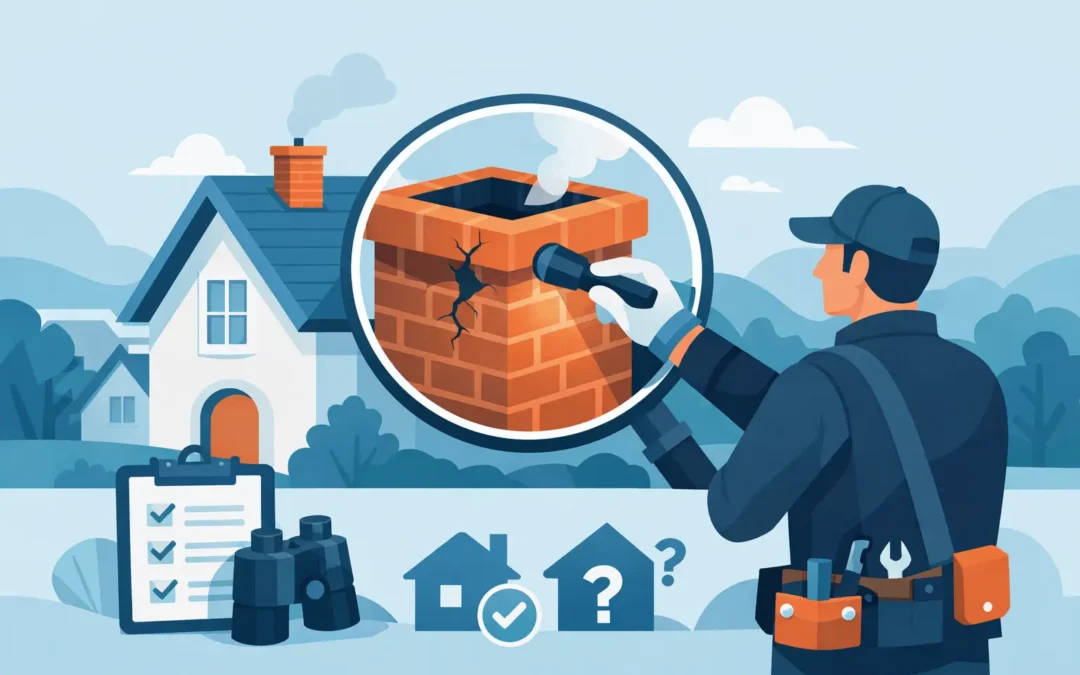
You can spot cracked plaster, tired pointing and even a damp patch during a viewing. What you usually cannot see is the condition inside the chimney. That is why a chimney inspection before buying house matters more than many buyers realise, especially if the property has an open fire, wood burner, multi-fuel stove or an older flue that has not been checked in years.
A standard home survey may mention the chimney stack or note visible defects, but it rarely tells you whether the flue is sound, whether the liner has failed, or whether a bird nest is blocking the passage. Those are the sorts of faults that turn up only when the appliance is used – and by then, the house is already yours.
Why a chimney inspection before buying house is worth it
For many buyers, the chimney gets treated as part of the character of the property. It looks charming in the sitting room, and the stack seems fine from the pavement, so it slips down the priority list. The problem is that chimneys and flues are working parts of the home. If they are damaged, blocked or poorly installed, they can create fire risk, smoke problems and carbon monoxide concerns.
A proper inspection can also help with budgeting. If the flue needs lining, the pot is unstable, the appliance has been fitted incorrectly, or the stack has suffered years of water ingress, you are no longer guessing. You have a clearer picture of likely repair costs before exchange.
That matters even more in older properties around Leicestershire, where original chimneys may have been altered several times over the years. One owner may have used an open fire, another may have fitted a stove, and someone else may have sealed part of the system without leaving any clear record. On paper it is one chimney. In practice, it can be a patchwork of old and newer work.
What a chimney inspection can actually reveal
The value of an inspection is not just in finding dramatic damage. More often, it identifies issues that would otherwise stay hidden until the first cold evening you light a fire.
A CCTV chimney inspection can show cracked or misaligned flue liners, heavy tar deposits, internal collapse, old nesting material, rubble in the flue, damp-related deterioration and restrictions that affect draw. It may also highlight whether the flue size is suitable for the appliance connected to it.
That last point is often overlooked. A stove may appear to be installed neatly, but appearance is not the same as correct performance. If the flue is the wrong size, leaking, or in poor condition, you may face smoke spillage, poor burning and expensive remedial work.
It also helps identify signs of neglected maintenance. If a chimney has not been swept properly, soot and creosote build-up can become a real hazard. If a property seller says the fire was “hardly ever used”, that may be true, but it does not automatically mean the flue is safe.
What your surveyor may miss
Surveyors do an important job, but chimney inspection is usually not their specialist area. A building survey can pick up leaning stacks, damaged pots, failing mortar joints and obvious weathering. It may recommend further investigation if something looks wrong. That is useful, but it is still different from a chimney specialist inspecting the flue system itself.
The inside of the chimney is where many of the costly or safety-critical faults sit. A camera inspection and a hands-on assessment from someone who works with chimneys every day will usually tell you far more than a visual note in a general survey report.
If the house has a stove, the inspection should also consider whether the appliance and flue arrangement look appropriate, whether there are signs of poor installation, and whether the system appears to comply with current expectations. Older installations are not always unsafe simply because they are old, but they do need checking properly rather than assumed sound.
When you should arrange the inspection
The best time is after your offer has been accepted but before you are fully committed. At that stage, you are far enough along to justify the cost of a specialist inspection, but early enough to use the findings in negotiations or repair planning.
If the property clearly has an active fireplace, stove or redundant chimney you may want to use later, do not leave it until after completion. Buyers sometimes assume they can sort it out once they move in. The risk there is simple – if the chimney needs lining, rebuilding work or major repairs, you are paying for that after the sale rather than factoring it in beforehand.
In some cases, the seller may not know the chimney’s condition either. That is common in inherited properties, rentals and homes where the fireplace has not been used for a long time. A specialist inspection helps replace guesswork with evidence.
Signs a chimney needs closer attention before purchase
Some properties deserve an even more cautious approach. If you notice staining around the breast, a strong smoky smell indoors, crumbling brickwork in the loft, loose pots, heavy tar around the fireplace opening or visible signs of previous patch repairs, it is sensible to investigate further.
The same applies if the seller cannot provide any history of chimney sweeping, liner installation or stove fitting. Missing paperwork does not always mean there is a problem, but it does mean you should not take the system on trust.
Older cottages, period terraces and houses with multiple flues often benefit most from a proper chimney check. The older and more altered the property, the more likely it is that hidden defects have built up over time.
What happens if problems are found
Not every issue should stop a purchase. Quite often, the inspection reveals manageable work rather than a deal-breaker. The key is understanding what type of issue you are dealing with.
A straightforward sweep, a cowl fitting or removal of a bird nest is very different from a failed liner or major structural deterioration. Some faults are routine maintenance. Others affect safety and may require more substantial remedial work before the chimney can be used.
This is where plain advice matters. A good chimney professional should tell you what is urgent, what can wait, and what the likely next steps are. That gives you something practical to work from, whether you want to renegotiate, request repairs, or simply budget for work after completion.
For example, if the stack is sound but the flue liner has reached the end of its life, you may still buy the property with confidence as long as the cost is understood. If the chimney has significant internal collapse or signs of long-term water damage affecting multiple areas, that may change the calculation.
Choosing the right person for the inspection
This is not a job for guesswork or vague reassurance. You want someone used to diagnosing chimney and flue faults properly, not someone who simply gives the fireplace a quick glance.
Look for a qualified, experienced local specialist who carries out CCTV chimney inspections and understands both maintenance and installation work. That matters because the best advice comes from someone who can recognise not just dirt or blockages, but also incorrect fitting, flue failure, downdraft issues and the early signs of larger problems.
For homeowners in this area, using a trusted local firm such as Thurnby Chimney Sweeps means dealing with people who understand the sort of properties found across Leicester and the surrounding towns and villages. That local experience can be useful when assessing older stacks, stove installations and flue arrangements that have evolved over decades.
Chimney inspection before buying house – a small cost against a big decision
Buying a property always involves a degree of compromise. You may accept that the kitchen needs updating or that the windows will need attention in a few years. A chimney is different because the risks are not just cosmetic. If it is unsafe, blocked or unsound, it can affect how you heat the home and whether you can use the fire or stove at all.
A specialist inspection will not tell you everything about the house, but it can tell you a great deal about one part of it that is often overlooked and expensive to put right later. For buyers who want fewer surprises, that is money well spent.
If the property has a chimney and you expect to use it, treat it as a working system, not a decorative feature. Getting it checked before you commit can save you from inheriting someone else’s problem and help you move in knowing where you stand.