
A brown stain spreading across the chimney breast, a musty smell after rain, or black liquid appearing around a stove pipe is not something to paint over and forget. Chimney condensation causes are often straightforward, but the damage can build quietly inside a flue before it becomes visible in the room. Getting to the source early protects the chimney, the stove and, most importantly, the safe passage of combustion gases out of your home.
What is chimney condensation?
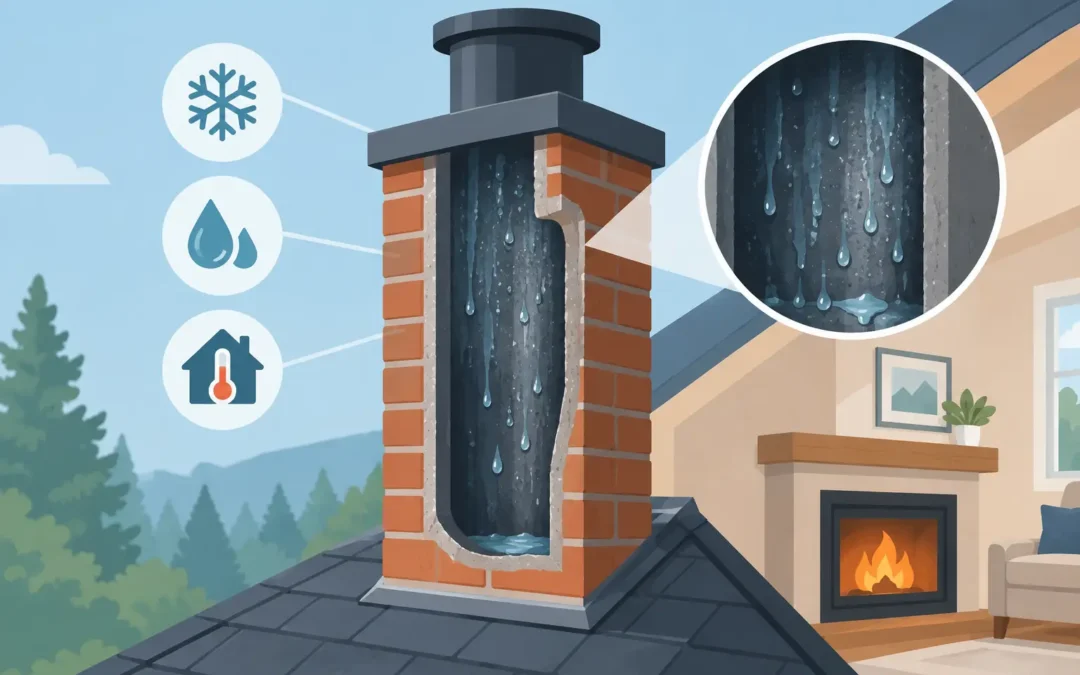
Condensation forms when warm, moisture-laden flue gases meet a cold surface and cool below their dew point. The water vapour then turns back into liquid on the inside of the flue. With solid fuel, that liquid is rarely clean water. It can mix with soot, tar and acidic deposits, creating brown or black staining and a sharp, smoky smell.
A small amount of moisture can occur while a cold appliance and chimney are warming up, particularly in winter. Persistent damp, dripping, staining or tar deposits are different. They point to a flue that is staying too cold, fuel that is too wet, an unsuitable installation, or water entering from outside.
The main chimney condensation causes
Burning wet or unseasoned wood
Wet logs are one of the most common causes. A large part of the heat from the fire is spent driving water out of the fuel rather than heating the room and warming the flue. That produces cooler, wetter exhaust gases which are far more likely to condense before they leave the chimney.
Logs should be properly seasoned and stored under cover with good airflow. For a stove, use wood with a moisture content of 20% or below. A simple moisture meter gives a much more reliable answer than judging a log by its appearance. Freshly cut timber, damp bags of logs and wood stored against a wet wall are all likely to cause trouble.
Wet fuel also encourages creosote and tar deposits. These restrict the flue, worsen the draught and increase chimney fire risk. In other words, the same problem can lead to condensation, poor stove performance and a harder-to-clean chimney.
A cold or oversized flue
A chimney needs to become warm enough to create a reliable upward pull. Older brick chimneys, external chimneys and large fireplace flues can take a long time to heat up. If a modern stove is connected to a flue that is too large for it, the gases may rise slowly and cool quickly against the broad, cold walls.
This is why lining can be the right solution in some properties. A correctly sized insulated liner helps gases travel upwards at the right temperature and improves draught. It is not a cure-all, though. The liner size, appliance output, chimney condition and installation details all need to be assessed properly. Fitting the wrong liner can create a different set of problems.
Twin-wall flue systems also need suitable insulation and correct installation. A poorly planned external flue is especially prone to cooling too quickly in cold weather.
Running the stove too slowly
Slumbering a stove for long periods starves the fire of air. The fire burns less cleanly, flue gases are cooler and tar vapours have more chance to condense inside the flue. It may seem economical because the fuel lasts longer, but the saving can be lost through extra sweeping, staining and damage to components.
Most modern wood-burning and multi-fuel stoves are designed to burn efficiently with an active, clean flame. Follow the appliance manufacturer’s operating instructions and avoid repeatedly shutting the air controls right down overnight. If the room becomes too warm when the stove is run correctly, the appliance may be oversized for the space.
Rain entering at the top of the chimney
Not all chimney damp is condensation. A damaged pot, cracked flaunching, failed pointing, missing terminal or unsuitable cowl can allow rain straight into the flue. Water can then mix with soot deposits and run down the inside of the chimney, looking very similar to condensation.
A cowl may help keep out direct rain and can also be useful for certain downdraught problems. However, it must suit the appliance and flue arrangement. A poorly chosen or blocked cowl can reduce the flow of gases, so it should not be treated as a universal fix.
Blockages and poor ventilation
Bird nests, loose masonry, heavy soot build-up and debris can restrict a chimney. A restricted flue does not clear combustion gases effectively, allowing moisture and deposits to linger where they should not. Nesting materials are particularly common during the spring and should be dealt with professionally and at the appropriate time.
The stove also needs enough air to burn properly. Modern homes can be well sealed, and extractor fans, open fires or other appliances can affect air movement. If smoke spills into the room, a carbon monoxide alarm sounds, or the fire behaves differently when an extractor is running, stop using the appliance and seek advice. Do not try to solve a suspected ventilation or flue fault by simply opening a window and carrying on.
Signs the problem needs attention
Condensation is often first noticed indoors, but its cause may be at the top of the chimney or within a hidden section of flue. Arrange an inspection if you notice several of the following:
- Brown, yellow or black patches on the chimney breast or around the fireplace.
- Tar-like liquid or staining at stove joints, the register plate or the fireplace opening.
- A persistent smoky, sulphurous or damp odour, even when the stove is not lit.
- Drips, loose debris, poor draw or smoke entering the room.
- Damp worsening after rain, or returning soon after redecorating.
These symptoms do not all mean the same thing. Staining that becomes worse after heavy rain suggests water ingress, while tar around the stove pipe often points towards wet fuel, cool flue gases or slow burning. A proper inspection avoids expensive guesswork.
How the cause is properly diagnosed
A sweep is an essential starting point, but a stubborn condensation issue may need more than routine cleaning. The flue should be checked for soot and tar deposits, blockages, liner condition and signs of water entry. The appliance connection, closure plate, chimney pot, cowl and external masonry may also need examination.
CCTV chimney inspection is particularly useful where the issue cannot be seen from either end of the flue. It can reveal damaged liners, open joints, internal obstructions and areas where deposits are collecting. This matters because treating only the visible stain leaves the underlying fault untouched.
At Thurnby Chimney Sweeps, the practical approach is to identify whether the issue is fuel, use, chimney condition or installation, then recommend work that actually addresses it. Sometimes that means changing fuel storage and operating habits. In other cases, it may mean nest removal, repairs at chimney level, a suitable cowl, or lining work.
Preventing condensation after the repair
Once the cause has been dealt with, good day-to-day habits make a real difference. Burn dry, suitable fuel and establish the fire briskly so the flue warms promptly. Avoid keeping the appliance permanently on a low setting, and have the chimney swept at the appropriate interval for the fuel you use. Wood, smokeless fuel and mixed use can all produce different levels of deposits.
Keep an eye on the outside of the stack as well. Cracked flaunching, loose pots and failing mortar are easier and cheaper to address before water reaches the flue or chimney breast. If a stain is being redecorated, make sure the chimney has dried and the cause has been fixed first, otherwise it will simply return through the new finish.
A dry, clean chimney is not just better for the appearance of your home. It helps your stove burn as intended and gives you confidence that the flue is doing the job it was built for. If damp, staining or unusual smells are appearing around your fireplace, arranging a qualified inspection is the sensible next step.