
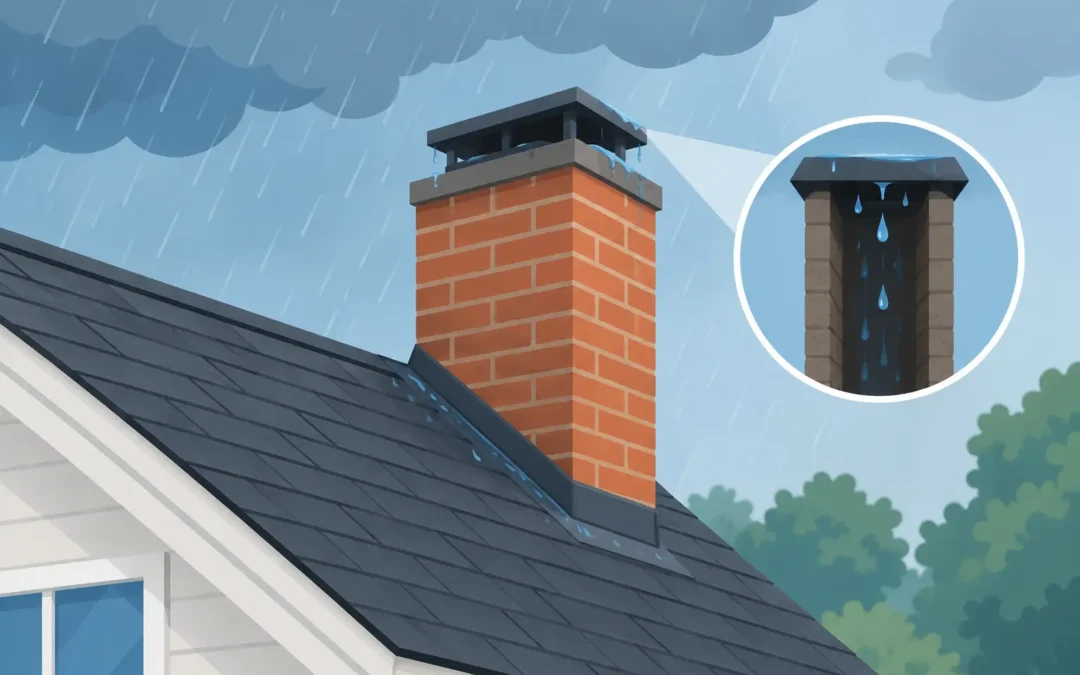
A shower passing over your roof should not leave a puddle in the fireplace or water running down the stove flue. Yet homeowners often ask, “can rain get down chimney?” The short answer is yes, a small amount can enter an open chimney pot, particularly in driving rain. What matters is whether that moisture can drain and evaporate harmlessly, or whether it is finding its way into the flue, fireplace or chimney breast in damaging amounts.
If you have noticed damp patches, a musty smell, staining around the fireplace, rust on your stove or water in the hearth, it is worth getting the cause checked rather than simply waiting for better weather.
Can rain get down a chimney and cause problems?
Traditional chimney pots are open at the top. They need to be open so smoke and combustion gases can leave the property safely. In ordinary rainfall, a little water may enter the pot and run down the inside of the flue. A sound chimney is designed to cope with this, and the moisture should not make its way into your room.
Problems begin when rain is being blown into the pot in volume, when the flue is damaged or blocked, or when water is getting in through the outside of the stack rather than down the chimney opening. Leicestershire weather can bring plenty of wind-driven rain, and exposed properties are more likely to show up weaknesses in chimney pots, mortar, leadwork and flaunching.
A lined chimney serving a wood burner or multi-fuel stove can also show rainwater more clearly. Water entering the liner may run down towards the appliance, causing corrosion, staining or a wet smell. This should not be ignored, especially if it happens repeatedly.
A little water or a chimney fault?
It is not always easy to tell where moisture is coming from. Condensation inside a flue can look very similar to rain ingress, particularly with an unused fireplace, a cold chimney stack or a stove that is only lit occasionally. Condensation is often worse when damp air meets a cold flue, while rain ingress commonly becomes obvious during or shortly after heavy weather.
Look at the pattern. Water appearing after strong rain from one direction may point to the chimney pot or a fault high on the stack. Damp that grows gradually, even in dry spells, may be caused by defective pointing, porous brickwork, cracked render, failed flashing or condensation. A CCTV chimney inspection can show the condition inside the flue and help separate one cause from another without guesswork.
You should arrange an inspection if you notice any of the following:
- water or debris collecting in the fireplace or stove;
- brown marks, bubbling paint or damp patches on the chimney breast;
- rusting stove components, a corroding register plate or a strong damp smell;
- loose mortar, cracked chimney pots or visible gaps around the base of the pot;
- smoke entering the room, reduced draw or a change in how your appliance burns.
The last point matters for safety. A wet or damaged flue can affect performance, but smoke problems can also indicate a blockage, a nest, poor ventilation or a downdraught issue. Do not keep using an appliance that is spilling smoke into the room. Have the flue checked first.
Common ways rain enters a chimney
Rain does not always come straight down the pot. In many cases, the visible damp indoors is caused by a defect around the chimney stack.
An uncovered or unsuitable chimney pot
An open pot will admit some rain. Where the chimney is exposed, the pot is too short, or the wind regularly drives rain directly into it, a suitable chimney cowl can reduce water entry while still allowing the flue to work properly. Some cowls also help with bird entry and downdraught.
The right type is important. A cowl must suit the appliance and fuel being used, and it must not restrict the safe discharge of flue gases. Completely sealing a live chimney is not a safe fix. The chimney needs to be assessed before anything is fitted.
Damaged flaunching, pots or mortar
Flaunching is the mortar bedding that holds chimney pots in place at the top of the stack. When it cracks or breaks away, water can get around the pot and into the chimney structure. Frost can make the damage worse over time, loosening mortar further and allowing more water in.
Cracked pots, open joints and failing brickwork can have the same result. These faults are often difficult to see safely from ground level, which is why a professional inspection is preferable to climbing onto the roof yourself.
Failed flashing or roof junctions
Lead flashing forms the weatherproof seal where the chimney meets the roof. If it has lifted, split or been poorly repaired, rain can track into the loft or down the chimney breast. This can be mistaken for water coming down the flue, but the repair required is different.
Water may also enter through damaged pointing or porous masonry on the stack. Older chimneys need materials that allow the brickwork to breathe. An unsuitable waterproof coating or hard cement repair can sometimes trap moisture and make a damp problem worse.
A blocked flue or bird nest
A clear flue gives any small amount of water a route to drain away. A nest, fallen debris, soot build-up or a damaged closure plate can stop that happening. Water can then pool above the blockage and leak out where it should not.
Bird nests are a regular issue in unused or unprotected chimneys. They must be dealt with carefully and at the appropriate time of year. Once the flue is clear, fitting a suitable guard or cowl may help prevent a repeat problem without compromising safe operation.
What you can check from inside the property
There are a few sensible checks a homeowner can make without going onto the roof. After rain, inspect the hearth, fireplace opening and the area around your stove for fresh water, staining or drips. Check whether the stove door seals, internal baffle and visible metalwork are showing unusual rust. If you have a carbon monoxide alarm, make sure it is working and within its replacement date.
Avoid putting your hand or tools far up an open fireplace, and do not attempt to sweep out a suspected nest yourself. Disturbing a blockage may send debris into the room, and it will not tell you whether the upper flue or chimney stack is sound.
For a stove installation, also look for signs around the register plate and flue pipe. A rust-coloured drip or moisture around a joint can indicate that water is travelling down from above. It may be a cowl, liner or chimney-stack issue, not necessarily a fault with the stove itself.
The right repair depends on the cause
There is no one-size-fits-all answer to rain entering a chimney. A cowl can be an effective solution for wind-driven rain and bird access, but it will not repair failed flashing. Repointing may protect an ageing stack, but it will not clear a blocked flue. A liner can improve the safe operation of a chimney used for a stove, but it must be correctly specified and installed for the appliance.
This is where an experienced chimney professional saves time and unnecessary expense. A visual check of the stack, combined with a sweep and CCTV inspection where needed, can identify whether the problem lies in the flue, the pot, the cowl, the chimney masonry or the roof junction. You can then repair the actual fault rather than treating the symptoms.
At Thurnby Chimney Sweeps, we see water-related chimney issues alongside nesting, downdraught and flue problems. Regular sweeping gives an opportunity to spot changes before they become a larger repair, particularly for households using wood burners through autumn and winter.
Protecting your chimney before the next wet spell
Annual chimney sweeping remains a sensible starting point for most solid fuel appliances, with the exact frequency depending on the fuel you burn and how often you use the stove or fire. It keeps the flue clear, helps identify blockages and provides a chance to check for signs of damp or liner deterioration.
If your chimney has been unused for some time, or you have just moved into a property, an inspection before lighting a fire is a wise precaution. A chimney can look fine in the room while hiding a nest, damaged liner or water ingress higher up.
Rain in an open chimney pot is not always a cause for alarm. Rainwater inside your home, persistent damp or changes in how your fire draws are different. Getting those signs checked early is usually the simplest way to keep your chimney safe, dry and ready to use when you need it.