
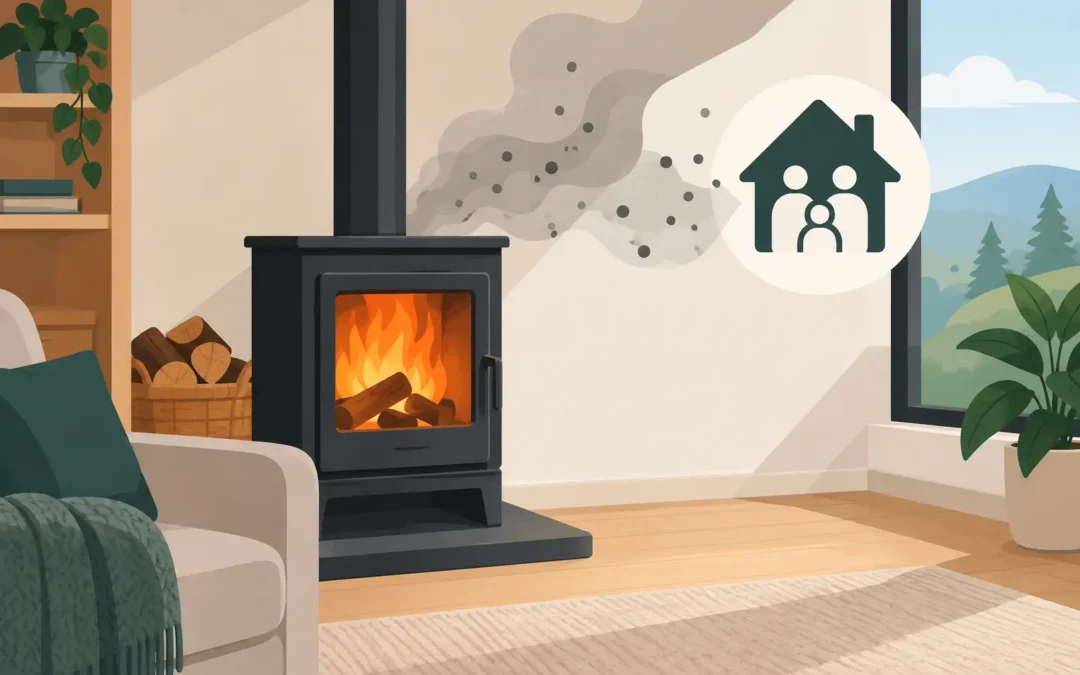
A wood burner can make a Leicestershire home feel warm and welcoming, but it is sensible to ask: are wood burner emissions harmful? The honest answer is yes, they can be – particularly when a stove is poorly installed, the wrong fuel is used, or the chimney and flue are not maintained. That does not mean every household needs to stop using its stove. It means burning wood properly and looking after the whole system matters.
A good stove, fitted correctly and used with dry fuel, produces far less pollution than an open fire or an appliance that is left to smoulder. Regular chimney sweeping also has a direct role to play. It helps the flue draw as it should, removes soot and deposits, and gives an opportunity to spot problems before they lead to smoke entering the room.
What comes out of a wood burner?
When wood burns, it releases gases and tiny particles. Some are an unavoidable part of combustion; others increase sharply when the fire is short of air, the logs are damp, or the appliance is not working as intended.
The main concern is fine particulate matter, often called PM2.5. These particles are so small that they can travel deep into the lungs. Wood smoke can also contain carbon monoxide, nitrogen oxides, volatile organic compounds and substances known as polycyclic aromatic hydrocarbons. The amount produced depends greatly on the stove, fuel, lighting method and chimney performance.
Most emissions should travel safely out through a sound, clear flue. However, smoke that spills back into the room, leaks from joints, or lingers because of poor draw is a different matter. You may notice it as a smoky smell, haze on the glass, black staining around the stove, or difficulty keeping the fire alight.
Are wood burner emissions harmful indoors?
Indoor exposure is the immediate concern for anyone using a stove. Briefly opening the door to refuel may release a little smoke, but repeated smoke escape is not something to put up with. A properly operating appliance should not fill the room with fumes or leave a persistent smoky smell indoors.
Fine particles can irritate the eyes, nose and throat and may aggravate breathing problems. People with asthma, chronic lung conditions or heart conditions can be more sensitive. Babies and young children are also more vulnerable because their lungs are still developing, while older people may be affected more easily too.
Carbon monoxide deserves particular attention because you cannot see or smell it. At higher levels, it can cause headaches, dizziness, nausea, confusion and, in serious cases, loss of consciousness. Every home with a solid fuel appliance should have a suitable carbon monoxide alarm fitted in line with the manufacturer’s instructions and current regulations. An alarm is a vital warning device, but it is not a substitute for a sound installation, regular servicing and chimney sweeping.
If your alarm sounds, leave the property, get fresh air and seek appropriate emergency advice. Do not relight the stove until the appliance and flue have been checked.
The condition of the chimney makes a real difference
A stove does not work in isolation. The flue provides the route for combustion gases to leave the property, and it needs to be the right size, correctly installed and kept clear. Soot build-up, a bird nest, a damaged liner, damp deposits or a partial blockage can all restrict the draw.
Poor draw often encourages people to open the stove door more often or run it with the air controls wide open. That may feel like a quick fix, but it does not solve the cause. In some homes, downdraught from the chimney position, nearby buildings or wind conditions is the real issue. In others, an oversized fireplace opening, unsuitable cowl or lack of adequate ventilation needs attention.
A professional sweep does more than remove soot. It should include checking the flue route and appliance connection for obvious defects, discussing any changes in how the stove is burning, and advising where further investigation is needed. CCTV chimney inspection can be particularly useful where there is a suspected obstruction, damaged liner or recurring smoke problem.
Why damp wood creates more smoke
The fuel you burn is one of the biggest factors in whether wood burner emissions are harmful in practice. Wet or unseasoned logs use a large part of the fire’s energy simply boiling off water. This lowers the fire temperature, creates more smoke and leaves heavier deposits in the flue.
For domestic wood burners, use properly seasoned or kiln-dried wood with a moisture content of 20% or less. Look for ready-to-burn wood from a reputable supplier, or check stored logs with a moisture meter after splitting a fresh face. Wood that has been left outside under a tarpaulin may look dry but still hold too much moisture inside.
Avoid burning household rubbish, treated timber, painted wood, old furniture, chipboard or MDF. These materials can give off harmful fumes and leave corrosive deposits in the stove and chimney. They are not a cheap alternative fuel – they are a safety and maintenance problem waiting to happen.
Burn cleanly, not slowly
Many avoidable emissions are caused by slumbering a fire overnight or turning the air supply down so far that the logs barely burn. A slow, smoky fire may make the fuel last longer, but it produces more particulates and tar than a bright, controlled burn.
Start the fire with plenty of dry kindling and small logs so the flue warms up quickly. The top-down lighting method can help establish a cleaner burn, with larger logs at the bottom and kindling on top. Once the stove is up to temperature, use the air controls as the manufacturer intends. Flames should be active, not struggling for oxygen.
It is also worth resisting the urge to overload the firebox. Add smaller amounts of fuel little and often enough to maintain a clean burn. When refuelling, open the air controls for a short time before opening the door, then open the door slowly. This reduces the chance of smoke rolling into the room.
Stove age and installation standards matter
Modern Ecodesign-compliant stoves are designed to burn more efficiently and produce lower particulate emissions than many older appliances. They are not emission-free, and they still need dry wood and the right operation. But replacing an old, inefficient stove can be worth considering where it is heavily used or repeatedly causes smoke issues.
Installation quality matters just as much. The correct hearth, clearances from combustible materials, suitable liner, terminal height and ventilation are all there for a reason. An appliance that is too large for the room may be run turned down too low. One that is too small may be pushed beyond its comfortable operating range. Both can lead to dirtier burning.
If you live in a Smoke Control Area, check the local requirements before using a stove or buying fuel. Rules can apply to the type of appliance and fuel you use, even in a property that already has a chimney.
When should you arrange a sweep or inspection?
As a general guide, a wood-burning stove should be swept at least once a year, and more often if it is your main source of heating or used most days through the colder months. The right interval can vary with the appliance, fuel and level of use.
Arrange a check sooner if you notice a change in performance. Warning signs include smoke entering the room, a strong tar smell, blackened glass much faster than usual, a carbon monoxide alarm sounding, debris falling into the fireplace, or birds nesting in the chimney. Do not assume these problems will clear themselves with the next fire.
At Thurnby Chimney Sweeps, we take a practical approach: keep the flue clean, identify the cause of poor draw or smoke escape, and recommend the work that is genuinely needed. For homeowners, that means clearer advice and fewer surprises.
A wood burner should give you dependable warmth, not leave you worrying about the air your family is breathing. Use dry fuel, burn it brightly, keep a working carbon monoxide alarm nearby, and have the chimney checked regularly. If something does not look, smell or perform as it should, stop using the appliance until it has been properly assessed.