
A wood burner should make a home feel warm, not leave you worrying about what may be coming back into the room. Carbon monoxide alarms are a simple but vital safeguard for any Leicestershire home with a stove, open fire, gas appliance, oil boiler or other fuel-burning appliance. They give an early warning of a dangerous gas that cannot be seen, smelt or tasted.
Carbon monoxide is produced when fuel does not burn completely. A blocked chimney, poorly maintained stove, damaged flue, inadequate ventilation or an appliance fault can all contribute. An alarm does not prevent those faults, but it can give you and your family time to get out and seek help.
Why carbon monoxide alarms matter in homes with chimneys
Carbon monoxide, often shortened to CO, is dangerous because it can build up without the usual signs people associate with a problem. You may not see smoke or notice an obvious smell. With solid fuel appliances, problems can develop slowly through soot deposits, bird nests, debris, deteriorating liners, poor draw or a change to the ventilation in the room.
A stove that has worked well for years is not automatically risk-free. New double glazing, blocked air vents, extractor fans, alterations to a fireplace or a chimney cowl issue can all affect how a flue performs. This is why an alarm belongs alongside regular sweeping, servicing and checks of the whole chimney system.
For newly installed solid fuel appliances, Building Regulations require a carbon monoxide alarm in the same room. Requirements can vary depending on the type of property and work being carried out, so your installer should make sure the installation is compliant. For existing appliances, fitting an alarm is still sensible safety practice, even where no new building work is involved.
Where should carbon monoxide alarms be fitted?
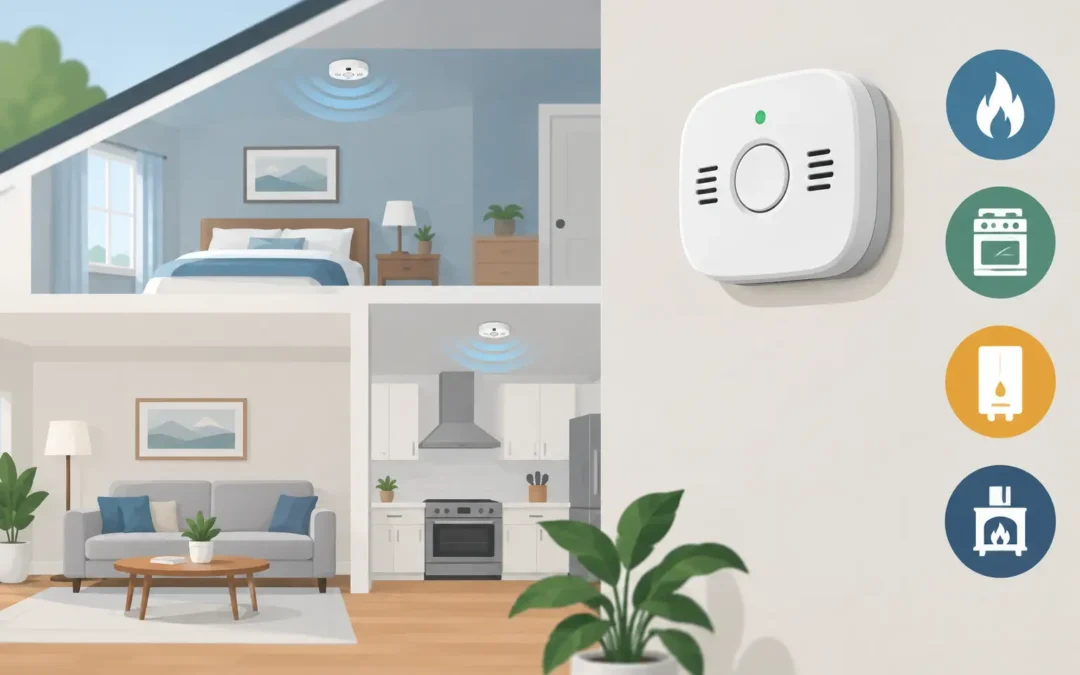
Always begin with the manufacturer’s instructions for the particular alarm. They take priority, as different models have specific siting requirements. As a general rule, fit an alarm in the same room as each fuel-burning appliance, such as a wood-burning stove, multi-fuel stove, open fire, gas fire or boiler.
For a solid fuel stove or fireplace, the alarm is normally positioned between one and three metres horizontally from the appliance. This keeps it close enough to detect a developing issue without placing it directly in the path of normal fumes when lighting or refuelling the fire. It should be easy to hear and easy to reach for testing.
Do not tuck an alarm into a corner, behind a curtain or inside a cupboard. Avoid placing it right next to an openable window, external door, extractor fan or air vent, where moving air may delay detection. Keep it away from areas of high humidity, such as bathrooms, and from very dusty or greasy locations. A kitchen may be suitable if it is the room with the appliance, but the exact position matters to reduce nuisance alarms.
Many homes also benefit from an alarm near sleeping areas, particularly where bedrooms are on a separate floor or a boiler is located close by. The aim is straightforward: if CO is present overnight, the alarm needs to be loud enough to wake the household. A single alarm in the hallway is not a substitute for an alarm in the room containing a stove or fire.
Ceiling or wall?
This depends on the model. Unlike smoke alarms, carbon monoxide alarms are not simply a case of putting one in the centre of every ceiling. Some can be fixed to a wall, while others can sit on a stable shelf or table. Follow the supplied instructions on height, clearance and orientation rather than relying on a rule you have heard elsewhere.
If you are having a stove installed, ask the installer to explain where the alarm should go before the job is finished. It is a small detail, but it is part of a safe, properly considered installation.
Choosing the right type of alarm
Look for an alarm intended for domestic carbon monoxide detection and marked to BS EN 50291. This standard is a useful check that the unit has been tested for home use. Avoid very old alarms, unbranded devices or products intended only for caravans, boats or industrial settings unless they are suitable for your property and application.
Battery-powered alarms are straightforward to fit and are useful where mains wiring would be impractical. Models with sealed long-life batteries remove the temptation to take the battery out and forget to replace it. Mains-powered alarms can be interconnected with other alarms in some properties, but they still require professional fitting and usually have battery backup.
The best choice depends on the layout of the home, the number of appliances and whether other alarm systems are already in place. What matters most is that the alarm is correctly positioned, maintained and within its working life. A cheap alarm fitted badly is less useful than a suitable alarm fitted as instructed.
Testing, replacing and looking after your alarm
Press the test button regularly, ideally once a month. This checks the sounder and power supply, although it does not prove that the sensor will respond to carbon monoxide. Keep the alarm free from dust and do not paint over it, cover it or spray cleaning products directly onto it.
Every carbon monoxide alarm has an end-of-life date. The sensor does not last forever, even if the alarm still beeps during a button test. Check the label or instructions for the replacement date, which is commonly between five and ten years from manufacture depending on the model. Replace the full unit when it reaches that date.
A chirp may mean a low battery, an end-of-life warning or a fault. Do not silence it and hope for the best. Check the manual, change the battery if the model allows it, and replace the unit where required. Never remove batteries simply because an alarm is inconvenient.
Know the signs of possible carbon monoxide exposure
An alarm is the main warning device, but people can feel unwell before they realise there is a problem. Possible symptoms include:
- headaches, dizziness or nausea
- unusual tiredness, confusion or weakness
- breathlessness or chest pain
- symptoms that ease when you leave the house and return when you go back inside
These symptoms can have other causes, so do not try to diagnose the situation yourself. If anyone feels seriously unwell, get into fresh air and seek urgent medical help. Tell medical professionals that carbon monoxide exposure may be involved.
What to do if a carbon monoxide alarm sounds
Treat a sounding alarm as real until a qualified person confirms otherwise. If it is safe to do so, open doors and windows on your way out, switch off fuel-burning appliances if you can do it quickly, and leave the property. Do not go back in just to investigate the stove, relight the fire or collect belongings.
Call 999 if someone has collapsed, is having severe symptoms or needs urgent medical attention. For a suspected gas emergency, contact the National Gas Emergency Service on 0800 111 999. For a solid fuel appliance, do not use the stove or fire again until the flue and appliance have been inspected by a competent professional.
It may turn out to be a faulty alarm, a low battery warning or a brief issue caused by fumes during lighting. Even then, it is worth finding the cause. A nuisance alarm is frustrating, but it can also point to poor placement, inadequate draw, a dirty flue or a problem with how the appliance is being used.
An alarm is not a replacement for chimney maintenance
Carbon monoxide alarms are one layer of protection. They work best alongside regular chimney sweeping, stove servicing and prompt attention to smoke coming into the room, staining around the fireplace, poor draw or changes in how the appliance burns.
The right sweeping frequency depends on the fuel you burn, how often you use the appliance and the condition of the flue. A chimney used heavily through winter may need more attention than an occasional open fire. CCTV inspection can be particularly useful where there is concern about a damaged liner, hidden blockage or bird nest.
At Thurnby Chimney Sweeps, we see first-hand that a clean, well-maintained flue and a correctly fitted alarm are a sensible combination. If your alarm has sounded, your stove is producing smoke indoors or you are unsure about the condition of your chimney, stop using the appliance until it has been checked. Peace of mind starts with taking the warning seriously.