
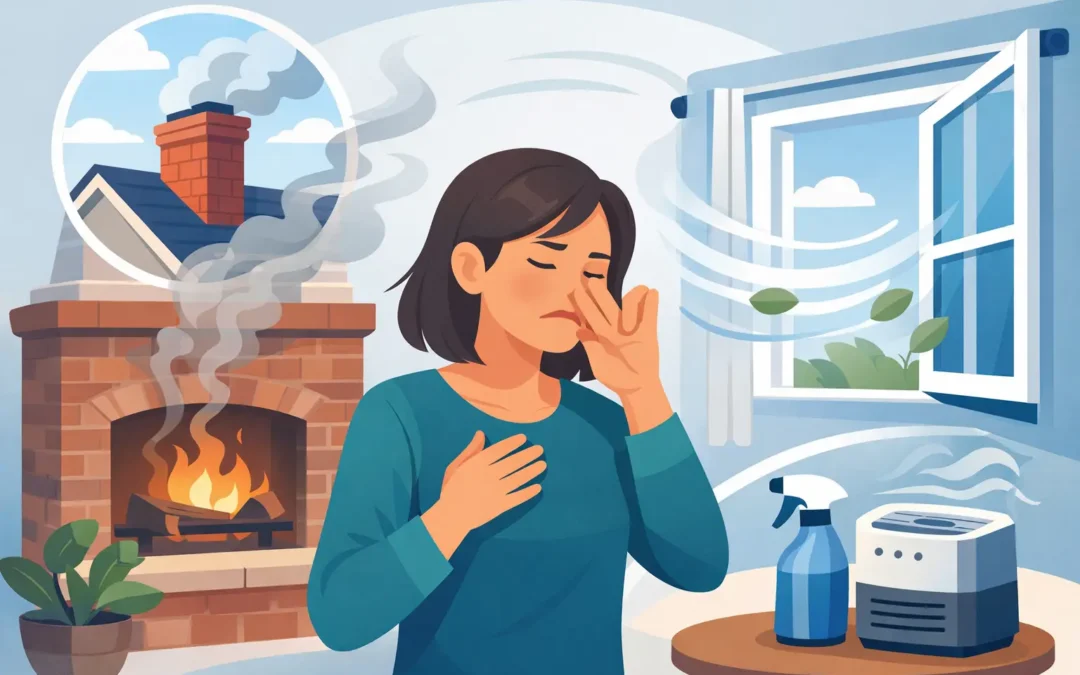
A cold fireplace can make the whole room smell stale, smoky or damp, particularly after rain or a spell of warm weather. If you are wondering how to remove chimney odours, the answer is rarely a scented candle or air freshener. The smell usually points to soot, moisture, poor airflow or a blockage within the chimney, and dealing with the cause is the safest way to put it right.
A chimney is designed to take combustion gases safely outside while a fire or stove is in use. When it is cold and unused, changes in air pressure can pull smells back into the room instead. That can be unpleasant, but it can also reveal a maintenance issue worth checking before you light the appliance again.
Why does a chimney smell?
Old soot is the most common source of chimney odours. Soot and tar deposits absorb moisture from the air, and that moisture brings out the familiar smell of ash, smoke or damp charcoal. Chimneys that have not been swept for some time are more likely to smell, especially if the fireplace is open or the stove door is left ajar.
Rain entering through a damaged chimney pot, failed flaunching or a missing or unsuitable cowl can make matters worse. Water mixing with soot leaves a sharp, musty smell and may eventually cause staining around the fireplace. A blocked or partly blocked flue can cause similar problems. Bird nests, loose debris and deteriorating liners restrict airflow and hold damp material in the chimney.
Sometimes the chimney itself is clean, but the house is drawing air down the flue. Extractor fans, tumble dryers, a powerful cooker hood and even a tightly sealed modern home can create negative pressure. Air then takes the easiest route into the property, which may be down the chimney and into the sitting room.
How to remove chimney odours safely
Start by working out whether the smell is coming from an open fireplace, a stove, or a redundant chimney. The right solution depends on the type of appliance and whether the flue is still in use.
Book a proper chimney sweep
For an active open fire, wood burner or multi-fuel stove, a professional sweep is usually the first and most effective step. Sweeping removes soot, ash, tar residue and loose debris that hold odours. It also gives the sweep an opportunity to identify signs of a nest, a damaged liner or excessive deposits that may need further attention.
Do not assume an occasional fire means the chimney can be left for years. Even light use can leave deposits, while an unused chimney may become a target for birds or collect damp. As a general rule, solid fuel appliances need regular sweeping, with the exact frequency depending on the fuel, appliance and how often it is used.
After the sweep, remove any old ash from the grate or stove. Ash is surprisingly good at retaining smells, particularly when it has absorbed humidity. Use a metal ash container with a lid and make sure all embers are completely cold before handling it.
Check the fireplace or stove seal
An open fireplace allows room air to move freely up and down the chimney, so a slight smell can return during certain weather conditions even after sweeping. A purpose-made chimney balloon or chimney draught excluder can help reduce cold air and odours when the fireplace is not being used. It must be removed before lighting a fire.
With a stove, check that the door closes correctly and that rope seals are in good condition. Worn door rope, damaged glass seals or poorly fitted flue connections can let odours into the room. Avoid blocking air vents that the appliance needs for safe combustion. A stove requires a suitable air supply, and closing vents to stop a smell can create a more serious problem.
If the stove is not used through the summer, leave it clean and empty, with ash removed. Some owners leave the air controls slightly open to allow gentle ventilation, but this depends on the appliance and the way the flue behaves. If you are unsure, ask a qualified stove engineer rather than making changes that affect ventilation.
Deal with damp at its source
A chimney that smells worse after rain needs closer attention. Look for obvious signs such as damp patches, staining on the chimney breast, crumbling mortar or water around the hearth. The issue could be a cracked pot, defective flashing, failing flaunching or rain being driven straight into an uncapped chimney.
A suitable cowl can reduce rain entry while still allowing the chimney to ventilate. However, cowls are not one-size-fits-all. The wrong type can restrict draught or fail to address a downdraught problem, so it is better to have the chimney assessed before fitting one.
Never seal an unused chimney completely at both ends. Moisture needs a route to escape. Redundant chimneys are normally capped or vented at the top and ventilated appropriately at the fireplace opening, helping to prevent condensation and the stale smell that follows.
Consider downdraught and room pressure
If the smell appears only when the wind is in a certain direction, or when an extractor fan is running, downdraught is a likely cause. The chimney may be catching wind over the roofline, or the room may be short of replacement air.
Try switching off kitchen and bathroom extractors briefly to see whether the smell changes. Do not treat this as a permanent fix, particularly if you have a solid fuel appliance. It is simply a useful clue. A professional can assess chimney height, terminal position, ventilation and whether a correctly selected anti-downdraught cowl could help.
When a smell needs more than a sweep
A sweep will resolve many chimney odours, but not every one. Persistent damp, a strong tar smell, debris falling into the fireplace, or a smell that returns quickly may call for a CCTV chimney inspection. A camera survey can show hidden nest material, internal damage, a displaced liner, heavy tar build-up or an obstruction that cannot be confirmed from the hearth.
Tar and creosote deposits deserve particular care. They can smell acrid and are combustible. Do not try to burn them out with a very hot fire, and do not pour household chemicals, water or deodorising products into the flue. These measures can damage the appliance, create a mess, or conceal an issue that needs proper attention.
If you smell fumes while the fire or stove is lit, see smoke entering the room, or feel unwell with symptoms such as headache, nausea or dizziness, stop using the appliance. Open doors and windows if it is safe to do so, leave the property if you suspect carbon monoxide, and seek urgent advice. Every room containing a solid fuel appliance should have a working carbon monoxide alarm, tested in line with the manufacturer’s instructions.
Simple habits that keep odours away
Burning dry, suitable fuel makes a real difference. Wet wood produces more smoke and deposits, which means more smell and more sweeping. Use properly seasoned or kiln-dried wood, store it under cover with airflow, and avoid burning household rubbish, treated timber or painted wood.
Keep the hearth tidy, have the chimney maintained at sensible intervals, and deal with water ingress promptly. If birds are active around the chimney in spring, do not disturb a nest yourself. Nest removal has legal and seasonal considerations, and the flue should be checked before it is used.
For homeowners across Leicestershire, a sweep combined with an honest inspection is often the quickest route to a fresher room and a safer chimney. Thurnby Chimney Sweeps can identify whether the cause is routine soot, damp, a nest, a flue fault or a downdraught issue, so you are not left masking the smell while the real problem remains above the fireplace.
A chimney should not be a source of worry when the fire is out. If the odour keeps returning, treat it as useful information: a straightforward check now is far better than discovering a blockage, leak or draught problem on the first cold evening you want to light the stove.