
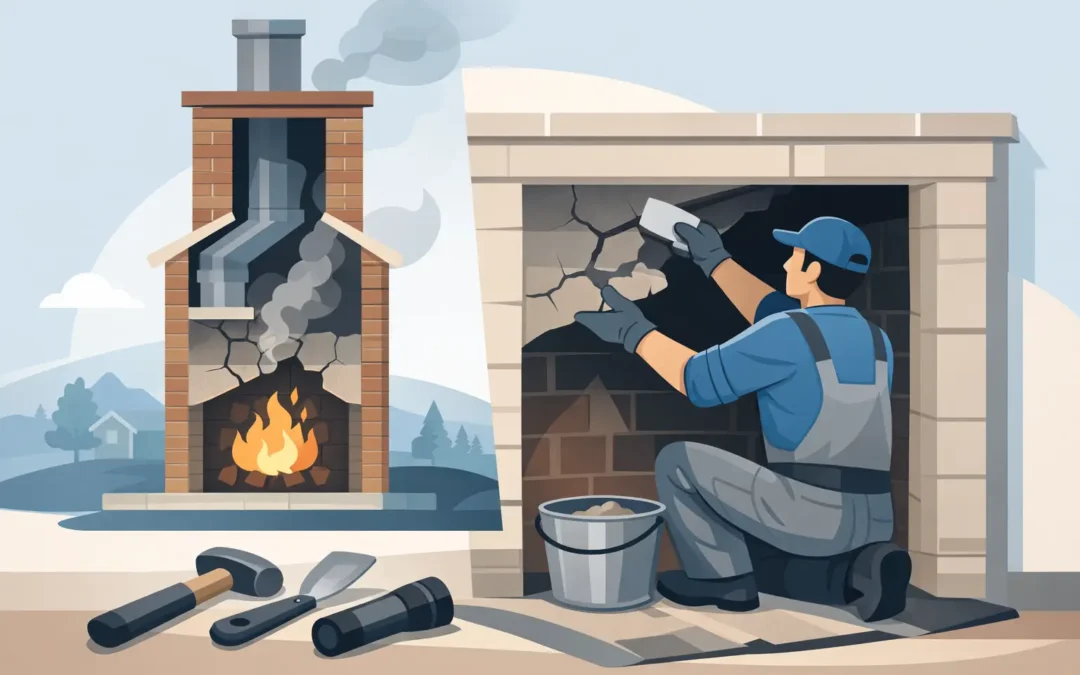
A fireplace can look perfectly sound from the hearth while hidden damage above it is affecting how safely it works. Smoke chamber repair deals with the area between the firebox and the main flue – a section that helps guide smoke upwards, away from your room. When this area is damaged, rough, leaking or blocked by fallen debris, the result can be poor draw, smoke entering the room and an avoidable fire risk.
For homeowners in Leicestershire with an open fire, wood burner or multi-fuel appliance, this is not a repair to put off until the next heating season. A proper inspection identifies what has failed and whether a localised repair, flue liner work or another solution is the right answer.
What is a smoke chamber?
The smoke chamber is the tapered space immediately above the fireplace opening. It sits above the smoke shelf and narrows towards the flue. Its job is straightforward: it channels hot gases and smoke from the fire into the chimney without creating unnecessary resistance.
In many older properties, the chamber is formed from brickwork with a rendered or parged inner surface. Over time, heat, soot, moisture and normal building movement can cause that surface to crack or break away. Loose mortar and damaged brickwork leave a rough passage for smoke, which can disrupt the chimney’s draw and allow debris to fall into the fireplace.
A smoke chamber is not the same as the flue liner, although problems in one can affect the other. The chamber is at the base of the chimney above the fire opening; the flue is the route that continues up through the chimney and exits at the top. Both need to be in sound condition for combustion gases to leave the property safely.
Signs smoke chamber repair may be needed
Smoke coming into the room when you light a fire is the warning homeowners notice first. It does not automatically mean the smoke chamber is at fault. A cold flue, unsuitable fuel, a blocked chimney, poor ventilation or downdraught can all cause the same symptom. However, smoke spillage should always be investigated rather than accepted as part of using the fire.
Other signs can be more visible. You may find pieces of mortar, tile, brick or blackened render in the grate after using the fireplace. There may be a persistent smoky smell, staining around the fireplace opening, or a noticeable change in how readily the chimney draws. In some cases, the chimney may have been swept regularly but still produces an unusual amount of falling debris.
For a stove installation connected into an existing chimney, the condition of the chamber matters too. Damage or an uneven surface can make it difficult to form a safe, tidy connection to a liner. If the appliance has recently been fitted and smoke problems have started, the full system needs checking – not just the stove itself.
Stop using the appliance if safety is in doubt
If smoke is entering the room repeatedly, or you can see loose masonry above the fire opening, stop using the appliance until it has been inspected. Do not try to push loose material back into place or patch a high-level chamber with general-purpose filler.
If a carbon monoxide alarm sounds, get everyone outside into fresh air immediately and seek appropriate emergency advice. A working audible carbon monoxide alarm is essential wherever a solid fuel appliance is used, but it is not a substitute for sound chimney maintenance.
Why smoke chambers deteriorate
Age is a major factor, particularly in period homes with original fireplaces. The materials used may have lasted for decades, but repeated heating and cooling eventually takes its toll. Small cracks can become larger gaps, while old parging can lose its bond to the masonry behind it.
Water ingress is another common cause. A damaged chimney pot, failed flaunching, defective pointing or a leaking cowl can allow rain into the stack. Once moisture gets into the chimney structure, frost can worsen cracks and salts can break down mortar. Repairing the chamber without dealing with water getting in from above is rarely a lasting fix.
Changes to the fireplace can also expose existing faults. Removing an old gas fire, opening up a boarded fireplace, or installing a new stove often reveals a chamber that has not been seen or maintained for years. This is why an inspection before installation is so valuable: it helps avoid surprises once work has begun.
How a professional smoke chamber inspection works
A proper assessment starts at the fireplace, where the condition of the firebox, lintel, smoke shelf and visible chamber can be checked. The chimney should also be swept where necessary, as soot and debris can hide the true condition of the structure.
Depending on the fireplace and access, a CCTV chimney inspection may be used to examine the flue and identify cracks, obstructions, old liner issues or areas of heavy deposit. The external stack also needs attention. There is little value in repairing internal masonry if loose brickwork, poor flaunching or water entry at roof level is causing the damage.
The goal is not to sell the biggest repair. It is to establish the cause of the problem and explain the safest practical option. A small area of failed parging may need a local repair, while widespread deterioration could make relining the chimney the more sensible long-term choice. The right approach depends on the fireplace, appliance, chimney age and how the system will be used.
What smoke chamber repair can involve
Where the underlying masonry is sound, the repair may involve carefully removing loose material and applying suitable heat-resistant mortar or render to create a smooth, sealed route into the flue. A smoother chamber improves the path for smoke and reduces places where soot can gather.
If bricks have deteriorated or joints have opened up, damaged masonry may need rebuilding before the chamber is finished. The smoke shelf may also need attention if it is broken or allowing debris to collect where it should not. This work needs to be carried out with materials suited to the temperatures involved, not ordinary decorating products.
In some chimneys, especially those serving a stove, fitting a flue liner may be recommended alongside chamber work. A liner can provide a correctly sized, continuous route for flue gases and make future sweeping more straightforward. It is not automatically required in every case, though. Installing one where a chimney is already sound and suitable may add unnecessary cost, while leaving a defective flue unlined can be false economy.
Any work affecting an appliance connection, liner or chimney system should be completed by a competent, properly trained installer. If installation work falls under building regulations requirements, using a registered installer can also make the notification process much simpler.
Avoid temporary fixes and guesswork
It is tempting to treat a smoky fireplace as a fuel problem or buy a chimney cowl straight away. Better fuel and a well-chosen cowl can help in the right circumstances, but neither repairs failed internal masonry. Equally, sweeping alone cannot fix gaps, loose render or a poorly formed chamber.
Do not use expanding foam, household cement mixes or fireproof sealant as a substitute for a proper repair. These products may look acceptable for a short time but can fail under heat, hide a larger defect and make later work harder. A chimney is a working part of the home, not a cosmetic feature.
Keeping the repair in good condition
After smoke chamber repair, regular sweeping remains essential. How often depends on the appliance and fuel, but frequent use of wood or solid fuel calls for a sensible maintenance routine. Sweeping removes soot and deposits before they build up, while giving your chimney professional attention at regular intervals.
Only burn suitable, dry fuel in a stove or open fire. Wet wood produces more smoke, tar and soot, all of which make the chimney work harder. Keep an eye on the external stack as well. Loose pots, failing mortar and damaged flaunching should be dealt with before rain turns a minor issue into internal damage.
If your fireplace starts smoking, shedding debris or behaving differently, arrange an inspection rather than waiting for the next sweep. Thurnby Chimney Sweeps can assess the wider chimney system, explain what is causing the fault and help you choose a repair that puts safe, reliable use of your fire first.