
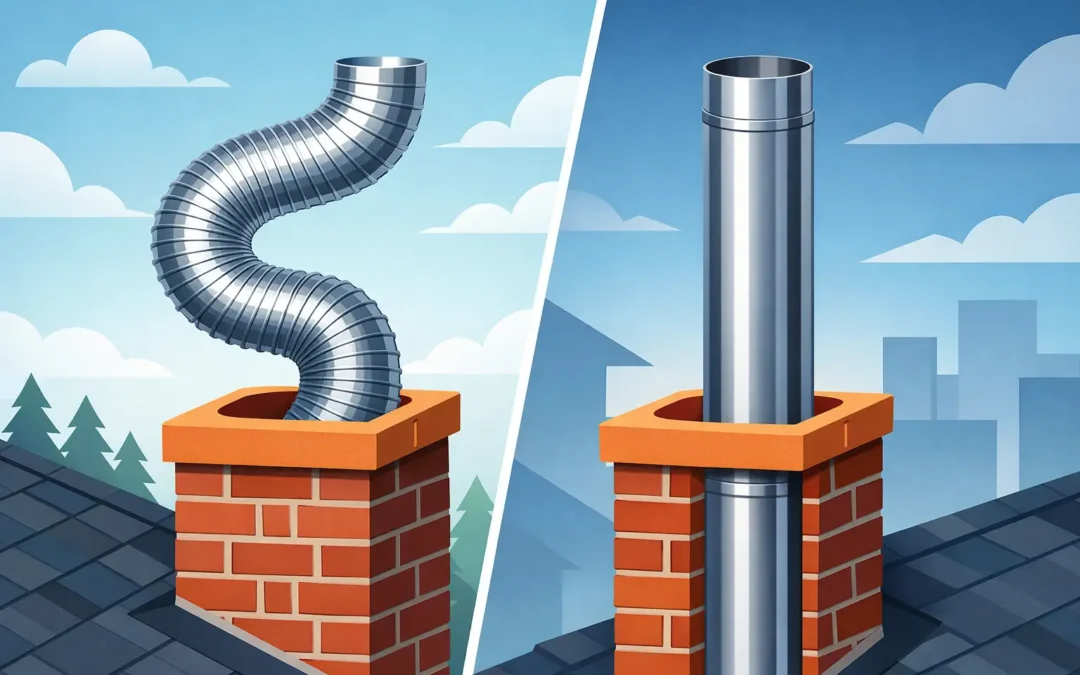
A flue liner is not a one-size-fits-all part of a stove installation. The choice between flexible versus rigid flue liners affects how safely your appliance draws, how long the system is likely to last and whether the installation is suitable for the chimney you already have. The right answer depends on the condition, shape and use of the flue, not simply which option appears cheaper on the day.
For many Leicestershire homes, a flexible stainless-steel liner is the practical answer when connecting a new stove to an existing masonry chimney. In other situations, a rigid system is the safer and more sensible route. A proper survey, and often a CCTV chimney inspection, should come before either is specified.
What a flue liner does
A flue liner creates a controlled passage for smoke, gases and condensation to travel from your stove or fireplace to the top of the chimney. Older brick chimneys can be rough, oversized, damaged or leaky. Without a suitable liner, smoke and harmful combustion gases may escape through cracks or joints into parts of the property.
Lining can also improve the draw of a chimney. A correctly sized, smoother flue warms up more efficiently than a large, cold and uneven brick shaft. That can mean less smoke coming back into the room, a cleaner-burning stove and fewer tar deposits.
However, a liner cannot put right every chimney problem. Loose brickwork, serious water ingress, an unsuitable chimney route or a badly positioned terminal may need separate remedial work. The liner is one part of a safe flue system, not a shortcut around an unsafe chimney.
Flexible versus rigid flue liners: the main difference
Flexible liners are usually made from corrugated stainless steel. They are supplied in a coil and lowered down an existing chimney from the top, then connected to the appliance at the bottom and finished with the correct plate, adaptor and terminal at the chimney pot.
Rigid liners come in straight sections joined together. They may be stainless steel, pumice, clay or ceramic, depending on the system and application. Rigid metal flue sections are also used where a new flue route is being built, including certain internal or external installations. Where the flue passes outside or through the building, an insulated twin-wall system is commonly required rather than a single-skin rigid pipe.
The key difference is simple: flexible liner is designed to follow the bends inside an existing chimney, while rigid sections need a route that can accommodate straight lengths and properly formed joints.
When a flexible liner is usually the best fit
A flexible liner is often the most practical option for an existing chimney with gentle bends or offsets. Many older properties do not have a perfectly straight flue, and opening up walls simply to install rigid sections can be disruptive and costly.
It can be a good choice when a wood-burning or multi-fuel stove is being fitted into an existing fireplace opening. The installation can be completed with far less alteration to the house, provided the chimney is structurally sound and has been checked for obstructions, excessive bends and damage.
The grade of stainless steel matters. A liner suitable for a wood burner may not be the right specification for a multi-fuel stove, particularly where coal or smokeless fuels are used. These fuels can produce more corrosive condensates. Choosing the right grade from the start is better value than replacing a failed liner early.
Flexible liner also needs to be installed in the correct direction. Its internal joints should shed condensate downwards rather than catch it. This is a small but important detail that can affect the lifespan of the liner and the build-up of deposits.
Where flexible liner has limits
Flexible does not mean suitable for every chimney. It should not be forced through a sharp bend, crushed to get past an obstruction or used where the chimney is unstable. Pulling a liner through a damaged flue can leave it vulnerable to tears and make future sweeping difficult.
It is also not generally the right choice for an exposed external flue run. Flexible liner relies on the existing chimney for protection and support. A new external route needs a properly designed, insulated flue system that keeps gases warm, maintains clearances from combustible materials and is securely supported.
Diameter is another common issue. A liner that is too small can restrict the appliance and cause poor draw or smoke spillage. One that is far too large may stay cold and encourage condensation and tar. The stove manufacturer’s requirements, the height and route of the flue, and the type of fuel all need to be considered together.
When rigid flue systems make more sense
Rigid systems are often the better option when the chimney is being built new, rebuilt, or has been opened up enough to allow straight sections to be fitted correctly. Their smooth internal surface can be advantageous for flow and sweeping, and the solid construction is well suited to a planned, accessible flue route.
For a stove that is not using an existing masonry chimney, a factory-made insulated twin-wall flue is usually the appropriate rigid solution. It can run internally through floors and the roof, or externally up the outside wall, but it must be designed around the property. Clearances, support brackets, weathering details, termination height and proximity to windows or neighbouring buildings all matter.
A rigid system may cost more where building work is required, but it can be the right long-term investment. It gives the installer control over the route, insulation and access points instead of relying on the unknown condition of an old chimney.
Rigid liners are not automatically better than flexible liners. They are better for particular circumstances. A straight, well-planned route may favour rigid sections. A sound but slightly offset original chimney may favour a flexible stainless-steel liner.
Safety, sweeping and expected lifespan
Whichever type is installed, the flue needs to be compatible with the appliance and fuel being burned. It must also be fitted to the manufacturer’s instructions and comply with the relevant Building Regulations requirements. A stove and flue should work as one system.
Regular sweeping remains essential after lining. A liner does not prevent soot, fly ash or creosote from forming. In fact, a well-drawing stove can disguise a growing deposit until it becomes a problem. Burning dry, suitable fuel and having the chimney swept at the right intervals helps protect both the appliance and the liner.
Warning signs should be dealt with promptly. These include smoke entering the room, a sudden loss of draw, strong tar smells, black staining around the fireplace, water running into the stove, or a carbon monoxide alarm sounding. Stop using the appliance if you are concerned and arrange a professional inspection.
A correctly specified stainless liner can provide many years of service, but its life is affected by fuel quality, sweeping, chimney moisture and how the appliance is operated. Slumbering a stove overnight with the air controls shut down can create heavy tar deposits and corrosive condensation. It is hard on any flue system.
What should be checked before choosing a liner
Before recommending a flexible or rigid option, an installer should establish the appliance type, the fuel to be used and the required flue diameter. The chimney itself should then be assessed for its route, height, bends, condition and any signs of historic leakage or water ingress.
A CCTV inspection is particularly useful where the inside of a chimney cannot be assessed properly from above or below. It can reveal bird nest material, fallen masonry, ledges, severe bends and previous liner remnants. This avoids guessing and helps prevent an installation being attempted in a flue that is unsuitable.
The assessment should also look at the chimney pot and terminal. A liner needs a secure top fixing and an appropriate cowl or rain cap where required. If downdraught is an issue, the solution may involve the terminal, chimney height or nearby obstructions rather than changing the liner alone.
At Thurnby Chimney Sweeps, we take the time to assess the full chimney system before advising on lining work. That means looking beyond the fireplace opening and giving homeowners a clear explanation of what is suitable, what is not and why.
The best flue liner is the one that matches your chimney, stove and fuel, and can be installed without compromise. If you are planning a stove installation or are concerned about an older chimney, arrange a professional inspection before making a decision. It is the straightforward way to protect your home, your appliance and the people using it.