
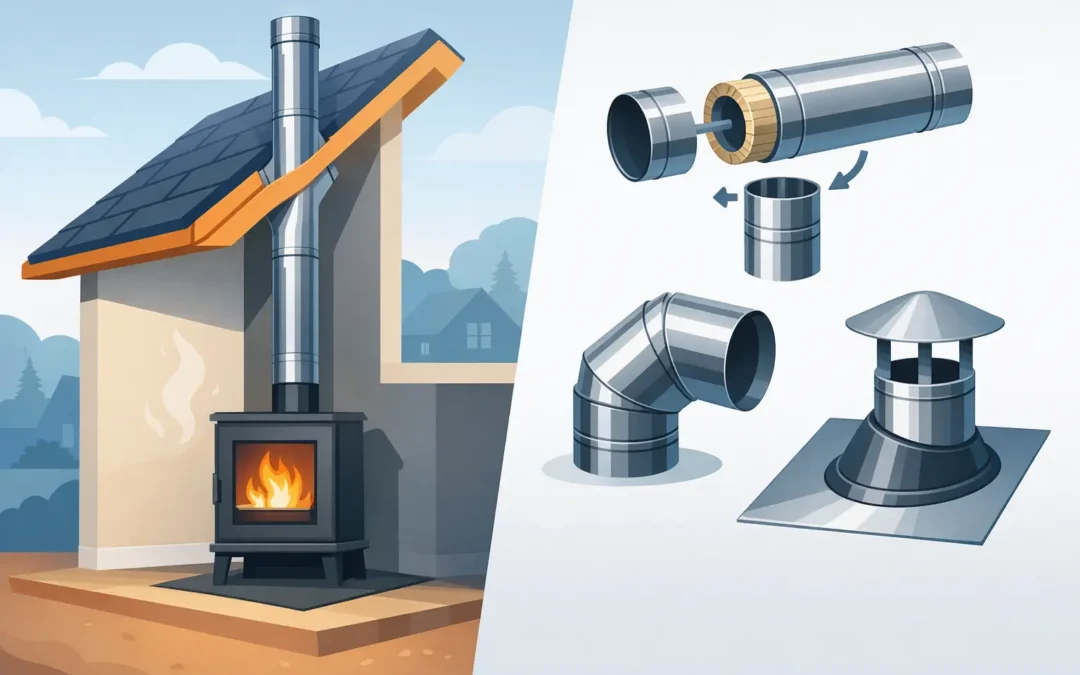
A stove can look straightforward once it is in place. The part that causes most of the head-scratching is often the flue. If your property does not have a suitable chimney, or the existing chimney is not the right route for the appliance, twin wall flue fitting is often the practical answer.
For many homeowners, that raises a few fair questions. What exactly is a twin wall flue, when is it needed, and why does fitting it properly matter so much? This is one of those jobs where the details make the difference between a stove that works cleanly and safely, and one that gives you smoke problems, poor draw, or compliance issues further down the line.
What twin wall flue fitting actually means
A twin wall flue is an insulated metal chimney system designed to carry smoke and combustion gases safely from a stove to the outside. It is called twin wall because it has an inner and outer skin with insulation between them. That insulation is not there for show. It helps keep flue gases warmer as they rise, which supports good draw and reduces condensation within the system.
Twin wall flue fitting involves much more than joining sections of pipe together. The full job includes choosing the correct diameter, planning the route, supporting the system properly, maintaining the right clearances from combustible materials, and terminating the flue in a position that allows the appliance to perform as it should.
In plain terms, it is a chimney system for properties where a traditional masonry chimney is not available, not suitable, or not in the right place.
When a twin wall flue is usually needed
The most common reason is simple. You want a wood-burning or multi-fuel stove, but your home does not have a usable chimney. That is often the case in newer houses, extensions, garden rooms, workshops and some renovated properties.
It is also used where an existing chimney cannot sensibly serve the stove position. You may want the appliance on an internal wall, in an extension, or in a room where connecting to the old chimney would mean an awkward route with too many bends. In those cases, a twin wall system can provide a direct and workable solution.
Sometimes the issue is not the absence of a chimney but the condition of what is already there. An older flue may be unsuitable, damaged, oversized, or expensive to put right. There are cases where relining a masonry chimney is the best option, and cases where a new insulated system is the cleaner and more reliable route. It depends on the property, the appliance and the flue path available.
Why proper twin wall flue fitting matters
A flue is not just a way to get smoke out of the room. It is a working part of the heating system. If it is wrongly sized, badly routed or poorly installed, the stove may struggle from day one.
The first issue is safety. Flue gases are hot, and the system must be installed with proper separation from nearby combustible materials such as timber, plasterboard details, joists and roof structures. Cutting corners here is not minor. It creates a real fire risk.
The second issue is performance. A good stove still needs a good flue. If the route is too long in the wrong places, too full of bends, or terminated badly, you can end up with weak draw, smoke spillage, soot build-up and difficult lighting. Homeowners sometimes blame the stove when the real issue is the flue design.
The third issue is compliance. Solid fuel installations are subject to regulations for good reason. A proper installation is about proving the system is suitable, safe and correctly fitted, not simply making it look neat from the outside.
How the fitting is planned
No two houses are exactly alike, which is why a proper site assessment matters. The first step is working out where the stove will sit and how the flue can rise from that point with the safest and most effective route.
In many homes, the ideal route is as vertical as possible. That usually gives the best draw and keeps the installation simpler. Sometimes the flue runs internally through floors and out through the roof. In other properties, it exits through a wall and rises up the outside of the building. Both approaches can work well, but each has trade-offs.
An internal route often performs better because the flue stays warmer. The downside is that it can be more disruptive during installation, especially where ceilings and upper floors are involved. An external route may be easier to achieve in some layouts and can reduce disruption inside the home, but because more of the flue is exposed to colder outside air, the design and insulation become even more important.
Choosing the right route and components
A good twin wall flue fitting job depends on using the right components in the right places. That includes the appliance connector, insulated sections, bends where necessary, wall supports, fire stop components, roof flashing, terminals and access points for sweeping and maintenance.
This is one area where guesswork causes problems. The diameter must suit the appliance. The route must allow for safe passage through walls, ceilings or roofs. The system must also be properly supported so that weight is not bearing where it should not.
Bends are sometimes unavoidable, but fewer is usually better. Every bend affects the way gases travel. Too many changes of direction can reduce draw and make sweeping more awkward. A neat-looking route is not always the same as a well-performing one.
Common problems caused by poor installation
One of the most frequent complaints after a bad install is smoke entering the room when lighting the stove or refuelling. That can be caused by poor draw, an incorrect terminal position, too many bends, or a flue that cools too quickly.
Another issue is excessive condensation or tar deposits. When flue gases cool too much, moisture and residues condense inside the system. Over time that can increase soot build-up and create maintenance headaches. In more serious cases, it can contribute to chimney fire risk.
There are also structural and finishing problems. Poor support, weak fixing, badly sealed penetrations or untidy roof detailing can all lead to trouble later. A flue should not only work safely. It should be fitted neatly and built to last.
Twin wall flue fitting and sweeping
A twin wall system still needs regular sweeping and inspection. Some homeowners assume a newer metal flue means less maintenance. That is not the case. If you burn wood or smokeless fuel, deposits still build up and the system still needs proper care.
Access for sweeping should be considered as part of the fit, not as an afterthought. If the layout makes routine maintenance awkward, that usually becomes obvious only after the installation is complete. It is far better to plan for servicing from the start.
This is where using one qualified provider for installation and ongoing chimney care can make life easier. A company that handles both understands how the system will be used in real homes, not just how it goes together on paper.
Is twin wall always the best option?
Not always. If a property already has a sound chimney in the right place, lining or adapting that chimney may be the better route. It can be more discreet visually and, in some homes, more cost-effective.
On the other hand, twin wall can be the better answer where no chimney exists, where the stove position is fixed by the room layout, or where an old chimney presents too many limitations. It is not about one method being better in every case. It is about what suits the building, the appliance and the way the room will be used.
That is why sensible advice matters. A reliable installer should explain the options, not push one system regardless of the property.
What homeowners should look for
When you are arranging twin wall flue fitting, the key thing is confidence in the person doing the work. This is not a job to hand to somebody vague on regulations or light on experience. Ask whether the installation will be carried out by a properly qualified professional, whether the route has been clearly explained, and whether maintenance access has been considered.
You should also expect plain speaking. If a proposed stove location is likely to create flue problems, a decent installer should say so. If the job needs additional building work or a different route to make it safe, that should be clear from the start. Honest advice saves money and stress later.
At Thurnby Chimney Sweeps, we see the difference that proper planning makes. A well-fitted flue system gives you safe use, reliable performance and fewer problems when the colder months arrive.
If you are thinking about adding a stove and need a chimney solution, treat the flue as seriously as the appliance itself. The right system, fitted properly, is what turns a stove from a nice idea into a safe and dependable part of your home.