
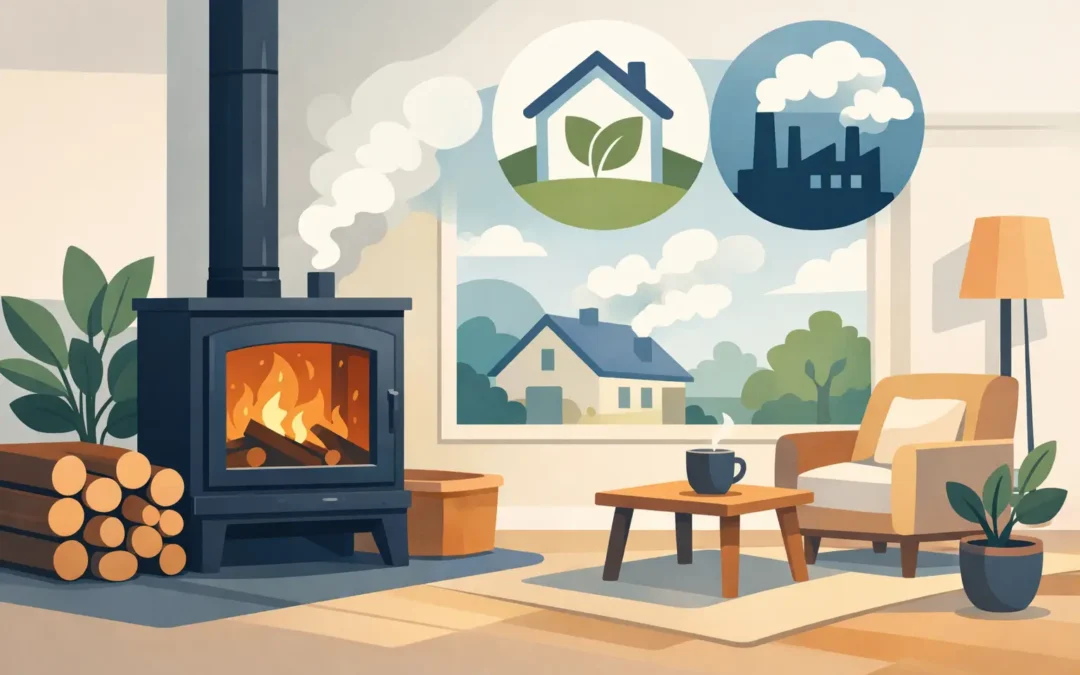
A clear chimney, dry logs and the right stove settings make a bigger difference than most householders realise. Wood burner emissions changes have led to understandable questions from people who enjoy their stove but do not want to fall foul of the rules, upset neighbours with smoke, or compromise air quality at home.
The good news is that owning a wood burner does not automatically mean replacing it. The rules mainly affect new appliances being sold, the fuels that can be supplied, and how stoves are used in Smoke Control Areas. For an existing stove owner, the practical focus is simple: burn suitable fuel, use the appliance properly and keep the flue maintained.
Why wood burner emissions changes are happening
Wood smoke contains fine particles known as PM2.5, along with gases and soot. These particles are small enough to travel deep into the lungs, which is why poor burning habits can affect both the household using the stove and the wider neighbourhood.
The aim of tighter standards is not to stop responsible people using wood burners. It is to reduce unnecessary pollution from old, inefficient appliances, damp logs and fires that are left to smoulder. A modern stove used with properly seasoned or kiln-dried wood will generally produce far less smoke than an open fire or a poorly operated older stove.
This matters particularly on cold, still evenings in built-up parts of Leicester and the surrounding villages. Smoke can hang in the air rather than dispersing, and that is when a neighbour may notice the smell or visible haze from a chimney.
The wood burner emissions changes that affect homes
New stoves must meet Ecodesign standards
Since January 2022, new wood-burning and multi-fuel stoves sold in the UK have had to meet Ecodesign requirements. These appliances are tested to tighter limits for particulate emissions, carbon monoxide and other pollutants than older models.
If you are buying a new stove, ask whether it is Ecodesign compliant and ensure it is sized correctly for the room. A stove that is too large often gets turned down too low, causing it to burn slowly and inefficiently. A smaller, correctly specified appliance that is allowed to burn well can provide better heat with less smoke.
Ecodesign rules do not mean an older stove has been banned. A sound older appliance can still be used, subject to the local rules and good operating practice. Replacement becomes worth considering where a stove is damaged, difficult to control, unsuitable for the property, or regularly produces smoke despite dry fuel and a clean flue.
Wet wood cannot be sold in small quantities
Wood sold in volumes below two cubic metres must have a moisture content of 20% or less. This is commonly identified by the Ready to Burn scheme. Damp wood wastes heat because much of the fire’s energy is spent driving out water. It also creates more smoke, soot and tar deposits in the stove and chimney.
For most homes, kiln-dried logs are the straightforward option. Properly seasoned logs can be suitable too, but they need to have been split, stored off the ground and protected from rain with good airflow for long enough to dry. A moisture meter is a useful, inexpensive check. Test a freshly split face of the log rather than its outer surface.
Avoid burning treated timber, painted wood, chipboard, MDF, pallets or household waste. These materials can release harmful fumes and leave corrosive deposits in the flue. They are not a cheap substitute for proper firewood.
Smoke Control Areas still have specific rules
Many towns and cities have Smoke Control Areas, and the restrictions can apply to particular streets or whole districts. In these areas, you must usually burn authorised smokeless fuel or use an exempt appliance, often described as DEFRA exempt, with the correct fuel.
The important point is that the rule relates to the location as well as the stove. Do not assume that a neighbour’s installation, or a stove advertised online, is automatically suitable for your address. Check the status of your property with the local authority before installing or changing how you use a solid fuel appliance.
Cleaner burning starts with how you light the fire
A stove can meet the latest standard and still perform badly if it is starved of air or fed with damp logs. The best flame is bright and lively, not a dark, lazy fire struggling under a pile of fuel.
Top-down lighting is a sensible method. Put the larger logs at the bottom, then smaller kindling and a firelighter on top. Light it from the top and leave the air controls open long enough for the flue to warm and the fire to establish. Once the stove is up to temperature, adjust the controls according to the manufacturer’s instructions.
Do not shut the air right down to make fuel last overnight. Slumbering creates more smoke and can quickly coat the glass, baffle, flue and chimney with deposits. It can also increase the risk of a chimney fire. It is better to use the right amount of dry fuel and accept that a clean-burning fire needs adequate air.
If your stove has a moisture control, secondary air setting or airwash, learn what each control does. The handbook for your particular model should always take priority over general advice.
Your chimney is part of the emissions picture
The stove is only one part of the system. A blocked, undersized, leaking or poorly drawing chimney can make even a good appliance difficult to use cleanly. Smoke spilling into the room, persistent tar smells, blackened glass and a fire that will not respond to its controls can all point to a problem that needs investigating.
Regular sweeping removes soot and combustible deposits, but it can also reveal issues such as bird nest material, failing flaunching, a damaged liner or restrictions around the chimney pot. For wood-burning stoves, an annual sweep is commonly recommended, although more frequent cleaning may be needed for heavy use, damp fuel or an appliance that has been burning poorly.
A carbon monoxide alarm should be fitted in the same room as a solid fuel appliance, positioned in line with the manufacturer’s instructions. It is an essential safety device, not a substitute for correct installation, ventilation and maintenance.
When an older stove may need attention
Not every older stove needs replacing, but it should be assessed honestly. Arrange a professional check if you notice any of the following:
- Smoke entering the room when the stove is lit or refuelled.
- Black staining around the stove or excessive soot on the glass.
- A tar-like smell, poor draw or repeated downdraught problems.
- Cracked firebricks, warped parts, damaged door seals or missing baffles.
- A chimney that has not been swept or inspected for more than a year.
Some faults can be resolved through servicing, replacing worn components, fitting an appropriate cowl or addressing a flue issue. In other cases, a new Ecodesign stove and a suitable liner may be the safer long-term choice. The right answer depends on the appliance, chimney, property layout and how the stove is used.
A practical approach for Leicestershire households
Before worrying about headlines or rumours of further restrictions, start with the basics. Confirm whether your home sits in a Smoke Control Area, check that your fuel is genuinely dry, and look at the smoke from the chimney once the fire is established. A little white water vapour on a cold day is normal. Thick grey or dark smoke is a sign that something needs changing.
If you are planning a new installation, choose a HETAS-registered installer who can assess the flue route, hearth, ventilation and appliance output rather than simply fitting the stove you have seen in a showroom. If you already have a stove, a proper sweep and inspection offers a sensible starting point before spending money on a replacement.
Thurnby Chimney Sweeps can help homeowners identify whether the issue is fuel, appliance condition, chimney draw or the flue itself. A clean, well-maintained system gives you the best chance of enjoying the warmth of a real fire while keeping smoke and emissions to a minimum.
A wood burner should heat the home, not fill the room or the street with smoke. With dry fuel, enough air and a chimney that is in good order, cleaner burning is usually a practical habit rather than a complicated overhaul.