
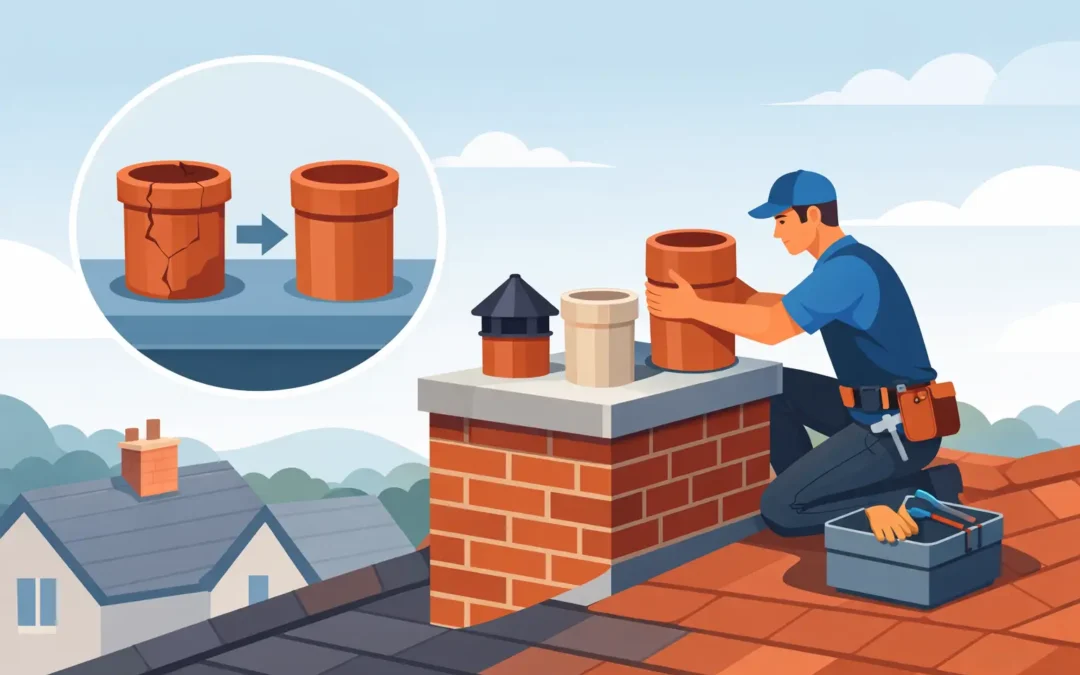
A chimney pot that looks slightly crooked from the garden can be more than an eyesore. It may be loose, cracked or no longer properly bedded into the top of the chimney stack. In high winds, that creates a real risk to people, roofs and neighbouring property. This chimney pot replacement guide explains what to look for, when replacement is needed and why this is a job best assessed from the roof by a competent professional.
A chimney pot has a straightforward job: it raises the flue outlet above the stack and helps the chimney draw combustion gases safely away from the property. The right pot, fitted securely and matched to the appliance and flue, supports safer and more reliable performance from an open fire, wood burner or multi-fuel stove.
When does a chimney pot need replacing?
Clay chimney pots are durable, and many remain in place for decades. They are exposed to rain, frost, soot, heat and wind every day, however, so deterioration is not unusual. The mortar around the base, known as the flaunching, can also fail before the pot itself does.
A replacement may be needed if the pot is visibly cracked, chipped around its base, leaning, loose or missing altogether. Pieces of clay found in the gutter, on the roof or on the ground are another clear warning sign. Never try to push a pot back into place from a ladder. A pot can be heavier and less stable than it appears, particularly where old mortar has broken down.
Smoke entering the room, poor draw, recurring downdraught or rainwater getting into the flue can also point to an issue at the chimney terminal. These symptoms do not automatically mean the pot is at fault. A blocked flue, bird nest, unsuitable cowl or chimney height issue could be responsible. That is why a proper inspection matters before choosing a solution.
Why a damaged pot should not be ignored
The most immediate concern is safety. A loose chimney pot can fall in bad weather, while failed flaunching can allow the pot to shift without obvious warning from ground level. Damage at the top of the stack can also let water into brickwork and mortar joints, accelerating frost damage over winter.
There is a flue safety point too. A badly cracked or poorly fitted pot may affect the way the chimney draws. Solid fuel appliances depend on a clear, correctly sized route for smoke and combustion gases. If the appliance starts smoking back into the room, stop using it until the cause has been checked. Carbon monoxide is colourless and odourless, so a working carbon monoxide alarm should always be fitted in the same room as a solid fuel appliance.
For an unused chimney, the priorities may be different. The pot may need to remain ventilated to prevent damp within the flue, but protected from driving rain and nesting birds. Simply blocking the top with a slab or bag of cement is rarely a sensible long-term answer.
Chimney pot replacement: inspection comes first
A good chimney pot replacement begins with identifying what is actually on the stack. Chimneys with several pots can serve separate fireplaces, stoves or flues. It is essential not to cap, remove or alter the wrong one.
A professional inspection should consider the condition of the pot, flaunching, chimney brickwork, leadwork and any existing cowl. The flue should also be checked for blockages and, where there is concern about its internal condition, a CCTV chimney inspection can provide a clearer picture. This is particularly useful in older Leicestershire properties, where alterations over the years may have left redundant flues or unexpected connections.
The inspection also establishes whether the chimney is still in use, what appliance it serves and whether the existing pot size is suitable. Fitting a replacement that looks similar is not always enough. The outlet must suit the flue and terminal arrangement, rather than simply matching the neighbouring pot.
Pot, cowl or both?
A chimney pot and chimney cowl are not the same thing. The pot is the clay or metal terminal that forms the upper part of the chimney. A cowl is a fitting placed over or within the pot for a particular purpose, such as discouraging birds, reducing rain entry or helping with a known downdraught issue.
A cowl is not a cure-all. The wrong type can restrict a flue, create a maintenance problem or fail to solve the reason smoke is blowing back. Likewise, fitting a bird guard to a pot may be useful where nests are a recurring issue, but it still needs to be compatible with the appliance and kept clear of soot and debris.
Choosing the right replacement pot
Most homes use traditional clay pots, available in several shapes, heights and diameters. A straight pot is common, while roll-top and cannon-head styles are often chosen to suit the look of an older property. There are also metal terminals used in certain flue systems.
Appearance matters, especially on a prominent period home, but function comes first. The replacement should provide the appropriate flue outlet, be tall enough for the chimney set-up and allow any cowl to be fitted correctly. Increasing chimney height can sometimes help a draw problem, but only after the wider cause has been considered. Nearby trees, a taller extension, roof shape and prevailing wind can all affect performance.
If the chimney serves a lined stove flue, the liner and terminal arrangement need particular care. A liner should be properly connected and finished with suitable components, rather than left loose beneath an oversized decorative pot. Where a chimney is no longer used, a ventilated cap or cowl may be the better option than installing a new open pot.
Listed buildings and properties in conservation areas can bring extra considerations. Matching the original style may be expected, and some work may require advice from the local planning authority. It is worth checking before ordering a modern-looking replacement for a traditional stack.
What professional replacement work involves
Safe access is the first part of the job. Depending on the height, roof pitch and condition of the stack, this may mean scaffolding, a roof ladder or other appropriate access equipment. Working at height without the right equipment is not a saving worth making.
The old pot is removed carefully, avoiding damage to the surrounding brickwork and chimney crown. Loose or failed flaunching is taken away so the base is sound and clean. The new pot is then bedded securely in fresh, weather-resistant mortar and the flaunching is formed to shed water away from its base.
If a cowl is required, it is fitted as part of the terminal arrangement. The professional should then check that the flue remains clear and that the appliance is drawing correctly where it is safe to do so. A sweep may be sensible before the work, particularly if the chimney has been unused or if debris could have entered the flue during deterioration.
The work is not simply about placing a pot on top of a stack. A pot that is not level, fully supported or properly sealed into its flaunching may soon become loose again. Good workmanship at this point helps protect the stack below as well as the flue itself.
Can you replace a chimney pot yourself?
For most homeowners, no. The risks include falling from height, dropping a heavy pot, disturbing fragile chimney masonry and accidentally blocking or damaging a live flue. Even a low bungalow roof can be hazardous when surfaces are wet, mossy or uneven.
There are also practical issues that are hard to judge from the ground: whether the flue is in use, whether a liner terminates beneath the pot, and whether a cowl is needed. A qualified chimney professional can assess the whole system rather than treating the visible pot as an isolated repair.
If you have noticed damage, take clear photographs from ground level if it is safe to do so, avoid using the affected fireplace or stove if there are smoke or stability concerns, and arrange an inspection. Thurnby Chimney Sweeps can assess chimney terminals, flaunching, cowls and flue condition as part of a practical maintenance approach.
Keeping the new pot in good order
Once replaced, a chimney pot needs little day-to-day attention, but it should be included in routine checks. Look up at the stack after severe storms and watch for new cracking, leaning or mortar loss. During regular chimney sweeping, ask for the terminal condition to be noted, especially if you use a stove frequently.
Keep an eye on changes inside the home too. A new smell of damp around a fireplace, staining on the chimney breast, birds in the flue or a sudden change in draw are all reasons to investigate rather than wait for the next heating season.
A secure chimney pot is a small part of the roofline, but it does an essential job. Putting right a loose or damaged one early is usually simpler, safer and less costly than dealing with fallen masonry, water damage or a flue that cannot be used when you need it most.