
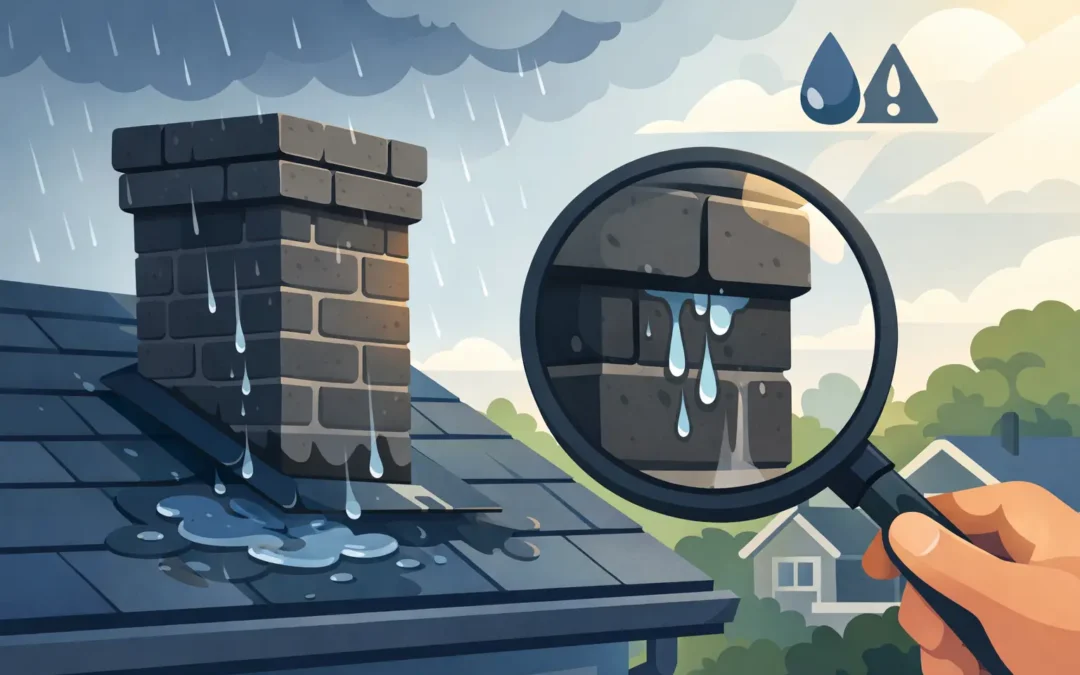
A chimney leak often starts small. A faint damp patch near the breast, a stale smell after rain, or a bit of staining in the loft can be easy to ignore – until the plaster starts bubbling or water begins finding its way into the fireplace. If you are wondering how to spot chimney leaks before they turn into a bigger repair, the key is knowing where the first warning signs tend to show up.
Chimneys take a lot of weather. Rain, frost, wind and heat all work on the brickwork, pots, flashing and flaunching year after year. Even a well-built chimney can develop weak points over time. The sooner a leak is identified, the better chance you have of keeping repair work smaller, safer and less expensive.
How to spot chimney leaks inside the house
In many homes, the first evidence is indoors rather than on the roof. Water rarely drips neatly from the point where it enters. It can track along masonry, timbers and plaster before it becomes visible, which is why chimney leaks are sometimes mistaken for general roof leaks or condensation.
One of the most common signs is damp staining on the chimney breast. This may appear as a yellow-brown patch, darkened plaster or tide marks that become more obvious after heavy rain. If the area feels colder or slightly soft to the touch, that is another clue that moisture is getting in.
You may also notice peeling wallpaper, blistering paint or flaking plaster around the fireplace opening or on the wall above it. In upstairs rooms, signs can show where the chimney passes through bedrooms or loft spaces rather than in the main living area.
A musty smell is another regular giveaway. Chimneys that take in rainwater can stay damp for long periods, especially in colder months. That trapped moisture creates a stale odour which some homeowners first notice when the fire has not been used for a while.
If you have a stove, pay attention to rust marks on the appliance or staining around the register plate. Water coming down the flue can affect metal parts and leave signs that are quite different from ordinary soot deposits.
Signs to check outside
External faults are often the cause, even if the problem shows up indoors. You do not need to climb onto a roof to spot some of the more obvious issues. A careful look from ground level can tell you a fair bit.
Cracked or missing mortar joints are a common starting point. When pointing wears away, rain can work into the brickwork. Over time, repeated freeze and thaw can make the damage worse. Spalled bricks, where the face of the brick begins to break away, are another warning sign that moisture has already been getting in.
Look at the chimney stack for leaning, loose masonry or any signs the top is deteriorating. The flaunching – the mortar around the chimney pot at the top of the stack – should be sound and properly shed water. If it is cracked, crumbling or pulling away, water can enter around the pot.
Flashing is another likely culprit. This is the material that seals the gap between the chimney stack and the roof covering. If lead flashing has lifted, split or come loose, rain can get in where the chimney meets the roof slope. That often causes staining in ceilings or loft areas close to the stack.
A damaged or missing cowl can also contribute. Not every chimney needs the same terminal, and fitting the wrong one can create its own issues, but an open pot with no suitable protection can allow more rain into the flue than it should.
Common causes of chimney leaks
Knowing how to spot chimney leaks is useful, but it also helps to understand what tends to cause them. In practice, there is rarely a single blanket answer. It depends on the age of the property, the condition of the stack, and whether the chimney is in active use.
One common cause is failed flashing. Because it sits at a junction exposed to constant weather movement, it can loosen over time. Another is worn pointing or damaged brickwork, especially on older properties where the stack has had years of exposure.
Cracked flaunching and damaged chimney pots are also frequent problems. Water can enter at the top and make its way down internally. In some cases, the issue is not the stack itself but the flue lining or terminal arrangement, particularly if rain is blowing directly into the flue.
Blocked chimneys can make matters worse too. Bird nests, debris and soot build-up can trap moisture and stop the flue venting properly. That can leave the inside of the chimney damp for longer and make leak symptoms more obvious.
There is also the question of condensation. Sometimes what looks like a leak is actually moisture forming inside a cold flue, especially where ventilation is poor or an appliance has been altered. The fix for condensation is not the same as the fix for water ingress, so proper diagnosis matters.
When it might not be a chimney leak
This is where a bit of caution helps. Not every damp patch near a chimney means rainwater is entering through the stack. Condensation, historic staining, roof defects nearby and even plumbing issues in some layouts can produce similar symptoms.
For example, if staining appears mainly in winter and is not clearly linked to rainfall, condensation may be part of the problem. If damp is showing on a ceiling beside the chimney rather than on the breast itself, the source could be a roof tile or valley issue instead.
That is why guessing can be expensive. A patch repair to the chimney will not solve a roof leak, and redecorating over damp plaster will not stop water coming back through. It is better to identify the source properly before any repair work starts.
How to inspect the problem safely
A basic visual check is sensible. A DIY repair on the roof usually is not. Chimneys are high, exposed and often more fragile than they appear from below.
From inside the house, note where staining appears and whether it gets worse after rain. Check the loft if it is safe to do so, looking for damp timbers, staining near the stack or daylight where it should not be. Outside, use binoculars from the ground to inspect the condition of the stack, pot and flashing.
If you use a fire or stove, stop and consider whether water might be affecting the flue system. Signs such as soot streaks mixed with moisture, rust, or bits of masonry falling into the fireplace should not be ignored.
Where the cause is unclear, a professional inspection can save time. In some cases, a CCTV chimney inspection gives a clearer picture of what is happening inside the flue, especially if there may be defects higher up that cannot be seen easily from ground level.
When to call a professional
If water is actively entering the property, if masonry is loose, or if the chimney is connected to a working appliance, it is time to get it checked. The same applies if you have repeated damp patches that keep returning after decoration.
A qualified chimney professional can assess whether the issue is failed flashing, defective pointing, damaged flaunching, a problem with the pot or cowl, or something happening inside the flue itself. That matters because chimney leaks are not all repaired the same way. A bit of sealant in the wrong place may hide a problem for a short while, but it rarely puts it right.
At Thurnby Chimney Sweeps, we often find that what homeowners first describe as a simple leak turns out to involve more than one issue – for example, tired mortar joints along with a missing cowl or debris affecting the flue. A proper inspection gives you a clearer answer and a safer repair plan.
Preventing chimney leaks before they start
Regular maintenance goes a long way. Sound pointing, well-fitted flashing, suitable chimney cowls and routine sweeping all help keep the system in better condition. If a stack has not been checked for years, small faults can sit unnoticed until a period of heavy weather exposes them.
Prevention is usually cheaper than repair, but the right approach depends on the chimney. An older brick stack on an exposed roof may need more frequent attention than a newer flue system. A chimney serving a wood-burning stove may also need different checks from one that is no longer in use.
If something feels off after rain, trust that instinct and get it looked at. A chimney leak rarely improves by being left alone, and catching it early is often the difference between a straightforward fix and much wider damage inside the home.
The good news is that most chimney leaks leave clues before they become serious – you just need to know where to look.