
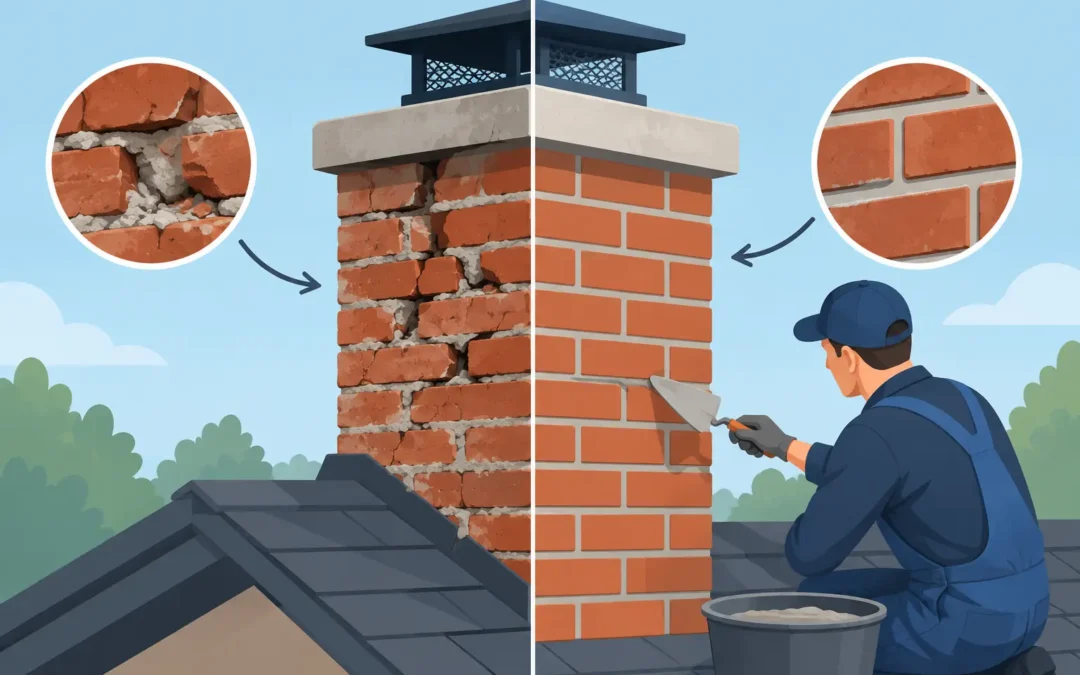
A chimney can look sound from ground level while the mortar between its bricks is already breaking down. So, why does chimney mortar crumble? Usually, it is the result of years of weather exposure, moisture getting into small gaps, and the natural movement of an external stack. Left alone, loose mortar can allow water further into the chimney and eventually affect the flue, roofline and the safety of the fireplace or stove below.
Chimney mortar is not designed to last forever. It needs inspecting and, when necessary, repairing before a small maintenance job becomes a larger rebuild. The good news is that early signs are often straightforward to spot, and prompt repointing can protect the chimney for many more years.
Why does chimney mortar crumble over time?
A chimney stack sits above the roof, where it is exposed to rain, frost, wind and changes in temperature from every direction. Unlike brickwork lower down on the house, it has very little protection. Mortar is normally the first part of the stack to show its age because it is softer than the bricks around it.
Water is the main cause. Rain can soak into hairline cracks and open joints. When temperatures fall below freezing, that trapped water expands. This puts pressure on the mortar and gradually forces small pieces away. Repeated freeze and thaw cycles can turn a narrow crack into a loose, sandy joint surprisingly quickly.
Heat also plays a part. When a chimney is used with a wood burner, multi-fuel stove or open fire, the flue warms up and cools down repeatedly. The materials in the stack expand and contract by small amounts. That movement is normal, but over decades it can weaken old mortar, particularly where the original mix was too hard, too soft or poorly applied.
In Leicestershire, wet winters and driving rain can be especially hard on exposed chimney stacks. A chimney on the side of a property that faces the prevailing weather may deteriorate faster than one in a more sheltered position.
The most common causes of failed chimney pointing
Age and general weathering
Even well-built chimneys need maintenance. Traditional lime mortar tends to weather gradually, while some later cement-based mortars can crack or separate from the brick edges. The age of the property, the type of brick and the quality of previous repairs all affect how long the joints will last.
Crumbling does not always mean the entire stack is failing. Sometimes it is limited to the top courses of brickwork, which receive the worst of the weather. A close inspection is the only sensible way to judge the extent of the problem.
Poor previous repairs
Repointing with the wrong mortar can cause more harm than good. Older bricks often need a compatible, breathable mortar that allows small amounts of moisture to evaporate through the joints. If a very hard cement mortar has been used on soft, older brickwork, moisture may be forced into the bricks instead. Over time, the brick faces can flake or fracture.
Poorly packed joints are another common issue. Mortar that only sits on the surface rather than being properly worked into the joint will not stand up well to wind and rain. It may look tidy at first, then fail after a few seasons.
Water getting in from above
Crumbling pointing is sometimes a symptom rather than the starting point. Damaged chimney pots, cracked flaunching, failed flashing, or an uncapped redundant chimney can all let water into the stack. Once moisture is entering from the top, mortar joints below may remain damp for long periods and decay faster.
Flaunching is the mortar bed around chimney pots. When it cracks, comes loose or slopes the wrong way, rainwater can sit around the pot base rather than running off. This can lead to damp brickwork, loose pots and worsening mortar damage.
Movement in the stack
Chimneys are heavy structures, and a little movement can happen as a building settles or as temperatures change. However, stepped cracks running through the brickwork, a chimney that leans, or gaps that are widening should never be treated as a simple pointing job. These signs can indicate more serious movement and need a proper assessment before repairs are planned.
Salt and soot contamination
Older chimneys may contain salts from historic coal use, smoke deposits and long-term moisture. These can affect brickwork and mortar, particularly in disused flues with poor ventilation. If the stack is damp internally, the mortar can soften and break down from within as well as from weather exposure outside.
Warning signs homeowners should not ignore
You do not need to climb onto the roof to notice every problem. From ground level, look for mortar joints that appear recessed, cracked, missing or unusually dark from damp. Pieces of mortar on the ground or in gutters are another clear warning sign.
Other signs include:
- loose or spalling brick faces around the chimney stack
- cracked flaunching around chimney pots
- staining on the outside wall, chimney breast or loft timbers
- debris falling into the fireplace or stove opening
- a chimney pot that looks out of line or unstable
Inside the property, damp patches around the chimney breast, a musty smell, or flakes of masonry in the hearth area should be investigated. These symptoms do not always come from failed pointing, but they do suggest that water may be finding a route through the chimney.
If you use the chimney, changes in how the appliance draws are also worth noting. A damaged stack does not automatically mean a blocked flue, but loose material, water ingress and failing flaunching can all contribute to chimney problems over time.
Can crumbling chimney mortar be repaired?
In many cases, yes. Localised deterioration can be repaired by raking out the failed mortar to a suitable depth and repointing the joints with an appropriate mix. The key is to remove loose material properly rather than simply applying a thin layer of fresh mortar over the top. A surface patch may look better for a while, but it will not provide a lasting repair if the joint behind it is still weak.
The right repair depends on the condition of the stack. A small area of failed pointing may only need local repointing. Cracked flaunching may need to be renewed at the same visit, especially if it is allowing water around the chimney pots. Where bricks are badly damaged, they may need replacing before the joints are repaired.
If the mortar loss is widespread, the chimney is leaning, or bricks are loose, more substantial work may be needed. This could include rebuilding the upper courses or taking down an unsafe stack to a safe level. It is never wise to assume that all crumbling mortar is cosmetic.
Why a chimney inspection is worthwhile before repairs
A view from a ladder or the ground cannot always show what is happening around the back of the stack, at the pot base, or inside the flue. A professional chimney inspection can identify loose brickwork, failed flaunching, damaged pots, water entry points and any concerns around the flue itself.
For a working solid fuel appliance, this matters for more than appearances. The chimney is part of the safe operation of the stove or fire. Moisture, debris and masonry defects can all affect the condition of the flue system. If there are signs of internal damage or recurring draught issues, a CCTV chimney inspection may help establish whether the problem is inside the flue as well as outside the stack.
Regular sweeping is useful here too. It gives an experienced chimney sweep the opportunity to spot signs of falling mortar, damp soot, unusual debris or changes in the flue condition before they become more serious.
Do not attempt a quick DIY fix at roof level
It is tempting to fill visible gaps with mortar, particularly if only a few joints appear damaged. But chimney work involves height, unstable surfaces and the risk of dislodging already weakened brickwork. It also takes experience to choose a suitable mortar and recognise when the issue is not just pointing.
Avoid using expanding foam, sealants or waterproof coatings as a substitute for proper repair. These can trap moisture or conceal ongoing deterioration. A chimney needs to shed water while still allowing the masonry to breathe.
If you spot crumbling mortar, arrange an assessment before winter weather makes the damage worse. Thurnby Chimney Sweeps can inspect the chimney alongside the wider flue system, helping you understand what needs attention now and what can be planned sensibly. A sound chimney stack is one less thing to worry about when you light the stove on a cold evening.