
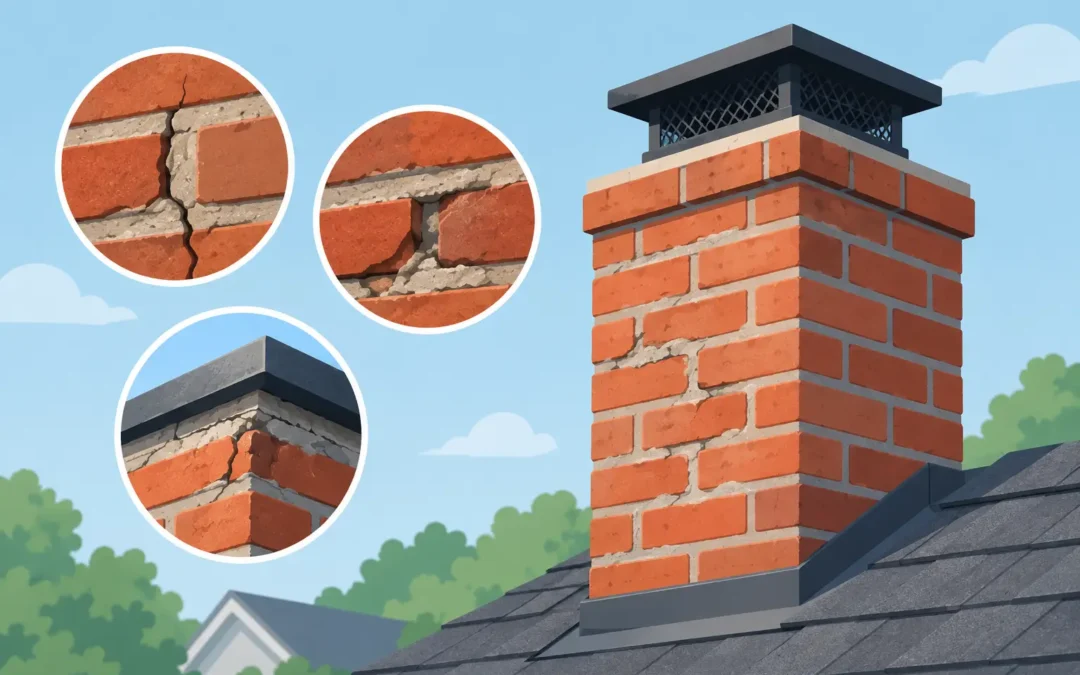
A chimney can look perfectly sound from the garden while the mortar holding its brickwork together is beginning to fail. If you are looking for the top signs chimney needs repointing, do not wait until bricks have become loose or damp has appeared indoors. Catching worn mortar early is usually simpler, safer and less disruptive than dealing with a damaged chimney stack later.
Repointing means removing defective mortar from between the bricks and replacing it with fresh, suitable mortar. It is not simply a cosmetic job. Sound pointing helps the stack resist rain, frost, wind and the heat changes that come with using a fire or stove. For homeowners across Leicestershire, a quick visual check from ground level can reveal when it is time to arrange a proper assessment.
Top signs your chimney needs repointing
Mortar is cracked, crumbling or missing
This is the clearest warning sign. Mortar joints should look firm and reasonably even. If sections are cracked, powdery, deeply recessed or missing altogether, water has an easy route into the stack.
You may notice small pieces of mortar on a roof, in the guttering or at the foot of the chimney. A little surface weathering is normal on an older property, but joints that can be seen breaking down from ground level need attention. Once rain gets behind the face of the brickwork, frost can make the problem worse quickly.
Gaps around individual bricks
Bricks rely on the surrounding mortar to keep them secure and distribute pressure across the stack. Gaps around a brick, or a brick that appears to sit proud of its neighbours, can indicate that the joint has failed.
Do not try to push loose bricks back into place from a ladder. Chimney work is high-level work, and a brick that moves may be part of a wider issue. A professional can check whether localised repointing is enough or whether damaged bricks need replacing at the same time.
Damp patches, staining or flaking plaster indoors
A failing chimney stack does not always cause an obvious leak straight away. Water can track through brickwork and appear as a damp patch on an upstairs wall, chimney breast or ceiling. You may also see peeling paint, stained wallpaper, a musty smell or salts forming on internal plaster.
Damp around a chimney is not automatically a repointing problem. Faulty flashing, damaged leadwork, a cracked chimney pot, poor flaunching or a leaking roof can all be responsible. That is why the cause should be identified before any work is specified. Repointing the wrong area will not stop water getting in.
Spalled, cracked or face-damaged bricks
When water enters weakened mortar joints and freezes, it expands. Over repeated winters, this can break away the face of nearby bricks. This is known as spalling. Bricks may look rough, flaky, split or have pieces missing from their surface.
Repointing is often needed alongside brick replacement in this situation. Fresh mortar alone cannot restore a brick that has already lost its strength. The right repair matches the needs of the stack rather than covering over the visible damage.
Rusting metalwork or deteriorating chimney fittings
Look for rust marks running down the brickwork beneath a cowl, aerial bracket, strap or other metal fitting. Rust can expand and put pressure on surrounding mortar, opening up joints further. Loose or poorly fitted chimney pots can cause similar damage at the top of the stack.
The top of the chimney takes the worst of the weather. A check of the pot, cowl, flaunching and pointing together is sensible, particularly after high winds. If your chimney has a bird guard or cowl fitted, it should remain secure without damaging the brickwork beneath it.
White deposits on the brickwork
White, chalky marks on bricks are often called efflorescence. They are mineral salts left behind as moisture evaporates from masonry. On their own, they do not always mean the chimney needs major repairs, especially after prolonged rain.
However, persistent white deposits alongside crumbling mortar, damp or damaged bricks suggest that moisture is regularly entering the stack. In that case, the chimney needs closer inspection rather than a simple clean-up.
Why damaged pointing should not be ignored
The chimney stack is exposed on all sides, often above the roofline where wind and rain are at their strongest. Mortar that looks like a minor maintenance issue can allow water to penetrate deeper into the structure. Over time, that can lead to loose bricks, internal damp, failed render and costly rebuilding work.
There is also a safety consideration. A chimney serves as part of the route that carries combustion gases away from a stove, open fire or other solid fuel appliance. External pointing does not usually tell you whether the flue itself is sound, but a visibly deteriorating stack should never be dismissed. It is wise to have the whole arrangement considered, including the pot, terminal, flaunching and any signs of movement.
For a working stove or open fire, keep up with regular sweeping as well. Sweeping removes soot and debris inside the flue; repointing repairs the external masonry. They are different jobs, but both form part of sensible chimney care.
When is repointing urgent?
Arrange an assessment promptly if bricks are loose, pieces of masonry are falling, mortar is missing over a large area, or you can see a chimney leaning or cracking through several courses. Keep people away from the area below and do not use a ladder to investigate. If there is any immediate risk of falling masonry, seek urgent professional advice.
Less severe wear can often be planned before it worsens, ideally during a period of settled weather. The timing depends on the extent of the repair, the chimney height, access requirements and the condition of the brickwork. Small, isolated patches may be straightforward. A stack with widespread deterioration, failed flaunching and damaged bricks will need a more thorough repair.
What a proper chimney repointing repair involves
A good repair starts with inspection, not a quick smear of mortar over the face of the joints. Defective mortar should be carefully removed to a suitable depth without damaging the surrounding bricks. The joints are then cleaned and repointed with a mortar appropriate for the property and existing masonry.
The mortar matters. Older bricks can be softer and more breathable than modern ones, so using an overly hard cement-rich mix may cause damage over time. A competent chimney professional will consider the age and condition of the stack rather than treating every chimney in the same way.
Access and weather also matter. Safe working at height is essential, and mortar needs suitable conditions to cure properly. Work may involve scaffolding or other safe access equipment, especially where a stack is high, unstable or difficult to reach. This can affect the cost, but it is not an area where cutting corners is worth the risk.
Can you spot chimney pointing problems from the ground?
Yes, but only to a point. Stand well back and use binoculars if you have them. Look for open joints, uneven brickwork, missing mortar, staining below the pot and debris in gutters or on the ground. Take photographs if possible, as these can help you monitor changes over time.
Avoid climbing onto the roof, leaning ladders against the stack or poking at loose mortar. You may damage fragile joints or put yourself at risk. A close inspection can also reveal defects that are not visible from below, including deterioration behind flashing or around the chimney crown.
Looking after your chimney before winter
Late summer and early autumn are useful times to inspect chimney masonry, before colder and wetter weather tests every weak joint. If you use a wood burner or multi-fuel stove, arrange regular sweeping and mention any external damage you have noticed. A sweep may identify visible concerns and advise whether a more detailed inspection is needed.
Thurnby Chimney Sweeps can help homeowners assess chimney and flue concerns alongside routine sweeping and safety work. The aim is straightforward: identify the cause, explain the sensible repair and help keep your chimney safe to use.
A sound chimney does not need constant attention, but it does need timely maintenance. If mortar is breaking down, arrange a professional look before the next spell of wet weather turns a manageable repair into a larger job.