
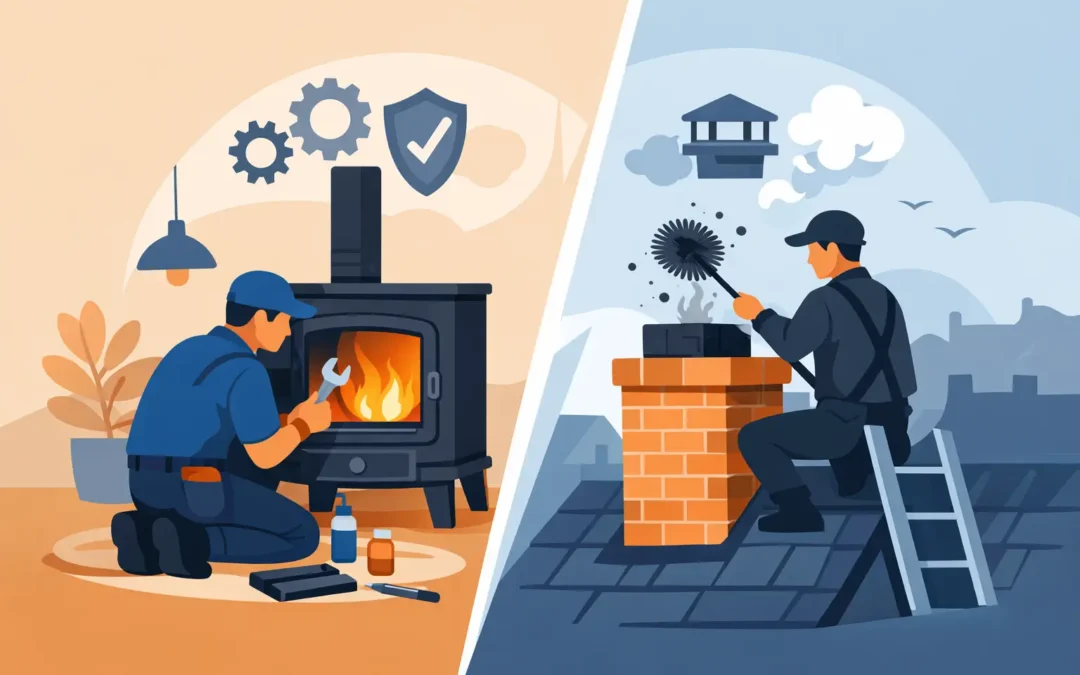
A stove can look clean, light easily and still have parts that are wearing out. Equally, a well-maintained stove cannot work safely through a flue packed with soot, tar or a bird nest. That is why stove servicing vs chimney sweeping is not an either-or choice for most solid fuel homes. They are two different jobs that work together to protect your property, your appliance and the people in it.
For homeowners in Leicestershire, the confusion is understandable. Both appointments involve your stove or fireplace, both are linked to fire safety, and both are usually carried out by the same type of trusted specialist. But the work carried out, the faults found and the timing can be quite different.
Stove servicing vs chimney sweeping: the key difference
A chimney sweep concentrates on the route smoke and gases take out of your home. The purpose is to remove soot, ash and combustible deposits from the chimney or flue, check that it is clear, and make sure it is drawing properly. A sweep may also identify blockages, damaged liners, nesting material or signs of tar build-up that need further attention.
Stove servicing concentrates on the appliance itself. It involves inspecting the condition and operation of the stove, including components that can deteriorate through normal use. Door seals, glass, firebricks, baffles, rope seals, air controls and the flue connection all need checking. A service helps ensure the stove burns as it should and is not allowing uncontrolled air or fumes into the room.
Think of it this way: sweeping keeps the chimney passage clean and clear; servicing checks that the stove feeding into that passage is in sound working order. One does not replace the other.
What a chimney sweep normally covers
Every fire produces residue. Even when you burn good-quality, properly seasoned wood or approved smokeless fuel, soot gathers in the flue over time. If wood is damp, fires are run slowly for long periods, or the appliance is not being used correctly, deposits can build more quickly.
A professional sweep removes this material from the chimney or lined flue using suitable equipment and containment methods, keeping disruption in the room to a minimum. The job should also include a visual assessment of the flue’s condition and a smoke test where appropriate, so you have confidence that fumes are travelling safely away from the property.
Sweeping can reveal issues that were not obvious from the hearth. A nest may have fallen into the flue during the quieter months. A liner may show signs of damage. Heavy, shiny tar deposits can point to wet fuel, low-temperature burning or a flue that is not performing correctly. These are useful findings, not an inconvenience. It is far better to address them before lighting the next fire.
For most homes using a wood burner or multi-fuel stove regularly, sweeping is commonly recommended at least once a year. The right interval depends on how often you burn, the fuel you use and the type of appliance. A stove used as a main heat source may need more frequent attention than an occasional weekend fire.
What happens during a stove service
A proper stove service is a closer look at the moving parts and consumable components that make the appliance safe and efficient. Stoves work under intense heat, so parts do not last forever, even on a well-made model.
The engineer will inspect the stove body and internal components for wear, cracking or distortion. Firebricks and baffles are particularly important because they protect the stove and help control the path of heat and gases. If they are damaged or out of place, the stove may not burn efficiently and other parts can be exposed to more heat than intended.
Door rope seals are another common issue. These create an airtight seal when the door is closed. As the rope compresses or hardens with age, excess air can enter the stove. You may notice that the fire is harder to control, fuel disappears faster or the stove runs hotter than usual. Replacing a worn seal is a relatively small job, but leaving it can lead to poor performance and unnecessary strain on the appliance.
The service should also include checks on the door catch, glass, grate, ashpan, air controls and visible flue connections. Depending on the stove and its condition, this may involve cleaning and replacing suitable parts. Any repair work should be clearly explained before it is carried out.
Why many homes need both services
A sweep can leave the flue clean while a worn door seal still causes the stove to overfire. A stove service can confirm that the appliance is in good condition while a blocked chimney prevents smoke and carbon monoxide from escaping as intended. The system is only as safe as its weakest point.
Booking both at the same time is often practical, particularly before the heating season. It allows the full route from stove to chimney pot to be assessed in one visit or as part of the same maintenance plan. If a problem is found, such as poor draw, recurring smoke in the room or a suspected liner fault, it is easier to diagnose when both the appliance and flue have been checked.
This is especially useful for properties with older chimneys, recently installed stoves, twin wall flue systems or appliances that have changed fuel type. The answers are not always obvious from a quick look at the fireplace.
Signs you should not wait for the next annual visit
Regular maintenance is sensible, but some warning signs call for earlier advice. Smoke spilling into the room when you open the stove door can be caused by a cold flue or poor lighting technique, but it can also indicate a restriction, poor draw or chimney problem. A persistent smoky smell, even when the stove is not lit, is worth investigating too.
Other warning signs include blackening around the stove door, loose or flattened rope seals, cracked firebricks, damaged baffles, difficulty controlling the fire, excessive tar, or a stove that seems to consume far more fuel than it used to. Do not assume these are just part of owning a wood burner.
Carbon monoxide alarms must be fitted, tested regularly and never ignored. If an alarm sounds, ventilate the property if it is safe to do so, leave the building and seek urgent advice. Do not relight the appliance until the cause has been identified and dealt with.
The fuel you burn makes a difference
Good maintenance starts before the match is struck. Burn dry, properly seasoned wood with a moisture content of 20% or less, or use suitable approved smokeless fuel for your appliance. Wet logs create more smoke and tar, which means more deposits in the flue and less useful heat in the room.
How you operate the stove matters as well. Running it too slowly for long periods can cool the flue gases and encourage condensation and tar. Letting the fire burn hot enough during normal use, following the manufacturer’s instructions and emptying ash safely all support cleaner combustion.
That said, good fuel does not remove the need for a sweep or service. It simply gives your stove and chimney a better chance of performing as they should between appointments.
Choosing the right person for the job
Chimney and stove work is safety-critical, so qualifications, experience and clear communication matter. Ask what the visit includes, whether the person can investigate faults beyond routine sweeping, and whether they can advise on repairs, liners, cowls or downdraft problems if they are found.
A local provider with relevant training and registration can save homeowners from being passed between different trades. Thurnby Chimney Sweeps can carry out routine sweeping and stove care, as well as CCTV inspections and practical solutions for more complicated flue issues. The aim is not to sell work that is not needed, but to give you a clear picture of what is happening in your system.
Keep any service records and sweeping certificates with your appliance paperwork. They are useful for your own maintenance schedule, can support insurance queries, and give future buyers confidence that the stove and chimney have been looked after.
Before the colder weather arrives, arrange the maintenance your system needs rather than waiting for smoke, smells or poor performance to make the decision for you. A clean flue and a properly checked stove make lighting the fire a much more reassuring part of home life.