
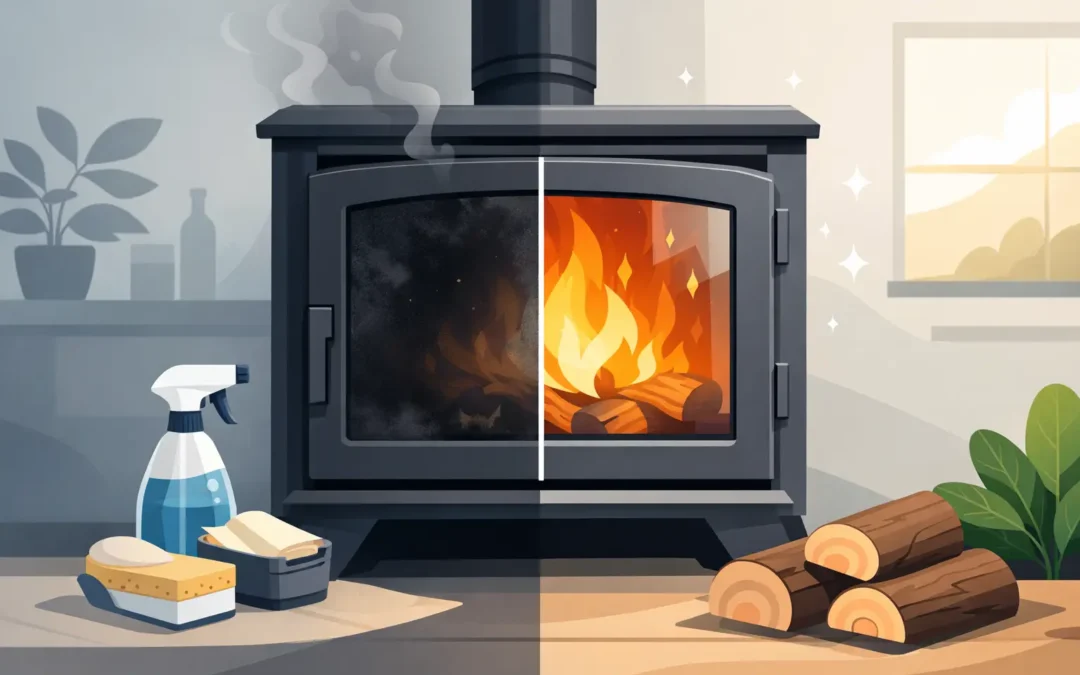
A blackened stove window is usually telling you something about the fire, not just the glass. If you are wondering how to reduce stove glass blackening, the answer is normally to improve combustion: use properly dry fuel, give the stove enough air at the right time and make sure the flue is drawing as it should.
Most modern wood burners have an airwash system designed to keep the glass clearer. It works well when the stove is burning cleanly, but it cannot compensate for damp logs, a starved fire or a flue problem. A little haze over time is normal. Thick black soot building up after every few fires is not.
Why stove glass turns black
Black deposits are soot – unburned carbon particles left behind when fuel does not burn completely. This commonly happens when the fire is too cool, the wood is too wet or the air controls have been shut down too soon.
A stove can look as though it is running gently while actually smouldering. The flames become lazy or disappear, the fuel blackens rather than burns brightly, and soot settles on the glass and inside the flue. That is not an efficient way to heat a room. It also produces more deposits in the chimney or liner.
The cause can be as simple as a poor batch of logs. However, if your usual fuel and routine have not changed, it is worth considering the stove, chimney and ventilation as a system. Restricted airflow, a leaking door seal, a blocked flue, poor chimney draw or downdraught can all affect the burn.
How to reduce stove glass blackening through better fuel
For a wood-burning stove, start with the logs. Burn dry, seasoned or kiln-dried wood with a moisture content of 20% or less. Wood sold as Ready to Burn should meet this standard, but logs stored outdoors for a long period can still become damp on the surface or throughout if they have not been protected properly.
Wet wood uses a large part of the fire’s heat simply to drive off water. The fire burns cooler, creates more smoke and leaves a dark film on the glass. It may also hiss or bubble at the ends when burning. A moisture meter is a useful check, but split a log first and test the freshly exposed centre rather than the outside.
Store logs under cover with plenty of air around them. A solid roof and open sides are generally better than wrapping a log store tightly in a tarpaulin, which can trap moisture. Bring a small supply indoors before use so surface damp and cold are not working against the fire.
Avoid treated timber, painted wood, chipboard, MDF, household rubbish and pallet wood of unknown origin. They can release harmful fumes, damage the appliance or create excessive deposits. For multi-fuel stoves, only use the fuel types approved by the manufacturer. Not every appliance designed for wood is suitable for coal or smokeless fuel, and different fuels need different air settings.
Give the fire enough air, especially at lighting
The cleanest glass usually starts with a good, hot fire. Build the fire with dry kindling and small pieces of wood, leaving space for air to move through the fuel. Open the controls as recommended in the stove manual while lighting, then allow the firebox and flue to warm properly before adding larger logs.
Do not close the air controls down as soon as flames appear. A newly lit stove needs time to establish a strong draw. Once the fire is burning brightly and the stove is up to temperature, reduce the controls gradually to the normal running position. If the flames die away, the glass darkens quickly or smoke spills into the room when the door is opened, you may have reduced the air too far.
Airwash systems generally use air directed down the inside of the glass. On many stoves, this is linked to the upper or secondary air control. Shutting that control fully may make the fire last longer, but it often means dirtier glass and more soot. The right setting varies by model, fuel and chimney draw, so use your appliance instructions as the starting point.
Never leave the stove door open or ajar to force a fire once it is established. This can make the appliance overfire and is not a safe substitute for correct lighting and airflow.
Avoid low, smouldering burns
Long overnight burns are a frequent reason for black glass. Loading the stove heavily and starving it of air can produce heat for longer, but it is usually a dirtier, less efficient burn. It can also increase soot and tar deposits in the flue.
It is better to burn smaller loads of dry wood brightly at the correct operating temperature, then refuel when needed. You should normally see active flames after refuelling, not a firebox full of dull, smoking logs. There will be occasions when a stove is run lower, but regularly slumbering a wood fire is rarely good for the glass or chimney.
Check the way you refuel
Refuelling can make a noticeable difference. Open the air controls for a few minutes before opening the door, particularly if the fire has been burning low. This helps strengthen the draw and reduces the chance of smoke entering the room.
Add a sensible amount of fuel rather than overfilling the firebox. Place logs with some gaps between them and use sizes suited to your stove. Very large, cold logs can cool the fire quickly. Once the new load is burning well, return the controls to the normal setting in stages.
Keep ash at the level recommended by the manufacturer. Wood burners usually need only a light ash bed, whereas some multi-fuel appliances are designed to run with a deeper bed and use primary air from beneath the grate. Clearing too much ash or allowing it to build up excessively can both affect combustion, depending on the appliance.
Make sure the stove and chimney can breathe
If clean, dry fuel and better firing technique do not improve the glass, do not assume the stove is simply old. A stove needs a clear route for combustion gases to leave the property and an adequate supply of replacement air to enter.
Check that air vents are open and have not been blocked for draught reduction or decoration. Modernised homes with new windows, insulation or extractor fans can be much more airtight than they used to be. Kitchen and bathroom extractors may compete with the stove for air, particularly in smaller rooms.
A weak or inconsistent draw can also be caused by a partial blockage, a bird nest, excessive soot, a poorly sized liner, a cold external flue, chimney height issues or local wind conditions. If the problem is worse on certain wind directions, or if smoke comes into the room, a downdraught assessment may be needed. A cowl can help in some cases, but fitting one without identifying the cause is not always the right fix.
Door rope seals and glass clips deserve attention too. A worn seal can allow uncontrolled air into the firebox, making the stove difficult to control and altering the airwash pattern. Damaged baffles, blocked air inlets and warped internal parts can have a similar effect. These are servicing issues, not reasons to keep turning the controls further down.
Clean the glass without damaging it
Let the stove go completely cold before cleaning the window. For light deposits, a soft damp cloth or kitchen paper dipped in fine, cold wood ash can work well. Rub gently, then wipe the glass clean with a fresh damp cloth and dry it afterwards.
A stove-glass cleaner can be useful for more stubborn marks, provided it is suitable for ceramic stove glass. Avoid abrasive pads, harsh oven cleaners and scraping with metal tools. They can scratch the surface, damage seals or leave residues that burn onto the glass at the next firing.
If the glass becomes brown, grey or permanently cloudy rather than simply sooty, it may have been overheated or affected by repeated poor combustion. Cleaning may improve its appearance, but it will not solve the underlying firing or airflow issue.
When black glass needs professional attention
Arrange a check if the glass suddenly blackens despite using dry wood and normal settings, if you have smoke entering the room, or if the stove is difficult to light and keep alight. A carbon monoxide alarm sounding is an urgent warning: leave the property, get to fresh air and follow the alarm manufacturer’s emergency guidance.
Regular chimney sweeping removes soot and deposits before they become a bigger restriction or fire risk. The right frequency depends on the appliance, fuel and how often it is used, but wood and multi-fuel stoves should be inspected and swept regularly. A proper service can also identify worn seals, damaged firebricks, baffle problems and issues with the flue connection.
For homeowners across Leicestershire, Thurnby Chimney Sweeps can assess the whole setup rather than treating a black window as a cleaning job alone. A clean-burning stove should give you a clear view of the flames most of the time, along with safer, more efficient heat for your home.