
A stove that burns well needs more than a sound chimney and dry fuel. It also needs enough air to do its job safely. This guide to stove ventilation rules explains what homeowners need to consider before installing, replacing or using a wood-burning or multi-fuel stove. Getting ventilation right helps prevent smoke entering the room, poor combustion and the risk of carbon monoxide.
Why stove ventilation matters
A solid fuel stove takes oxygen from the room to keep the fire burning. If the room cannot replace that air, the stove may struggle to draw properly. You might notice smoke spilling out when you open the door, a lazy flame, blackened glass, a smell of fumes or a fire that is difficult to control.
Modern homes are often much more airtight than older properties. Double glazing, draught-proofing, insulation upgrades and sealed floors all make a home warmer and cheaper to heat, but they can also reduce the natural air supply available to a stove. That does not make a stove unsuitable, but it does mean ventilation must be assessed properly.
The flue, the appliance and the room ventilation work as one system. A clean flue alone cannot make up for an inadequate air supply, and an air vent alone will not solve a blocked chimney, an unsuitable flue height or a downdraught issue.
The main stove ventilation rules in England
Stove installations in England must comply with Building Regulations, particularly Approved Document J, which covers combustion appliances and fuel storage systems. The rules are there to make sure the appliance can receive sufficient combustion air and that products of combustion are safely removed from the building.
In straightforward terms, a permanent air supply may be needed where a solid fuel appliance has an output above 5kW. The size of that vent is based on the stove’s rated output and the age and construction of the property. Homes built or substantially altered from 2008 onwards can have different ventilation requirements because they are expected to be more airtight.
A commonly used calculation is 550 square millimetres of permanent ventilation for every kilowatt above 5kW in an older dwelling. In newer, more airtight homes, ventilation may be required for the appliance’s full rated output. However, this is not a calculation to guess at from a stove brochure. The appliance instructions, the building’s air permeability and the specific installation all matter.
Some modern stoves are designed to take combustion air directly from outside through a dedicated external air kit. This can be a sensible option in an airtight property, but it must be installed as the manufacturer intends. It is not enough to fit a pipe to any convenient opening and assume the job is done.
The vent must be permanent
If a vent is required, it should provide a permanent source of air. It must not be fitted with a closable flap, covered by furniture or blocked up in winter because it feels draughty. Blocking an air vent can turn a safe installation into an unsafe one.
The vent should also be positioned so it does not become easily obstructed by leaves, dust, insulation, insect mesh or household items. A correctly sized vent that has been blocked is no longer doing its job.
Extractor fans can affect a stove’s draw
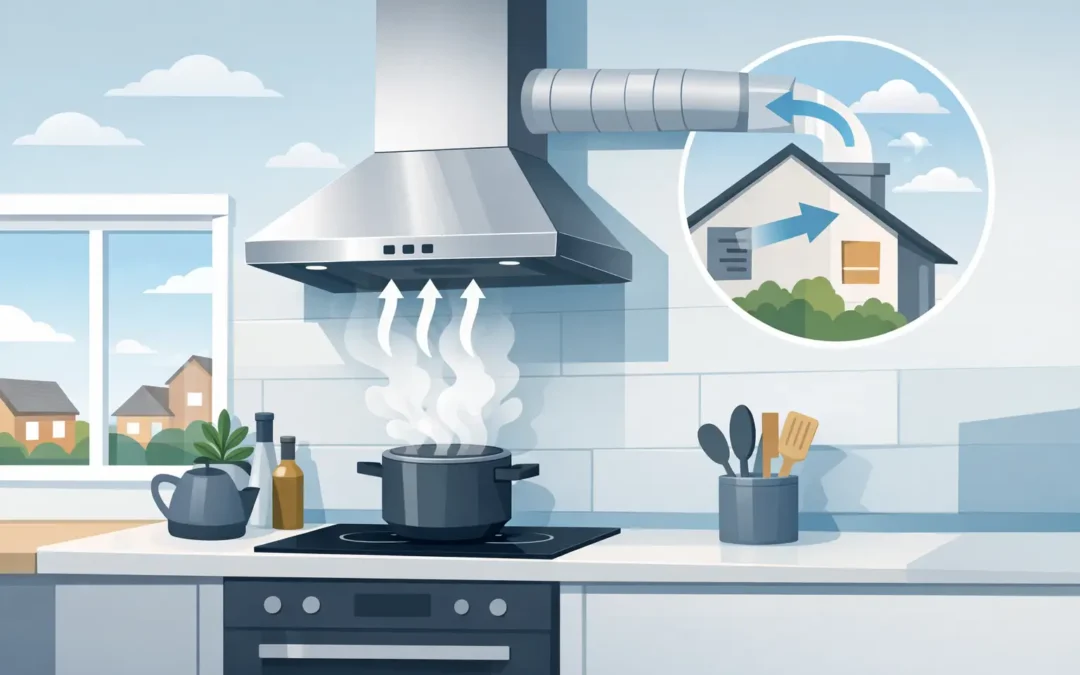
Kitchen and bathroom extractor fans are often overlooked when a stove is being planned. A powerful fan can remove air from the property and create negative pressure. That pressure can interfere with the chimney’s natural draw and, in some circumstances, pull combustion gases back into the room.
The risk depends on the appliance, the chimney, the size and airtightness of the home, and where the fan is located. A small intermittent bathroom fan on another floor is not the same as a high-extraction cooker hood in an open-plan kitchen and living area.
Where an extractor fan could affect the safe operation of a stove, extra ventilation or a different design solution may be required. This is particularly relevant in extensions, kitchen-diners and renovated homes where a stove sits close to a large cooker hood. A competent installer should ask about existing and planned extraction before recommending a stove or signing off the work.
If you already have a stove and it starts smoking when the cooker hood is switched on, do not ignore it. Stop using the appliance until the cause has been checked. The answer may involve ventilation, flue performance, a cowl or changes to the extraction arrangement, but it needs a proper diagnosis rather than a quick fix.
Stove output is not just about heating the room
Many ventilation problems start with an oversized stove. It is tempting to choose the biggest appliance available, especially in a large old house, but a stove that is too powerful for the room will often be run low. That can lead to poor combustion, tar deposits in the flue and a hotter room than anyone wants.
The rated output also affects the ventilation calculation. Choosing a stove that genuinely suits the heat demand of the space can reduce the amount of dedicated ventilation needed while improving day-to-day comfort. Room size is only one part of the picture. Insulation levels, ceiling height, open doorways and how the home is used all need consideration.
A smaller, correctly specified stove running efficiently is usually a better choice than an oversized appliance constantly turned down.
Carbon monoxide alarms are essential
A carbon monoxide alarm is required in the room where a new or replacement fixed solid fuel appliance is installed. It is an important warning device, but it is not a substitute for correct ventilation, a safe flue or regular sweeping.
Use an alarm that is suitable for domestic carbon monoxide detection and fit it in line with the manufacturer’s instructions. Avoid putting it directly beside the stove, behind curtains or in a spot where it can be knocked off the wall. Test it regularly and replace it when it reaches the end of its stated service life.
If a carbon monoxide alarm sounds, get everyone into fresh air, ventilate the property if it is safe to do so, and seek appropriate emergency advice. Do not simply silence the alarm and carry on using the stove.
What a proper installation check should cover
A compliant stove installation is more than fitting a hearth and connecting a flue pipe. Before work starts, the installer should assess the appliance output, the room’s ventilation, the existing chimney or proposed twin-wall flue route, nearby extraction fans and the condition of the property.
They should also check whether the chimney needs lining, whether the flue is the right size for the stove, and whether its height and terminal position are likely to provide reliable draw. In some homes, CCTV chimney inspection is useful before an installation, especially where the chimney is old, unlined or has a history of smoke problems.
After installation, the appliance should be tested and the relevant paperwork provided. Work must be notified through the appropriate route, either by a registered competent person such as a HETAS installer or through local authority Building Control. Keep the certificate with your house documents. It can be useful for insurance, future sales and proving that the work was carried out correctly.
Common mistakes homeowners should avoid
The most common mistake is assuming an existing fireplace opening has enough ventilation simply because an open fire used to be there. Once a stove is fitted, the chimney may be lined, the opening sealed and the home improved for energy efficiency. The conditions are no longer the same.
Another is treating draughts as proof that ventilation is adequate. Uncontrolled draughts through floorboards or old windows are not a reliable or compliant replacement for correctly designed permanent ventilation. Equally, leaving a window ajar is not a safe long-term solution because it can be shut, and it does not address the installation requirement.
Homeowners should also be cautious of decorative vents with very small free-air openings. The visible grille size is not necessarily the amount of usable airflow. What matters is the free area of the vent once grilles and mesh are taken into account.
Keeping the system safe after installation
Ventilation needs checking as part of normal stove care. Do not cover vents during decorating, fit furniture tightly over them or fill an external grille with expanding foam to stop a perceived draught. If the vent becomes noisy, cold or inconvenient, ask for advice on a suitable approved alternative rather than removing it.
Regular chimney sweeping and stove servicing are equally important. Soot, ash and deposits can affect performance, while nests and debris can restrict a flue at any time of year. At Thurnby Chimney Sweeps, we see that smoke and draw problems are rarely caused by one issue alone. Air supply, appliance use, fuel quality and flue condition all need to be considered together.
If your stove is planned, newly fitted or behaving differently after building work, have the ventilation and flue system checked before the next fire. A properly assessed installation should let you enjoy the warmth of your stove with the reassurance that you and your household are in safe hands.