
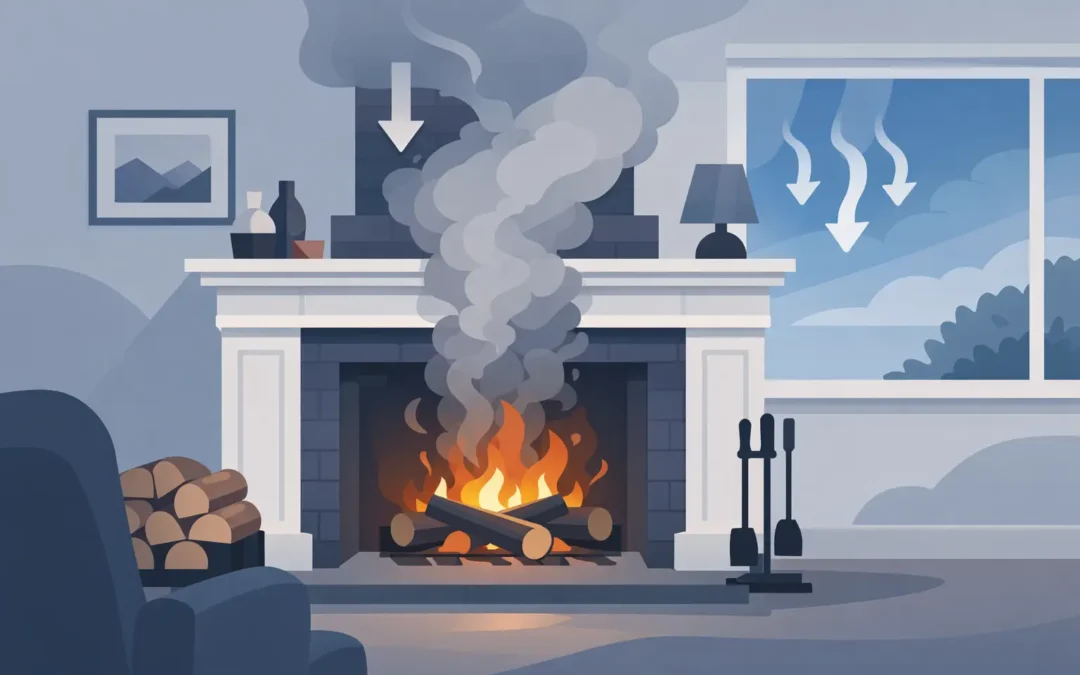
Smoke should be rising up the chimney, not drifting back into your lounge and leaving that stale bonfire smell behind. If you are asking what causes a smoky fireplace, the answer is usually a problem with airflow, heat, or blockage somewhere in the system. Sometimes the fix is simple. Sometimes it points to a fault that needs proper attention before you light another fire.
A smoky fireplace is not just annoying. It can leave soot around the opening, stain walls and ceilings, and in some cases point to a flue that is not drawing safely. That is why it helps to understand what is going on before the problem gets worse.
What causes a smoky fireplace most often?
In plain terms, a fireplace smokes when the chimney is not pulling combustion gases up and out as it should. This upward pull is called the draught. If the draught is weak, interrupted, or flowing the wrong way, smoke spills into the room instead.
The most common causes are a blocked flue, cold chimney, poor ventilation, incorrect fire size, damp or unseasoned wood, or downdraught from wind conditions. In older properties, the issue can also be linked to the size or condition of the chimney itself. Cracked liners, damaged pots, bird guards clogged with soot, and poor previous installation work can all affect performance.
The tricky part is that more than one issue can be happening at the same time. A chimney may be partly restricted and the room may also be short on air. That is why smoky fireplaces need proper diagnosis rather than guesswork.
Blockages in the flue
One of the first things to suspect is a blockage. Soot and creosote build-up can narrow the flue over time, especially if the fire has been burning wet wood or has not been swept regularly. Even a partial obstruction can upset the draught enough to push smoke back into the room.
Bird nests are another regular cause, particularly in spring and early summer. Jackdaws are well known for filling chimneys with twigs at surprising speed. We also see fallen masonry, loose render, and debris from damaged chimney pots causing trouble.
If the fireplace has suddenly started smoking when it never used to, a new blockage is high on the list. This is one of the clearest cases where a professional chimney sweep and inspection make sense straight away.
A cold chimney can stop the draught
A chimney needs warm rising air to work properly. When the flue is very cold, especially after long periods of not being used, the air inside can feel heavy and resistant. Instead of smoke rising cleanly, it hangs low and spills out at the fireplace opening.
This is common in colder months and in properties where the chimney sits on an outside wall. The first lighting of the season often shows the problem more than later fires do.
Sometimes gently warming the flue before building the main fire helps. A small kindling fire started correctly can establish the draught. If every fire smokes no matter how carefully it is lit, the issue is probably more than just a cold flue.
The room may not have enough ventilation
Many homeowners are surprised by this one. Fires need air to burn, and chimneys need air movement to carry smoke away. If the room is too airtight, the fire struggles for oxygen and the chimney draught can weaken.
This tends to happen in homes that have had newer doors, windows, insulation, or other draught-reducing improvements fitted. Those upgrades are good for energy efficiency, but they can change how an open fire or stove behaves.
You might notice the fire improves when a window is opened slightly. That is a useful clue, not a long-term solution. If lack of ventilation is the cause, a suitable air vent may be needed so the appliance can work safely and consistently.
Damp or poor-quality fuel
Fuel quality matters more than many people realise. Wet logs create more smoke, more soot, and less heat. That means the flue does not warm up as efficiently, and the chimney is more likely to struggle with the draught.
Unseasoned wood can also leave sticky deposits inside the flue, which then increase the chance of future smoke problems. Smoky fires are often worse when oversized logs are used, when the fire is starved of air, or when people try to keep it slumbering for long periods.
For open fires and stoves alike, properly seasoned or kiln-dried wood is the safer bet. It burns hotter, cleaner, and gives the chimney a better chance to perform as it should.
Fireplace and chimney size can be mismatched
Sometimes the problem is in the design rather than the day-to-day use. If the fireplace opening is too large for the flue serving it, the chimney may not be able to cope with the volume of smoke produced. Equally, if a stove or appliance has been fitted to an unsuitable flue system, draught problems can follow.
This is more common in older homes where fireplaces have been altered over the years, or where previous work was done without proper understanding of flue sizing. You can sweep a chimney and still have smoke issues if the setup itself is wrong.
In these cases, a CCTV chimney inspection can be particularly useful. It helps identify restrictions, changes in flue direction, liner problems, or old construction details that cannot be seen from the hearth.
Downdraught and wind problems
If smoke problems seem worse on windy days, downdraught may be to blame. This happens when wind pushes air down the chimney instead of allowing smoke to rise naturally. Nearby roofs, trees, taller buildings, and the position of the chimney stack can all affect this.
Downdraught can be inconsistent, which makes it frustrating. The fireplace may behave one day and smoke badly the next, even when you are burning the same fuel.
A suitable anti-downdraught cowl can sometimes help, but not every cowl suits every chimney. Fitting the wrong one can create a different problem. It is always better to identify the exact cause first rather than treating chimney accessories as a guess.
Poor fire lighting technique does play a part
Not every smoky fireplace points to a major fault. If a fire is overloaded too early, lit with poor kindling, or smothered before the flue gets warm, smoke can spill into the room during start-up.
Open fires need a good base of kindling and enough space around the fuel for air to circulate. Stoves need the correct air controls set for lighting. Shutting vents too soon is a common mistake and often leads to lazy, smoky burning.
That said, a well-used fireplace should still be reasonably forgiving. If you are doing everything right and smoke is still entering the room, there is likely a deeper issue.
When a smoky fireplace is a safety concern
A bit of smoke on lighting is one thing. Persistent smoke entering the room is another. If you notice strong fumes, black staining around the fireplace opening, bits of soot falling down, or headaches when the fire is in use, stop using it until it has been checked.
Smoke problems can go hand in hand with carbon monoxide risk, especially where combustion is poor or the flue is not venting properly. Every property with a solid fuel appliance should have a working carbon monoxide alarm in the correct position.
This is also why regular sweeping matters. It is not just about keeping things tidy. It is about keeping the flue clear, spotting faults early, and making sure the system is working as safely as it should.
What to check before calling a professional
There are a few sensible checks you can make. Think about whether the problem has always been there or whether it is new. Notice if it is worse in certain weather, only at lighting, or all the time. Check what fuel you are burning and whether the logs are truly dry. If opening a window improves the fire, ventilation may be part of the problem.
Beyond that, avoid poking around inside the chimney or carrying on with repeated smoky fires in the hope it will sort itself out. If there is a nest, soot restriction, damaged liner, or structural fault, it needs proper equipment and experience to put right.
At Thurnby Chimney Sweeps, this is exactly the sort of issue we help local homeowners with – from routine sweeping to CCTV inspections, downdraught diagnosis, bird nest removal and cowl fitting.
What causes a smoky fireplace that used to work fine?
When a fireplace that has behaved well for years suddenly starts smoking, something has changed. Most often that means a blockage, build-up of soot, damaged terminal, or a ventilation change in the property. New extractor fans, replacement windows, or even changes to the fireplace opening can upset an otherwise reliable setup.
That is why a sudden change should never be ignored. Chimneys do not usually become smoky for no reason.
If your fireplace is smoking, the best next step is not to keep testing it with another fire. Get the chimney checked, get the cause identified, and deal with it properly. A fire should give warmth and peace of mind, not a room full of smoke.