
A stove that looks well fitted can still be unsafe if it cannot draw enough air. This guide to stove ventilation requirements explains what homeowners need to know before installing, replacing or using a wood-burning or multi-fuel stove. Good ventilation helps the fire burn properly, keeps smoke moving up the flue and reduces the risk of carbon monoxide entering your home.
For many homes in Leicestershire, the answer is not simply to fit an air brick and carry on. The right arrangement depends on the stove’s rated output, the age and airtightness of the property, the flue system and any extract fans nearby. Getting these details right at installation is far easier, and safer, than trying to correct persistent smoke or poor draw afterwards.
Why a stove needs a dedicated air supply
A solid fuel stove uses oxygen to burn. That air has to come from somewhere. In an older, naturally draughty property, there may be enough background air leakage to support a smaller appliance. Modern doors, windows, insulation and draught-proofing can change that completely.
When a stove does not receive enough combustion air, it may be difficult to light, burn sluggishly or send smoke into the room when the door is opened. You may also notice blackened glass, excessive soot, a fire that goes out overnight, or fumes when a kitchen extractor fan is running. These are not problems to ignore or solve by leaving a window slightly open every time you use the stove.
Purpose-provided ventilation gives the appliance a reliable source of air. It also helps the flue establish the draw needed to remove combustion gases safely. A well-maintained chimney and a correctly sized vent work together. One cannot fully make up for a problem with the other.
Guide to stove ventilation requirements in the UK
Stove ventilation is covered by Building Regulations, principally Approved Document J in England and Wales. The rules are technical, and a competent installer should calculate the requirement for the particular appliance and property rather than guess.
As a general guide, a stove with a rated output of up to 5kW may not need a purpose-made air vent in many existing homes. For appliances above 5kW, extra permanent ventilation is normally required. A common calculation is 550 square millimetres of free air area for every kilowatt above 5kW.
For example, a 7kW stove may need ventilation equivalent to 1,100 square millimetres of free air area. However, this is only an illustration, not an installation specification. In newer or particularly airtight homes, ventilation can be required even for a stove rated at 5kW or below. The date the property was built, its designed air permeability and the manufacturer’s instructions all matter.
The figure to check is the stove’s nominal heat output, not the maximum output claimed in a brochure. It is worth choosing a stove that suits the room and the home rather than buying a larger model than necessary. An oversized appliance is often run slowly, which can lead to poor combustion, soot and tar deposits in the flue.
The vent must be permanent and correctly sized
A combustion air vent should lead directly to outside air, either through an external wall or an approved route such as a ventilated floor void. It must not be closable, even in cold weather. Blocking it with furniture, a draught excluder or tape defeats its purpose and can create a dangerous situation.
The quoted ventilation area refers to the free area through the vent, not simply the size of the grille or hole in the wall. Screens, insect mesh and louvres can reduce airflow. This is one reason a suitable, tested vent should be selected and fitted properly rather than improvised.
Where possible, the vent should be positioned so that it supplies the room without causing an uncomfortable cold draught across seating areas. Some installations use a direct external air connection to the stove. These systems can be a good option for suitable appliances and airtight homes, but the stove must be designed for that arrangement and the installation must follow the manufacturer’s instructions.
Extractor fans, open fires and other pressure changes
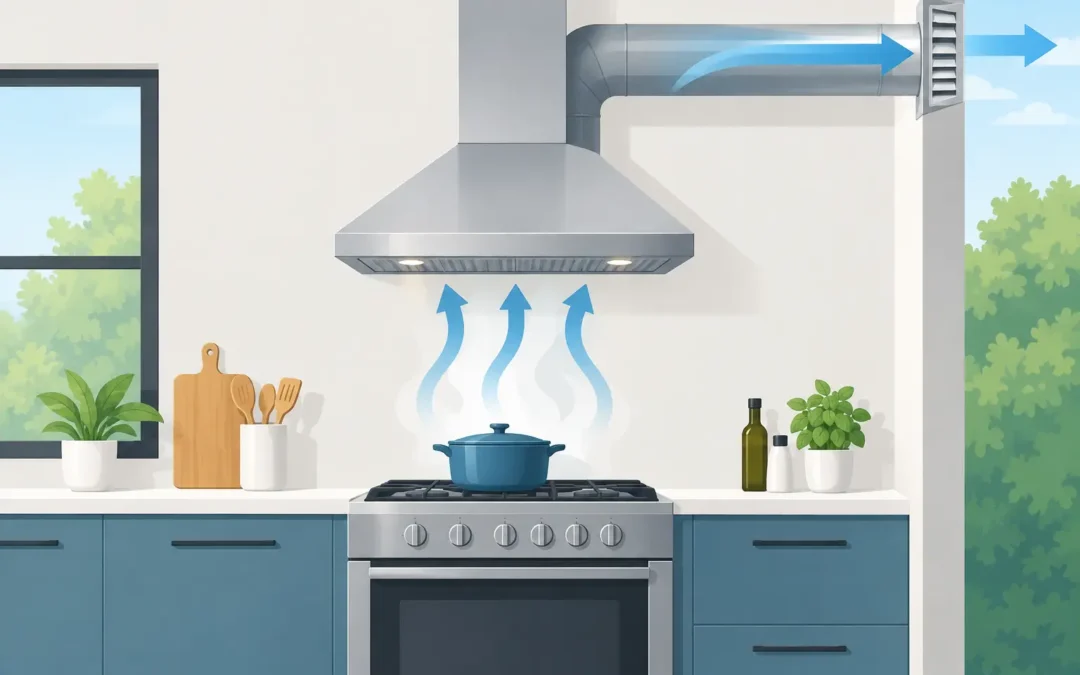
A stove does not operate in isolation. Kitchen cooker hoods, bathroom extractors, tumble dryers and whole-house ventilation systems can all affect air pressure inside a property. If an extractor pulls air from the room faster than replacement air can enter, it can compete with the stove or reverse the flue draw.
This may cause smoke spillage, a smell of fumes, or carbon monoxide risk. The concern can be greater where an extractor fan is installed in the same room as an open-flued appliance, but it should be assessed whenever a solid fuel appliance is being fitted. A competent installer may need to carry out a spillage test and advise whether the fan needs an interlock or whether more make-up air is required.
Open fires, additional stoves and boilers also draw air from the home. If more than one appliance is used, the ventilation calculation needs to reflect the combined demand. Do not assume an existing wall vent is adequate simply because it was already there.
Signs your current ventilation may not be right
Smoke entering the room is the clearest warning sign, but ventilation problems are not always obvious. A stove that burns badly can also be affected by a blocked flue, a bird nest, wet fuel, an unsuitable chimney height or downdraught from nearby buildings and trees. That is why the cause needs investigating rather than relying on a quick fix.
Look out for recurring difficulty lighting the stove, smoke when opening the door, soot marks around the appliance, lazy flames, blackened glass despite using dry wood, or problems that appear when internal doors and windows are shut. Fumes or a carbon monoxide alarm sounding require immediate action: stop using the appliance, ventilate the property if it is safe to do so, leave the area and seek urgent professional advice.
A carbon monoxide alarm should be fitted in the same room as a solid fuel appliance, in line with the manufacturer’s positioning guidance and current regulations. It is an essential warning device, but it does not replace the correct air supply, a sound flue or regular sweeping.
Installation, certification and ongoing checks
A new stove installation must comply with Building Regulations and the appliance manufacturer’s instructions. In many cases, a HETAS registered installer can self-certify the work and provide the appropriate compliance certificate. If the work is not self-certified, it should be notified to local authority Building Control.
Keep the certificate with your property paperwork. It can be useful for insurance, future house sales and proving that safety-critical work was completed correctly. It is also sensible to retain the stove manual, details of the flue liner or twin-wall system, and records of chimney sweeping and servicing.
Ventilation should be checked as part of routine stove care. Grilles can become blocked by dust, pet hair, decorating materials or external debris, while alterations to the house can change how the stove performs. Replacing windows, adding insulation, installing a new extractor hood or converting a room are all good reasons to have the appliance and flue arrangement reviewed.
Regular sweeping remains part of the safety picture. Soot and creosote restrict the flue, and a partial blockage can mimic a ventilation fault. Thurnby Chimney Sweeps can assess the whole system, from the appliance and air supply to the chimney, liner and terminal, rather than treating smoke problems as a one-size-fits-all issue.
If your stove only works when a window is open, or you are planning an installation in a newly improved home, do not live with the uncertainty. A proper assessment of the ventilation and flue will give you a stove that burns cleanly, heats effectively and stays safe when your family is at home.