
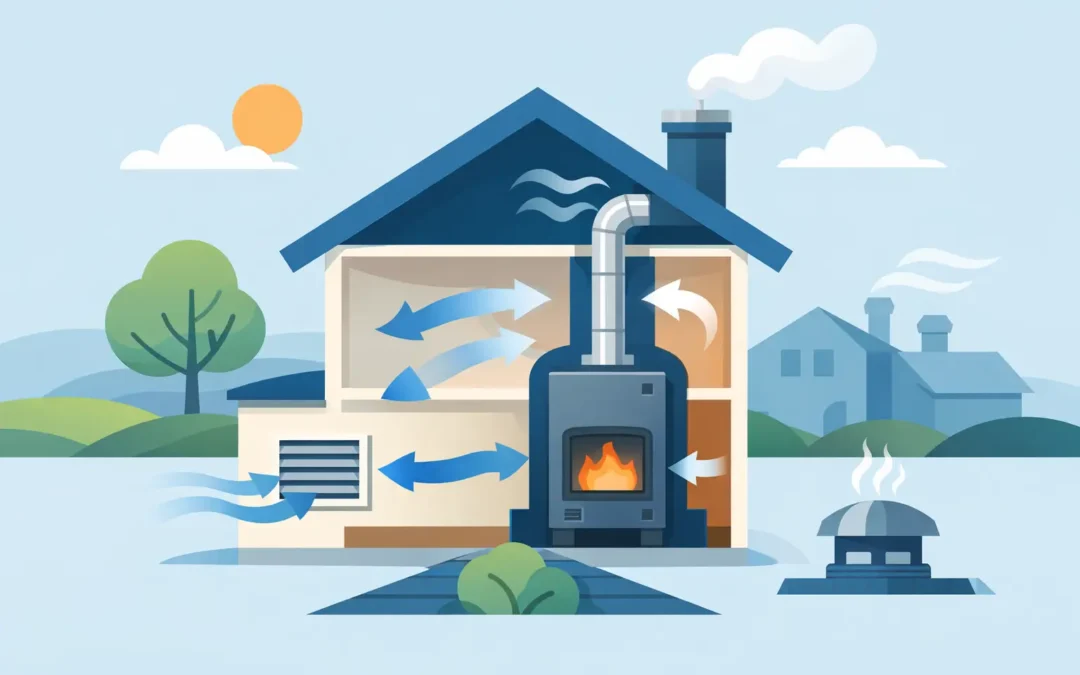
A stove that looks perfectly fitted can still be unsafe if it cannot draw enough air. Smoke entering the room, a lazy flame or a carbon monoxide alarm sounding are not small inconveniences to live with. This guide to flue ventilation requirements explains what homeowners need to consider when installing, replacing or using a wood-burning or multi-fuel stove in Leicestershire.
The aim is simple: the appliance needs a reliable supply of combustion air, and the flue needs to carry gases safely outside. Get either part wrong and the stove may perform poorly, produce more deposits in the chimney, or put people in the property at risk.
Why ventilation matters for a stove or fire
Solid fuel appliances burn fuel by drawing in oxygen from the room or through a dedicated external air connection. That process also creates combustion gases. A correctly sized, sound flue creates the upward pull that takes those gases away from the appliance and out of the property.
Modern homes can make this more complicated. New windows, insulation and draught-proofing are good for warmth and energy bills, but they can reduce the natural replacement air available to a stove. A powerful kitchen extractor, bathroom fan or tumble dryer can also compete for air and, in some circumstances, encourage smoke or fumes back into the room.
Ventilation is not there to make a house feel cold. It is there to provide the air an appliance needs to burn properly and to help prevent dangerous spillage of combustion gases. A permanent vent should not be covered, blocked with furniture or taped over because it feels draughty. If it is causing a noticeable cold draught, the right answer is to have the installation assessed, rather than removing the air supply.
A guide to flue ventilation requirements
For solid fuel appliances in England, the relevant guidance sits within Building Regulations Approved Document J, alongside the appliance manufacturer’s installation instructions. Both matter. The manufacturer’s requirements can be more specific for a particular model, and they must be followed.
A common rule of thumb for many installations is that an appliance rated above 5kW needs permanently open ventilation from outside. The usual calculation is 550 square millimetres of free air per kilowatt above 5kW. For example, a 7kW stove may require 1,100 square millimetres of free ventilation.
That figure is a starting point, not a substitute for an installation assessment. The age and airtightness of the property, the appliance type, whether it has a direct external air kit, and other fuel-burning appliances in the home can all affect what is needed. Newer or particularly airtight homes may have ventilation requirements even for lower-output appliances.
The useful phrase is “free area”. A grille may look large enough from the front, but its internal mesh, louvres and insect screening reduce the amount of air that can pass through it. The vent must be sized for its actual free area, not its outside dimensions. It must also lead directly to outside air, remain permanently open and be positioned where it cannot easily become obstructed.
If you are choosing a stove, output deserves proper thought. Bigger is not always better. An oversized stove is often run with the air controls restricted, which can lead to poor combustion, blackened glass and faster soot or tar build-up in the flue. A suitably sized appliance, fitted with the correct ventilation, is generally easier and safer to use.
Direct air and room ventilation
Some modern stoves can be connected to a dedicated air supply from outside. This is often called a direct air kit or external air supply. It can be a sensible choice in a well-sealed house because the stove receives combustion air without relying solely on air drawn through the room.
However, a direct air connection is not a reason to assume every other ventilation requirement disappears. The appliance instructions, the installation design and the property’s layout still need checking. The duct must be correctly sized, protected from blockage and installed so that rainwater, pests and cold bridging are properly considered.
The flue has a separate job to do
Ventilation and the flue work together, but they are not the same thing. An air vent supplies oxygen. A flue removes combustion products and creates the draw, or draught, needed for the appliance to operate correctly.
A flue that is too short, poorly insulated, leaking, oversized or restricted can cause smoke problems even where the room vent is adequate. Chimney bends, loose liners, bird nests, heavy soot deposits and failed flaunching can all affect performance. In some properties, nearby roofs, trees or prevailing winds can create downdraught at the chimney pot.
For a new stove or replacement appliance, the flue should be assessed for its condition, route, diameter and suitability for the stove being fitted. Older chimneys are not automatically suitable simply because they have been used for an open fire. A stove usually produces cooler, more concentrated flue gases, and an unsuitable chimney may need lining to improve safe operation and reduce deposits.
Flue terminal height and clearance from the roof are also part of a compliant installation. These details are not cosmetic. They help the flue discharge safely and reduce the chance of smoke being pulled back towards windows, neighbouring buildings or the property itself.
Extractor fans, open fires and other appliances
Before fitting a stove, consider what else uses air in the home. Extractor fans are particularly relevant in open-plan kitchens and recently renovated properties. A cooker hood running at full speed can create negative pressure, making a stove harder to light or causing fumes to spill into the room.
Open fires need significant ventilation too. They take far more air from a room than a closed stove, which is one reason they can feel draughty and can be affected by extractor fans. Gas boilers, gas fires and oil appliances also need their own appropriate air supply and flue arrangements. Never assume one vent serves every appliance safely.
A competent installer should consider the whole property, not just the fireplace opening. This is especially valuable where a stove is being added after extensions, replacement windows or major insulation work.
Warning signs that should not be ignored
A new or worsening problem with a stove or chimney is worth investigating promptly. Stop using the appliance and seek advice if you notice:
- Smoke or fumes entering the room when lighting or refuelling the stove.
- A carbon monoxide alarm sounding, even if the appliance seems to be working normally.
- Persistent staining around the appliance, register plate or chimney breast.
- A fire that struggles to establish, burns sluggishly or produces unusually black glass.
- Strong smells, falling debris, bird activity in the chimney or signs of a blocked flue.
Carbon monoxide has no smell, colour or taste. Every room containing a solid fuel appliance should have a suitable carbon monoxide alarm fitted in line with current requirements and the alarm manufacturer’s instructions. An alarm is a final warning device, not a replacement for a sound installation, adequate ventilation or regular sweeping.
Maintenance keeps ventilation and flues working as intended
A clear chimney cannot compensate for an inadequate air supply, but regular sweeping remains essential. Soot, tar and debris reduce the effective flue area and can interfere with draught. Bird nests are a regular issue in unused or poorly protected pots, particularly after the nesting season, and should only be removed safely and legally at the appropriate time.
Check visible air vents as part of normal household care. Keep them clear of dust, pet hair and furnishings, and do not fit filters or covers unless they are designed for the installation and have been approved by a competent professional. If you have recently changed windows, added an extractor fan or carried out insulation work, it is sensible to have the stove and flue arrangement reviewed.
At Thurnby Chimney Sweeps, we see many smoke and draught complaints where the cause is not one single fault. It may be a partially blocked flue combined with an undersized vent, an unsuitable cowl, or a house that has become more airtight over time. A proper inspection identifies the cause before money is spent on the wrong fix.
If you are planning a stove installation, replacing an existing appliance or concerned about how your chimney is drawing, use a qualified, registered installer who can assess the appliance, ventilation and flue as one system. A little care at that stage helps keep the stove warm, efficient and safe for the seasons ahead.