
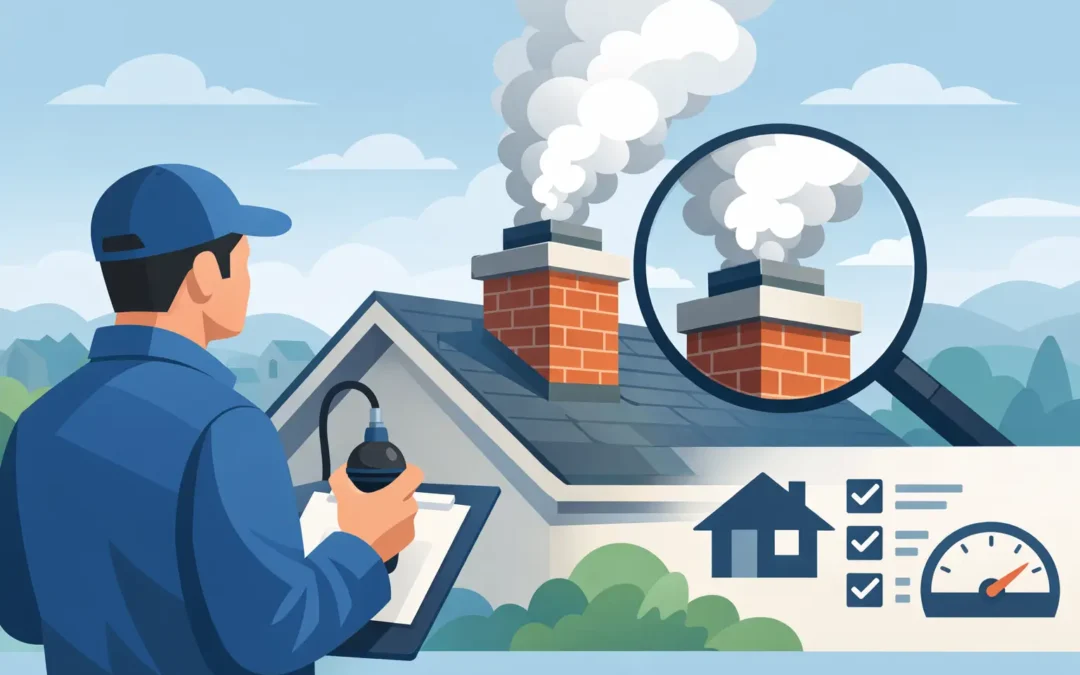
A chimney can look perfectly sound from the fireplace or stove, yet still fail to draw properly or allow fumes to escape where they should not. This guide to chimney smoke tests explains what a smoke test is designed to reveal, when it is sensible to arrange one and why it is not simply an extra step after a sweep.
For homeowners in Leicestershire with an open fire, wood burner or multi-fuel stove, the aim is straightforward: combustion gases should travel safely from the appliance, through the flue and out above the roof. A properly carried out smoke test helps identify problems before they become a smoky room, a lingering smell, or a more serious carbon monoxide risk.
What is a chimney smoke test?
A chimney smoke test uses a small smoke pellet to check the condition and performance of a chimney or flue. The visible, harmless smoke makes it easier to see whether the flue is drawing correctly and whether smoke is escaping from joints, cracks or unsuitable openings.
There are two broad types of smoke test. The right one depends on the appliance, the type of flue and the concern being investigated. A professional may also use visual checks, CCTV inspection and draught testing alongside a smoke test. No single test tells the full story in every property.
A smoke test should not be confused with lighting a fire and seeing whether the room gets smoky. That may show an obvious problem, but it does not establish why it is happening or whether the flue is safe throughout its length.
Smoke test types and what they show
Smoke test for chimney draw
A draw test checks whether the chimney is pulling gases in the correct direction. After suitable preparation, smoke is introduced into the flue and the sweep observes how it travels and whether it discharges from the chimney pot as expected.
This can help diagnose poor draw, slow lighting, smoke entering the room, or a stove that is difficult to control. Cold flues, damp weather and short chimney stacks can all affect draw, so the result needs to be considered alongside the property and appliance rather than treated as a simple pass or fail.
Downdraught is another common issue. Wind can force air down a chimney, particularly where a house is exposed, nearby buildings create turbulence, or the chimney pot is poorly positioned. In some cases a suitable cowl can help, but fitting one without understanding the cause can make matters worse. The flue first needs checking for blockages, sizing issues and poor ventilation.
Smoke test for flue integrity
An integrity smoke test is intended to show whether smoke can escape from the flue into areas where it should not be. Openings are sealed as required and smoke is introduced into the chimney. The chimney is then checked throughout the property, including roof spaces, adjoining rooms and any accessible areas around the flue route.
This test is particularly useful after chimney lining work, alterations to a fireplace, a suspected flue defect, or when a chimney is being brought back into use after a long period. Smoke staining in an upstairs room, a persistent smoky odour when the stove is lit, or fumes appearing through a neighbouring fireplace all warrant proper investigation.
Older properties can have complicated chimney breasts, redundant flues and historic openings hidden behind plaster or cupboards. That is why an integrity test needs a careful, methodical approach. If smoke appears where it should not, the chimney should not be used until the cause has been identified and the necessary repair work has been completed.
When should you arrange a chimney smoke test?
A smoke test is often sensible following a change to the chimney system. This includes installing a stove, fitting a new liner, rebuilding part of the chimney stack, changing a fireplace opening or fitting a cowl. It is also a worthwhile check before using a fireplace or stove that has been dormant for several years.
Arrange an inspection promptly if you notice smoke spilling into the room, fumes or soot smells in unexpected places, poor stove performance, visible staining, or a fire that will not stay alight unless a window is open. These signs may be caused by a blocked flue, inadequate ventilation, an unsuitable appliance connection or a fault within the chimney itself.
A bird nest is another reason to stop using the appliance and have the flue checked. Nests can block a chimney completely or partly, and loose nesting material can create a fire hazard. Sweeping may remove the blockage, but a smoke test or CCTV inspection can be needed to make sure the full flue route is clear and sound.
Routine sweeping remains essential, especially for solid fuel appliances. However, sweeping and smoke testing do different jobs. Sweeping removes soot, tar deposits and debris. A smoke test checks smoke movement and, where appropriate, the integrity of the flue. A clean chimney is not automatically a fault-free chimney.
What happens during a professional smoke test?
The first stage is a conversation about the problem and the history of the appliance. A qualified chimney professional will want to know whether the issue happens in certain wind directions, whether it began after building work, how often the appliance is used, and whether there have been any signs of smoke or fume leakage.
The appliance, fireplace opening and visible flue components are then assessed. Depending on the test, the flue may need to be swept first. This is not only good housekeeping – a heavily sooted or blocked chimney can make the test unreliable and may conceal the underlying issue.
A smoke pellet is lit and placed in the appropriate part of the system. The professional observes the smoke at the top of the chimney and checks the building carefully where necessary. Windows, extractor fans, air vents and internal doors can all influence airflow, so they may be opened, closed or tested in different positions to understand how the house affects the flue.
You should receive a clear explanation of the findings. If there is a fault, the next step may be further CCTV investigation, repointing or flaunching repairs, chimney lining, ventilation improvements, or a solution for downdraught. The correct remedy depends on the evidence, not guesswork.
Why ventilation matters as much as the chimney
Modern homes are often better sealed than older properties. New windows, draught-proofing and extractor fans can reduce the air available to a solid fuel appliance. A stove needs a reliable supply of combustion air, while the chimney needs enough draw to remove gases safely.
This is why a problem may become noticeable after home improvements, even when the stove and chimney have worked well for years. A kitchen or bathroom extractor can sometimes pull air from the room and interfere with the flue. Opening a window may improve the situation, but it is a clue to investigate, not necessarily a permanent fix.
A suitable carbon monoxide alarm should always be fitted in the same room as a solid fuel appliance, in line with the manufacturer’s instructions and current requirements. It is an essential warning device, but it does not replace sweeping, servicing or professional flue checks. If the alarm sounds, move everyone into fresh air, seek appropriate advice and do not use the appliance until it has been checked.
Can you carry out a smoke test yourself?
Smoke pellets are available to buy, but a DIY test can be misleading and is not recommended where safety is in doubt. It can be difficult to seal the right openings, inspect concealed parts of the chimney and interpret the result correctly. There is also a risk of filling the property with smoke or overlooking a fault that needs repair.
For a simple concern, it is tempting to try a pellet and hope for the best. Yet the cost of an incorrect conclusion can be far greater than arranging a proper assessment. This is especially true for lined flues, shared chimney stacks, stove installations and properties with converted lofts or extensions.
At Thurnby Chimney Sweeps, the approach is practical: assess the flue, explain what the test shows and recommend only the work needed to put the issue right. If your chimney is slow to draw, smells smoky or has been altered or unused, dealing with it before the colder months is the safer, less stressful choice.