
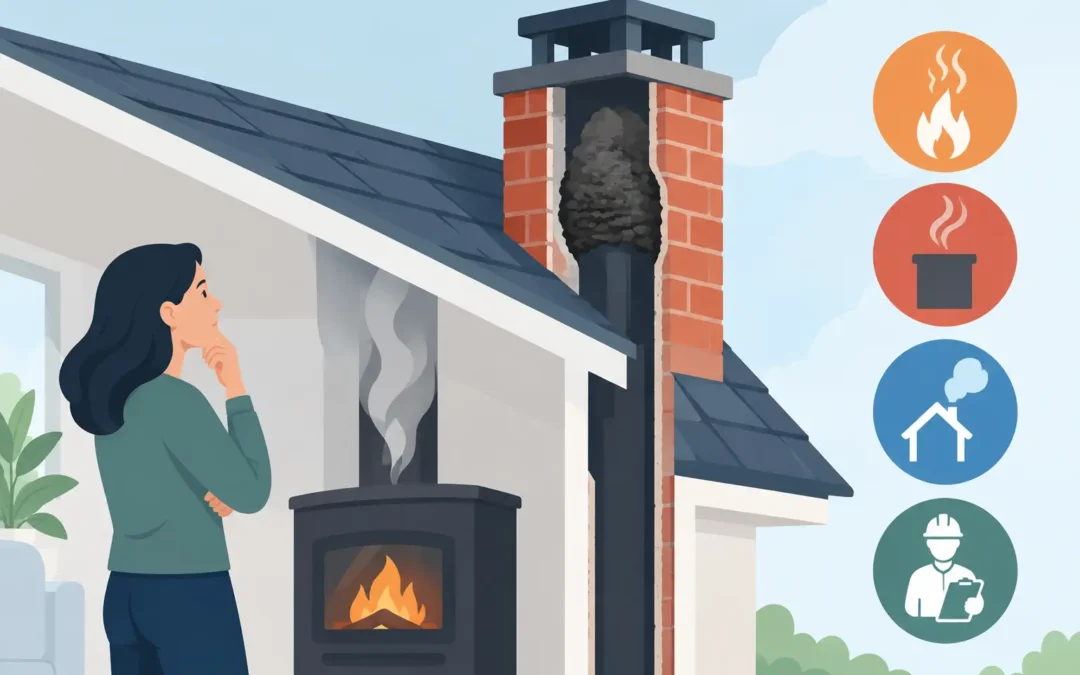
Smoke drifting from the stove door when you open it is a common flue blockage example that should never be ignored. A little smoke can sometimes enter the room while refuelling, particularly on a cold or windy day, but persistent smoke, fumes or a fire that will not burn properly can point to a restriction in the flue. Stop using the appliance until the cause has been checked.
For homeowners with a wood burner, multi-fuel stove or open fire, the chimney is doing a safety-critical job. It must carry smoke, combustion gases and carbon monoxide safely outside. When that route is narrowed or blocked, the appliance can no longer draw as it should.
What does a flue blockage example look like in practice?
Imagine a stove that has worked well through the winter. One evening, it becomes difficult to light. The flames look lazy, logs blacken instead of burning cleanly, and smoke spills into the room when the door is opened. The stove glass may darken more quickly than usual and there may be a strong smoky smell indoors.
The cause could be a bird nest built over spring or summer, a build-up of soot and tar, fallen debris from an ageing chimney pot, or a problem with the liner. The symptoms alone do not prove which one it is. What they do tell you is that the flue needs professional attention before the appliance is used again.
A blockage is not always total. Even a partial restriction can reduce the draw enough to create poor burning and allow harmful gases to enter the property. That is why a stove that is suddenly temperamental should not simply be put down to damp logs or bad weather without further checks.
Warning signs of a blocked flue
The clearest sign is smoke or fumes coming into the room. Other changes can be less obvious at first. You might notice that the fire is difficult to establish, the flames die down when the door is closed, or fuel is being used faster than normal without producing much heat.
Soot deposits around the stove, blackened glass, tarry smells and staining near the fireplace can also indicate poor flue performance. On an open fire, smoke may roll into the room rather than travelling cleanly up the chimney. A chimney that once drew well but now struggles deserves investigation.
Your carbon monoxide alarm is another vital warning device. If it sounds, leave the property immediately, get everyone into fresh air and call 999. Do not go back inside to open windows or investigate the appliance. Carbon monoxide has no smell or colour, and symptoms such as headache, dizziness, nausea or confusion need urgent medical attention.
What to do straight away
Do not light another fire to see whether the problem clears. Do not attempt to burn through a suspected blockage, and do not push brushes, poles or household tools up from the fireplace. This can compact debris, damage a liner or dislodge material into the room.
Allow the appliance to cool fully. If there is still smoke or a strong smell in the property, ventilate the room only if it is safe to do so, then arrange for a qualified chimney professional to inspect the flue. Keep the appliance out of use until it has been swept, tested and, where needed, examined with a CCTV chimney camera.
Common causes of flue blockages
Bird nests are a frequent cause in Leicestershire, especially where an uncapped chimney offers a sheltered nesting spot. Jackdaws are particularly persistent and can build substantial nests from twigs, mud, moss and other material. A nest may block the flue completely or leave only a narrow passage for smoke.
Soot and creosote are another common issue. Burning wet or unsuitable fuel, slumbering a stove overnight, or going too long between sweeps can lead to heavier deposits. Wood should be properly seasoned or kiln dried, with a moisture content of 20% or less. Cleaner fuel helps, but it does not remove the need for regular sweeping.
Chimney damage can create a blockage too. Loose mortar, damaged flaunching, a deteriorating chimney pot or debris from an old liner may fall into the flue. With lined systems, an incorrectly fitted or damaged liner can restrict the route for flue gases. These problems need more than a standard sweep.
External conditions sometimes mimic a blockage. Very cold flues, nearby tall buildings, trees and certain wind directions can cause downdraught or poor draw. An extractor fan in a tightly sealed kitchen can also compete with the stove for air. The difference matters: fitting a cowl may help a genuine downdraught issue, while it will not solve a nest or soot blockage.
Why a sweep may not be the whole answer
A routine chimney sweep is the right starting point for many flues. It removes soot and deposits and gives the sweep an opportunity to spot visible concerns. However, a clean grate and a swept chimney do not always rule out a problem higher up the system.
If the issue is recurrent, if a brush meets an obstruction, or if the flue continues to perform badly after sweeping, a CCTV inspection can provide a clearer answer. A camera allows the chimney to be checked for nests, cracks, offset joints, liner faults, debris and other restrictions that cannot be confirmed from the fireplace alone.
This avoids guesswork. It also means any repair is based on the actual condition of the flue rather than an assumption. In some cases, the answer may be straightforward nest removal and a suitable cowl. In others, the chimney may need repair work, relining or changes to the stove installation.
How a professional blockage inspection works
The first step is to discuss what has changed. Useful details include when the issue started, what fuel you burn, when the chimney was last swept and whether the problem occurs in particular weather conditions. A visual check of the stove, hearth, chimney breast and chimney stack can reveal early clues.
The flue is then swept or tested as appropriate. Where there is concern about an obstruction or structural defect, a CCTV chimney inspection can identify its position and likely cause. A reputable sweep will explain what has been found in plain terms and set out the safest next step, whether that is removal, repair, cowl fitting or further installation work.
For active bird nests, timing and wildlife rules must be considered. Nests must not be disturbed when they are in use. A professional can advise on the safe, lawful approach and on preventing future nesting once the chimney is clear.
Reducing the chance of another blockage
Most blockage problems are easier to prevent than to deal with after smoke has entered the home. Have your chimney swept at an interval suited to the appliance and fuel you use. Many wood-burning and multi-fuel appliances need sweeping at least once a year, while heavier use or smokier fuels may require more frequent attention.
Use dry, appropriate fuel and avoid burning household waste, treated timber or painted wood. These produce harmful deposits and can damage both the appliance and flue. Keep your carbon monoxide alarm installed in the same room as the appliance, test it regularly and replace it in line with the manufacturer’s instructions.
A properly selected chimney cowl can help prevent birds entering and may improve performance in exposed locations. It is not a one-size-fits-all fix, though. The wrong cowl can restrict flow or make an existing draw problem worse, so it should be chosen to suit the chimney and appliance.
Questions homeowners often ask
Can I use my stove if I think the flue is only partly blocked?
No. A partial blockage can still allow carbon monoxide and smoke to spill back into the room. Stop using the stove or fire until the flue has been checked and confirmed safe.
Can rain cause a flue blockage?
Rain itself does not normally block a flue, but water ingress can weaken mortar, damage liners and contribute to debris falling inside. A damaged chimney pot, failed flaunching or missing cowl should be dealt with before it leads to a larger problem.
Does a chimney cowl stop all blockages?
No. A cowl can deter birds and protect the chimney opening, but soot, creosote, internal damage and debris can still restrict the flue. It supports regular maintenance rather than replacing it.
A chimney should work quietly in the background, carrying smoke safely away without you having to think about it. If yours starts behaving differently, treat that change as a reason to stop, check and get proper advice. Early attention is usually simpler, safer and less costly than waiting for a small restriction to become a complete blockage.