
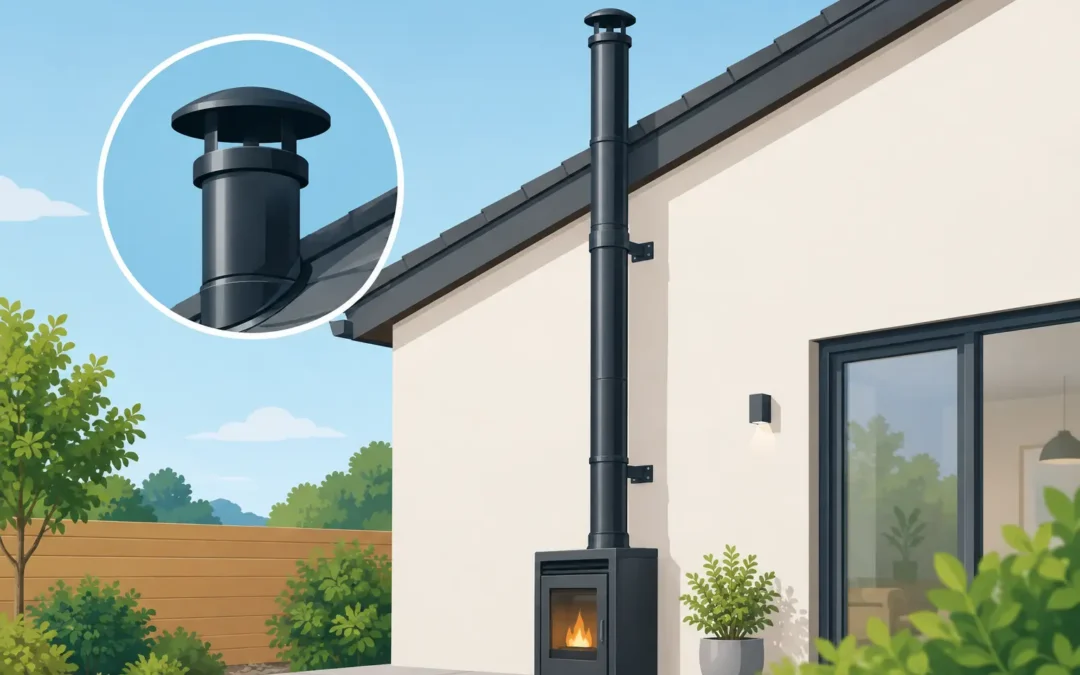
A stove can be the centre of a room, but its flue system does the safety-critical work. When there is no usable chimney, or an existing chimney is unsuitable, an external twin wall flue can provide a practical route for a wood-burning or multi-fuel stove. The right result is not simply a shiny pipe fixed to an outside wall. This external flue project example shows the thought that should go into a safe, tidy and compliant installation.
Why an external flue may be the right answer
Many homes in Leicestershire have altered fireplaces, blocked chimneys or no chimney at all. A rear extension, modern layout or converted room may be ideal for a stove, but there may be no direct vertical route through the house for a flue.
An external twin wall system takes the flue from the stove through an outside wall, then rises up the external elevation to a suitable termination point above the roofline. It is insulated to keep flue gases warmer than a single-skin pipe would, helping the stove draw properly and reducing the chance of condensation forming inside the flue.
It can be a very sensible solution, particularly where routing through bedrooms, bathrooms or a roof would create unnecessary disruption. However, it must be designed around the property, not treated as a one-size-fits-all kit. The stove, wall construction, roof shape, neighbouring buildings and final flue height all affect the plan.
External flue project example: a typical installation
Imagine a homeowner with a living room in a 1930s semi-detached house. They have removed an old gas fire and want a compact wood-burning stove. The original chimney breast has been taken out years ago, so there is no chimney to line or repair.
The stove is positioned against an external wall. This makes the route straightforward in principle: a short section of vitreous enamel stove pipe rises from the appliance, passes through the wall using a properly insulated wall sleeve, and connects to twin wall flue on the outside. From there, the flue rises vertically past the eaves and terminates above the roof at the required height.
That may sound simple, but the survey is where the real work starts.
Starting with the appliance and hearth
The chosen stove needs to suit the room and the household’s heating needs. A stove that is too large can make a room uncomfortably hot, encouraging people to turn it down too far. Slow, starved burning produces more soot and tar, which is bad news for any flue.
The installer also checks the hearth, clearances to combustible materials and ventilation requirements. Some modern stoves have specific air supply arrangements, and newer homes can be particularly airtight. The flue is only one part of a safe installation – the appliance, hearth, air supply and carbon monoxide alarm must all work together.
Planning the route outside
In this example, the external wall is brick, with a clear position away from windows and doors. The flue exits at a sensible height, then rises in a mostly vertical line. Wall brackets support the system at the manufacturer’s recommended intervals, keeping it secure without putting strain on the stove connection.
A good route avoids unnecessary bends. Bends can be necessary, but each one can affect flue performance and makes sweeping more involved. A near-vertical flue is generally preferable because warm gases rise more freely and there are fewer places for deposits to settle.
The installer considers the eaves, guttering and roofline before drilling anything. The terminal must be high enough and positioned to disperse smoke safely. Nearby taller roof sections, dormers, extensions and adjoining properties can all create turbulence or downdraught. This is one reason a quick visual estimate from the garden is not enough.
The wall penetration and weather protection
The opening through the wall must be made to the correct size and protected with a suitable insulated component. It is not acceptable to pack a flue tightly through brickwork, timber framing or insulation and hope for the best. The flue system needs the clearances specified by its manufacturer to protect the building fabric from heat.
Internally, the finish should look neat and be appropriate for the wall construction. Externally, the joint needs weathering correctly so rain cannot track into the property. On a well-planned job, the visible flue is straight, firmly supported and placed with the building’s appearance in mind. It may never disappear completely, but it should not look like an afterthought.
What can change the design
Every external flue project has trade-offs. An external route can preserve indoor space and avoid cutting through several floors, but the flue may need to be taller than a through-the-roof system to clear the roof properly. More height can mean more brackets, more materials and a greater visual impact.
If the proposed wall has a conservatory roof, low eaves or an opening window nearby, the route may need to move. If a neighbour’s higher building affects airflow, the termination height may need revisiting. Planning restrictions can also apply to listed buildings, conservation areas and certain property types. Checking this before committing to an appliance prevents expensive changes later.
Access matters too. A flue on a rear wall above a single-storey extension may require safe access equipment. That is not a reason to cut corners on height or support. It is simply part of pricing the work honestly and carrying it out safely.
Building Regulations, notification and certification
A solid fuel stove and flue installation must meet the relevant Building Regulations requirements. For homeowners, this matters because it is evidence that the installation has been completed to an accepted safety standard and recorded correctly.
Using a competent, appropriately registered installer helps take the uncertainty out of the process. A HETAS-registered installer can self-certify qualifying work, meaning you receive the necessary documentation without having to manage a separate Building Control application yourself. Keep this paperwork with the property records. It can be useful for insurance, future sales and proving the installation was properly undertaken.
A carbon monoxide alarm is also required in the same room as a new or replacement fixed solid fuel appliance. It is an essential safety measure, but it is not a substitute for correct installation, good fuel and regular servicing.
What the homeowner should expect after fitting
Once the flue is installed, the stove should be commissioned properly. This includes checking the draw, testing the appliance and explaining how to use it without causing excessive soot build-up. The first few fires may produce a paint smell as coatings cure, so ventilation is sensible during the initial use.
The homeowner should also be shown the correct fuel to burn. Use dry, seasoned wood with a moisture content of 20% or less, or approved smokeless fuel where suitable for the appliance. Damp logs create more smoke, tar and deposits, and they can quickly undo the benefits of a well-designed flue.
External twin wall flues still need sweeping. The exact frequency depends on the fuel, how often the stove is used and the manufacturer’s guidance, but regular sweeping and inspection should be part of owning any solid fuel appliance. A sweep can spot loose fittings, damaged seals, corrosion or signs that the stove is being over-fired or run too slowly.
Questions worth asking before you approve the job
Before proceeding, ask who will carry out the installation, whether the proposed flue route has been surveyed from ground level and roof level where needed, and what certification you will receive. Ask how the flue will be supported, how the wall penetration will be insulated and weathered, and how the final height has been determined.
It is also reasonable to ask about sweeping access. A flue system should be designed so it can be maintained, not just fitted on the day. If there are bends or an awkward connection, there needs to be a practical plan for cleaning it safely and thoroughly.
At Thurnby Chimney Sweeps, we see the difference that careful design makes. A correctly fitted external flue gives a stove the best chance of burning cleanly, drawing reliably and serving the household for years.
If you are considering a stove where there is no suitable chimney, begin with a proper survey rather than choosing parts online. A few measured decisions at the start can save a great deal of disruption, cost and worry once the work is under way.