
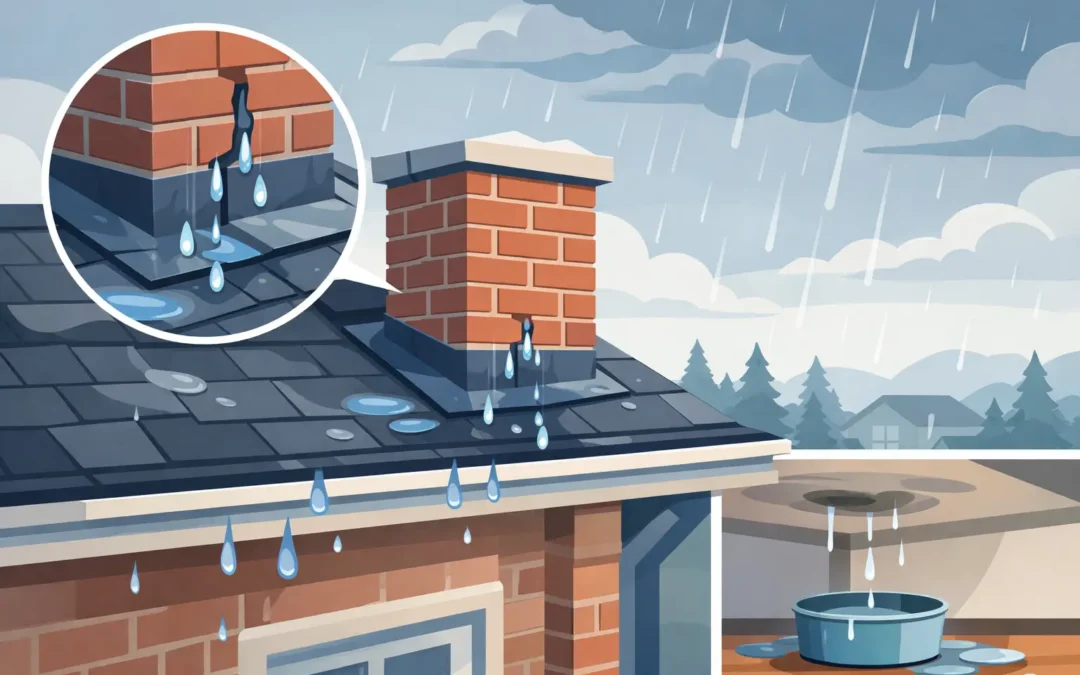
A brown patch on the chimney breast, a musty smell in the loft or water appearing in the fireplace after heavy rain is not something to leave until spring. Common chimney leak causes are often found at the top of the stack, where brickwork, mortar, flashing and pots take the full force of the British weather. Catching the problem early usually means a simpler repair and less disruption inside your home.
Water does not always enter where the stain appears. It can travel along timbers, behind plaster or down the inside of a flue before becoming visible. That is why a proper assessment matters, particularly if you use a wood burner, open fire or multi-fuel stove.
Common chimney leak causes
Damaged chimney flashing
Flashing is the material fitted where the chimney meets the roof. Its job is to create a watertight seal between two parts of the building that move and weather differently. Lead flashing is common on older homes, although other systems may be used.
Over time, flashing can crack, lift, split at joints or pull away from the brickwork. Mortar holding it in place may also fail. Wind-driven rain can then run beneath the flashing and into the roof space, often causing damp around the chimney breast or on ceilings nearby.
Flashing defects are a frequent cause of leaks, but they need diagnosing carefully. A stain close to the chimney does not automatically mean the flashing is at fault. Broken roof tiles, defective valleys and gutter problems can send water towards the same area.
Cracked or porous brickwork
Chimney stacks are exposed on all four sides and tend to weather faster than the walls below. Frost, rain and years of temperature changes can damage brick faces and open small cracks in mortar joints. Once water gets into those gaps, frost can make the damage worse by expanding it.
Older, softer bricks require the right type of repair. Repointing with an unsuitable hard mortar, for example, can trap moisture in the brick rather than allowing it to dry naturally. The right approach depends on the age and construction of the stack, not simply on filling every visible joint with sealant.
Look out for loose mortar, flaking brick faces, vegetation growing from joints or bits of masonry in the gutter. These are signs the stack deserves attention before water reaches the flue or the rooms below.
Failed chimney flaunching
Flaunching is the sloping mortar bed around the base of chimney pots. It sheds rainwater away from the pot and helps keep the top of the stack sound. When it cracks, crumbles or separates from the pot, water can sit on the chimney crown and find its way into the brickwork.
Because flaunching is difficult to inspect from ground level, it is often missed until a leak becomes noticeable. A professional roof-level inspection can show whether it needs patching or replacing. If pots are loose or the flaunching is badly deteriorated, it should be dealt with promptly rather than treated as a cosmetic issue.
Damaged chimney pots, cowls or caps
A cracked pot can let water into the flue, and an uncapped unused chimney is particularly vulnerable to rain. Water entering an open flue may run down to the fireplace, soak soot deposits and leave a strong, unpleasant odour. It can also contribute to damp within the chimney breast.
A suitable chimney cowl or cap can reduce rain entry while still allowing the flue to ventilate properly. The word suitable matters here. A cowl is not a one-size-fits-all fitting. It must match the appliance, flue size and draught requirements. The wrong type can restrict performance or make a downdraught issue worse.
Bird guards can be useful too, especially where nesting is a regular problem. They should be checked and kept clear, as a blocked guard can affect safe operation.
A blocked or poorly ventilated flue
Not every apparent leak is rainwater coming through the masonry. Chimneys that are no longer used still need ventilation. If a disused flue is sealed at the fireplace and capped tightly at the top, moisture can become trapped inside. Condensation then builds up and can show as damp patches, peeling wallpaper or salt marks on the chimney breast.
Blocked flues can create similar symptoms. Bird nests, fallen debris and heavy soot deposits may prevent normal airflow. In an active chimney, a blockage is more than a damp concern. It can affect the safe removal of smoke and combustion gases.
A visual check from below is not enough to confirm that a flue is clear throughout. CCTV chimney inspections are useful where there is uncertainty, recurring damp or concern about internal damage. They allow the condition and route of the flue to be assessed without guesswork.
Condensation from a stove or liner
Modern stoves and lined flues can be efficient, but they still need to be correctly specified and installed. If flue gases cool too quickly, moisture can condense inside the system. This can happen with an unsuitable liner, poor insulation, an oversized flue or an appliance that is regularly run at too low a temperature.
Condensation may mix with soot and tar deposits, producing dark staining or a sharp smell. It is sometimes mistaken for a roof leak because the evidence can appear around the chimney breast or fireplace.
The remedy depends on the cause. It might involve changing how the stove is operated, improving the flue arrangement or investigating the liner. Simply sealing internal stains without addressing the source will only hide the issue for a while.
Signs that should not be ignored
A chimney leak does not always arrive as a dramatic drip. More often, homeowners notice a tide mark after prolonged rain, blistering paint, crumbling plaster or a cold, damp smell in one room. Rust on a fireplace register plate, staining around a stove pipe or damp soot in the grate can also point to water entering the flue.
Take particular notice if the issue appears after wind-driven rain from one direction. That pattern can help identify whether the problem is linked to the stack, flashing or a nearby roof defect. If damp persists during dry spells, trapped moisture or condensation becomes more likely.
Where a chimney serves a live appliance, stop using it and seek advice if you suspect a blockage, damaged liner, loose pot or water affecting the flue. A leak can be a building maintenance issue, but it may also have implications for safe ventilation and the performance of your stove or fire.
Why quick fixes can make chimney leaks worse
It is tempting to apply waterproof coating, expanding foam or a generous bead of sealant when water is getting in. These products can occasionally have a limited role in the right repair, but they are not a substitute for finding the fault.
Some coatings can prevent old brickwork from breathing, holding moisture within the stack. Covering a crack may also conceal movement or failed mortar beneath it. Similarly, blocking a disused fireplace opening without allowing the flue to ventilate can turn a rainwater problem into a condensation problem.
The best repair is the one that deals with the route water is taking. That may be repointing, renewing flaunching, securing a pot, fitting the correct cowl, repairing flashing or clearing and ventilating the flue. In some cases, the chimney itself is sound and the fault lies in the roof beside it.
What a professional inspection should establish
Before recommending work, the key question is whether the moisture is entering externally or forming internally. A thorough inspection considers the stack, pots, flaunching, flashing, visible roof coverings, fireplace opening and condition of the flue. For hidden faults, a camera inspection can provide useful evidence.
This matters because chimney repairs should be proportionate. A small flashing repair is very different from rebuilding a damaged stack, and neither should be recommended without a clear reason. Ask what has been found, why it is causing the symptoms and whether the chimney is safe to use while repairs are arranged.
For Leicestershire homeowners, Thurnby Chimney Sweeps can assess flue-related issues alongside routine sweeping, nest removal, CCTV inspections and chimney cowl or flaunching work. Using a trained, registered professional gives you a clearer picture of both the leak and the condition of the appliance system it serves.
Reducing the chance of future water damage
Regular chimney sweeping helps keep an active flue clear and gives an opportunity to spot changes around the fireplace or pot. It does not replace external maintenance, but it can reveal warning signs before they become more costly.
After storms, check from ground level for loose pots, fallen mortar or obvious damage, but do not climb onto the roof yourself. Keep gutters and valleys around the chimney clear so water is not forced back under roof coverings. If you have a disused chimney, make sure it has appropriate ventilation rather than sealing it completely.
A dry chimney is not just better for plaster and decoration. It helps protect the structure of the stack, supports a healthier flue environment and gives your stove or fire the conditions it needs to work safely. If a stain has appeared or something does not look right after rain, arranging an inspection now is usually the calmest and most cost-effective next step.