
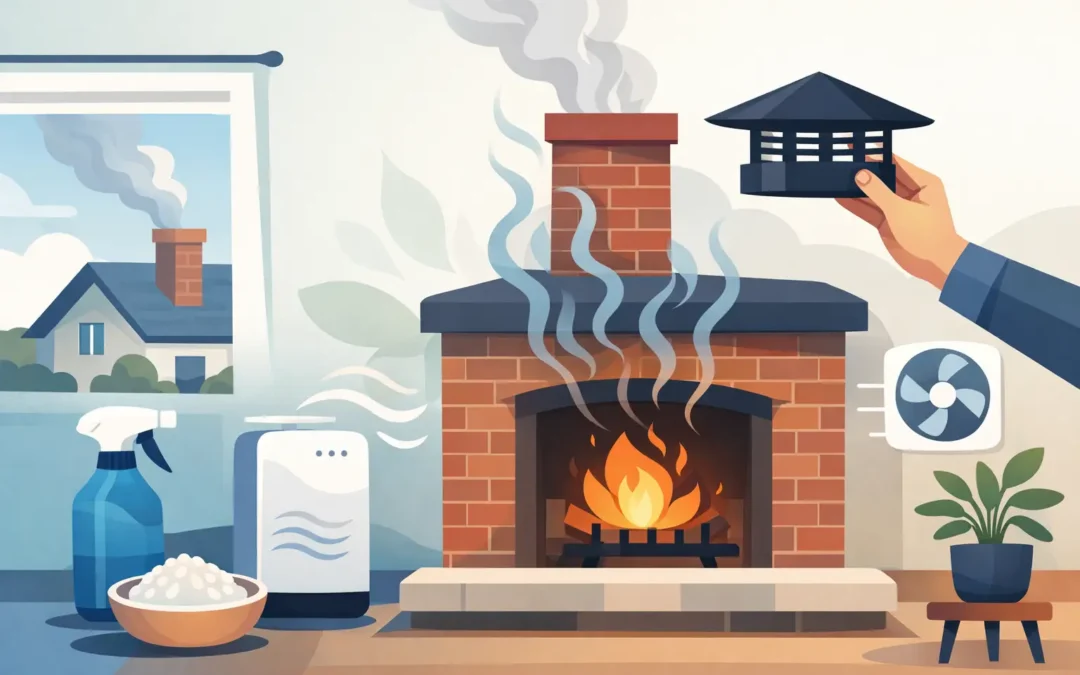
A cold fireplace can make the whole sitting room smell stale, smoky or damp, even when you have not lit a fire for weeks. The best ways to stop chimney smells depend on what is causing them, but the answer is rarely to cover the odour with a spray or air freshener. A chimney smell is often a sign that soot, moisture, poor airflow or a blockage needs attention.
For homeowners with open fires, wood burners and multi-fuel stoves, identifying the cause early protects both comfort and safety. Here is what commonly causes chimney odours and what can be done about them.
Start by identifying the type of chimney smell
The smell itself can give a useful clue. A dry, smoky or sooty smell usually points to deposits in the flue, especially after warm or humid weather. Chimney soot contains oils and tar-like residues which can become more noticeable when the air is damp.
A musty, earthy smell is more likely to involve moisture. Rain entering the pot, damaged mortar, failed flaunching or condensation in an unused flue can all leave a chimney breast smelling damp. If the smell is sharp, chemical or particularly strong after rainfall, there may also be creosote deposits reacting to moisture.
An unpleasant animal smell, scratching sounds or debris falling into the fireplace can indicate a bird nest or other obstruction. Jackdaws and other birds often choose chimney pots for nesting. Nests should be dealt with properly and at the right time of year, rather than pushed down the flue.
If you can smell fumes while a stove or fire is in use, treat that differently. Stop using the appliance, ventilate the room if it is safe to do so, and arrange a professional inspection. Smoke or fume spillage can be caused by a blockage, a downdraught issue, insufficient air supply or a fault with the appliance or flue.
The best ways to stop chimney smells for good
Have the chimney swept thoroughly
A proper chimney sweep is usually the first and most effective step. Soot, ash, creosote and debris sit inside the flue, and ordinary cleaning around the hearth cannot remove them. Once the flue is clean, there is far less material available to hold moisture and release odours into the room.
How often you need sweeping depends on the fuel and how regularly you use the appliance. Wood, coal and smokeless fuel all leave different deposits, while an open fire may need different attention from a lined stove flue. A qualified sweep can advise on a sensible schedule based on your setup and use.
Do not assume an unused chimney does not need maintenance. A dormant flue can still collect fallen debris, damp and nests. In some cases, a sweep reveals the real source of the problem straight away.
Keep rain and debris out, without sealing the chimney shut
A chimney cowl or rain cap can help reduce water entering the flue and can also discourage birds from nesting. It is not a universal fix, though. The right cowl needs to suit the chimney, fuel type and draw of the appliance. Fitting the wrong type can restrict the flue or make an existing downdraught problem worse.
The chimney should not be completely sealed at the top or bottom. Air movement helps keep a flue dry. Where a fireplace is no longer used, a purpose-made chimney balloon, vented closure plate or suitable vent can reduce draughts and odours while still allowing the flue to breathe. The best option depends on whether the chimney serves another appliance and the condition of the stack.
Deal with damp at its source
If the smell is musty and the chimney breast has staining, peeling wallpaper or crumbling plaster, the issue may be outside rather than inside. Damaged chimney pots, loose flashing, cracked brickwork and poor flaunching around the chimney pot can all allow water into the structure.
A visual roof-level inspection can identify obvious defects, but the inside of the flue may also need checking. Water can travel down a liner or soak into soot deposits long before a damp patch appears indoors. Leaving it to dry out on its own is rarely enough if rain is still getting in.
Ventilation also matters. Keeping a room shut up for long periods can allow stale chimney odours to build up. Regularly airing the room may help, but it will not cure a leak, blocked flue or heavy soot deposit.
Check for downdraught and poor airflow
Chimneys rely on warm air rising through the flue. Changes in wind direction, nearby buildings, tall trees, chimney height or the shape of the roof can push cold air back down instead. This is known as downdraught, and it can bring soot smells into the room even when the appliance is not lit.
Modern homes can make the problem more noticeable. Extractor fans, tumble dryers and tightly fitted doors and windows can create negative pressure, drawing air down the chimney. If the smell worsens when an extractor fan is running, or only appears in certain wind conditions, airflow is worth investigating.
A suitable anti-downdraught cowl may help, but it should be selected after assessing the chimney rather than guessed at. In other cases, improving the air supply to the room, checking the flue height or addressing a blockage may be the correct solution.
Have the flue inspected if the smell keeps returning
When a smell returns soon after sweeping, a CCTV chimney inspection can be particularly useful. It allows the flue to be checked for broken liners, cracks, ledges holding debris, old nest material, displaced pots or an obstruction that brushes cannot fully remove.
This is especially worthwhile for older properties, homes where the fireplace has been altered, or chimneys with a history of smoke problems. A damaged flue can allow odours and, more seriously, combustion gases to pass into areas where they should not be.
For stoves, the inspection may include the liner, register plate, connection points and terminal. A loose or poorly fitting component can affect both performance and the smell in the room.
Avoid quick fixes that can hide a safety issue
Air fresheners, scented candles and bowls of bicarbonate of soda may disguise a mild stale smell for a short time, but they do not remove the cause. Strongly scented products can also make it harder to notice a change in the smell of smoke or fumes.
Avoid blocking a chimney with newspaper, insulation, plastic bags or a tightly packed cloth. These can trap moisture, create a blockage or become a fire risk if the fireplace is used by mistake. Never burn a fire to “clear” a smelly chimney. If there is a nest, blockage or poor draw, lighting it can force smoke and carbon monoxide back into the room.
When to stop using the fire or stove
Some chimney smells are unpleasant but not urgent. Others need prompt attention. Do not use the appliance if smoke enters the room, there is a persistent smell of fumes during use, or a carbon monoxide alarm sounds. Leave the property and seek appropriate emergency advice if anyone feels unwell, dizzy, sick or unusually tired.
You should also arrange an inspection before using the appliance if there is visible nest material, a suspected blockage, falling debris, a recent chimney fire, or clear signs of water damage around the fireplace. Carbon monoxide alarms should be fitted and maintained in rooms with solid fuel appliances, but they are a warning device, not a substitute for sweeping and servicing.
Get the right fix for your chimney
Chimney odours are not all caused by the same problem, which is why a one-size-fits-all answer often disappoints. A clean flue may be all that is needed, while another property may need a bird nest removed, a cowl fitted, a damp issue repaired or a closer look at the liner and airflow.
For homeowners across Leicestershire, Thurnby Chimney Sweeps can assess the full chimney system rather than simply treating the smell at the fireplace. Regular sweeping, sensible ventilation and timely repairs give your chimney the best chance of staying dry, clear and pleasant to live with.