
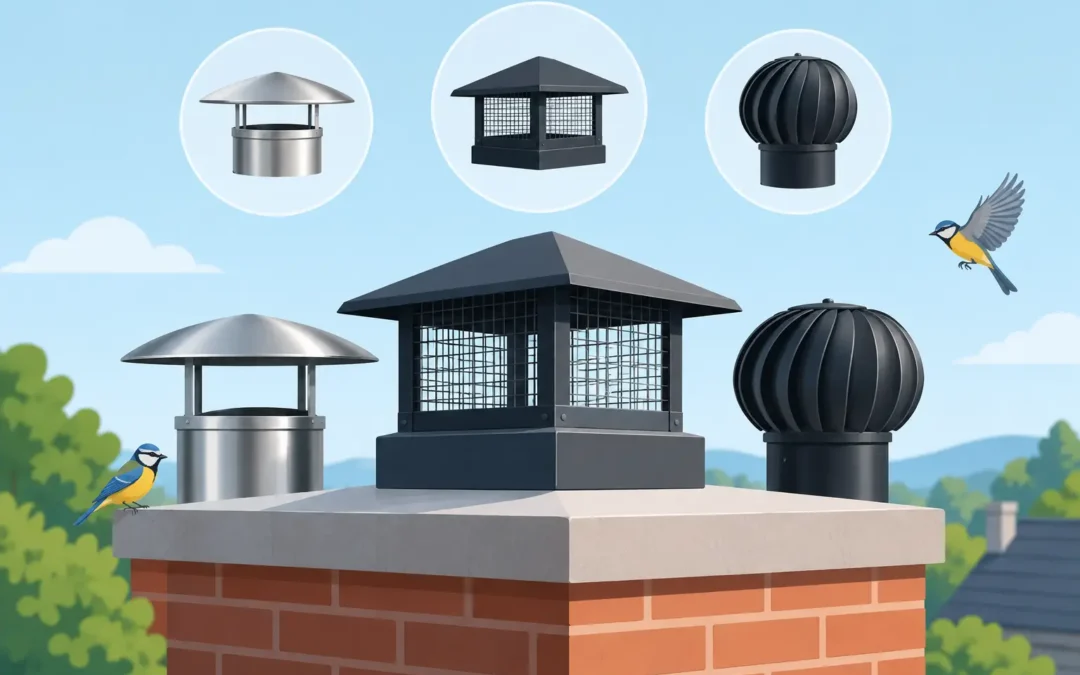
A jackdaw can turn an open chimney pot into a nest site remarkably quickly. By the time you notice twigs in the fireplace, hear scratching overhead or find smoke entering the room, the flue may already be partly blocked. The best chimney cowls for birds prevent access while allowing your chimney or stove to draw properly – but the right choice depends on the fuel you burn, the height and condition of the stack, and whether wind causes downdraught at your property.
A cowl is not simply a cover to put over the pot. It is part of the flue system, so a poorly chosen or poorly fitted one can create the very problems it was meant to solve. For homes in Leicestershire with open fires, wood burners or multi-fuel stoves, getting the detail right matters.
Why birds in chimneys are more than a nuisance
Birds are attracted to chimney pots because they are high, sheltered and often warm. Jackdaws are frequent visitors, particularly in spring, and their nests can be substantial. A handful of twigs near the top of the flue is one thing; a packed nest lower down can restrict the passage of smoke and combustion gases.
With a working stove or fire, a blockage can lead to poor draught, smoke spillage and carbon monoxide risk. It can also leave soot and debris trapped in areas that are difficult to reach. Even where the chimney is no longer used, a nest may allow water, debris and pests into the flue.
A suitable bird guard cowl keeps birds out before nesting begins. It should not be treated as a substitute for regular sweeping, however. Soot still builds up, and a guard itself needs checking for corrosion, debris and any signs of restriction.
Best chimney cowls for birds: the main options
The best option is usually a purpose-made bird guard or bird guard cowl designed for your particular appliance and flue. The key difference is in the shape of the hood, the open area around it and the materials used.
Stainless steel bird guard cowls
For many solid fuel chimneys, a stainless steel bird guard cowl is the sensible all-round choice. It has a weather cap above the flue outlet and a cage or guard around the sides, preventing birds from entering while leaving adequate space for flue gases to escape.
Stainless steel is preferred for durability. Chimney pots are exposed to rain, frost, soot and heat, and cheaper galvanised guards can rust sooner than expected. A good-quality stainless cowl can provide years of service when it is correctly sized and secured.
This type is often suitable where the main issue is birds rather than wind. It gives straightforward protection without adding unnecessary complexity to the chimney top.
Anti-downdraught cowls with bird protection
If smoke is pushed back into the room on windy days, a standard bird guard may not be enough. An anti-downdraught cowl with integral bird protection can be a better answer, provided the cause of the problem has been properly assessed.
These cowls are shaped to reduce the effect of wind passing over or blowing across the chimney pot. Some use a fixed hood, while others use a rotating design. They can be useful on exposed properties, tall stacks or chimneys affected by nearby roofs, trees or taller buildings.
There is a trade-off. A more complicated cowl is not automatically better. Moving parts can wear, and the wrong anti-downdraught design can restrict flow or make sweeping more awkward. A chimney professional should consider the flue height, pot size, appliance output and the pattern of the smoke problem before recommending one.
Rain cowls with a bird guard
A rain cowl with bird protection can help where water is entering an unused or lightly used chimney. It may reduce rain falling directly into the flue while also stopping birds from nesting.
For a regularly used wood-burning or multi-fuel stove, the cowl still needs to provide the free area required by the appliance manufacturer. Restricting the outlet in an effort to keep rain out can affect performance, especially when the stove is first lit or weather conditions are poor.
A rain cap is therefore not a universal fix for damp. Water can also enter through defective flashing, cracked mortar, damaged chimney pots or failing flaunching. The chimney should be inspected rather than assuming the cowl is the only issue.
Purpose-made terminals for gas and oil appliances
Gas and oil appliances should not have a general-purpose bird cowl fitted as an afterthought. Their terminals are designed as part of a tested appliance and flue arrangement. Altering them with an unsuitable guard can affect safe operation.
If birds are entering a gas or oil flue, speak to a suitably qualified engineer who can identify an approved solution for that appliance. This is not a job for a mesh cover from a DIY shop.
Avoid fine mesh over a working solid fuel flue
Fine wire mesh may look like an easy way to keep birds out, but it is often a poor choice for an active solid fuel chimney. Soot, tar and ash can collect on a small mesh opening. Over time, this reduces the outlet area and makes the flue harder to sweep.
The same concern applies to small, tightly spaced guards. A cowl must prevent bird entry without becoming a trap for combustion deposits. The dimensions and open area matter far more than whether a guard simply looks secure from ground level.
Avoid makeshift covers, loose chicken wire and anything fixed with temporary straps or sealant. High winds can dislodge them, and a loose fitting at chimney height is a danger in its own right.
The cowl must suit the chimney, not just the bird problem
Before fitting a cowl, a competent installer should establish what the chimney serves and whether the flue is clear. For a stove, that includes checking the appliance type, flue diameter, liner arrangement and manufacturer requirements. A cowl that is too small for the flue can impair draught even if it fits neatly over the pot.
The condition of the stack also matters. Chimney pots can be cracked, loose or poorly bedded, while old flaunching may be crumbling around the base. Adding a new cowl to an unstable pot is not a proper repair. In some cases, repointing, replacing the pot or renewing the flaunching should be carried out first.
A sweep or CCTV chimney inspection can show whether there is existing nesting material, fallen masonry or a liner issue before work is done. This is particularly worthwhile if you have had smoke problems, a stale smell from the fireplace or a period when the chimney has not been used.
What if there is already a nest in the chimney?
Do not light the appliance to try to burn or dislodge a suspected nest. Apart from the fire and carbon monoxide risk, it may harm birds and make the blockage more difficult to remove.
Wild birds, their active nests and eggs have legal protection. If a nest is in use or being built, it must not be disturbed or removed. A professional can assess the situation, advise on safe timing and remove old, inactive nesting material where appropriate. Once the flue is clear, fitting the correct guard prevents the same problem returning next season.
This is also a good time to arrange a sweep. Nest debris can leave twigs and dust on ledges or inside a liner, even after the main blockage has been taken out.
Choose fitting and maintenance, not just a product
Buying a cowl online based on the chimney pot diameter alone can be tempting, but it misses the safety checks that make the installation worthwhile. The best chimney cowls for birds are those that protect the flue without compromising its ability to work safely in real conditions.
For homeowners with a stove or open fire, professional fitting gives peace of mind that the cowl is secure, suitable for the fuel being burned and accessible for future maintenance. Thurnby Chimney Sweeps can assess bird entry, clear suitable inactive nest material and advise on a cowl that matches the chimney rather than offering a one-size-fits-all fix.
A clear, well-maintained flue is the aim. Deal with bird access early, before the first cold evening makes you want to light the fire, and your chimney will be ready to do its job safely.