
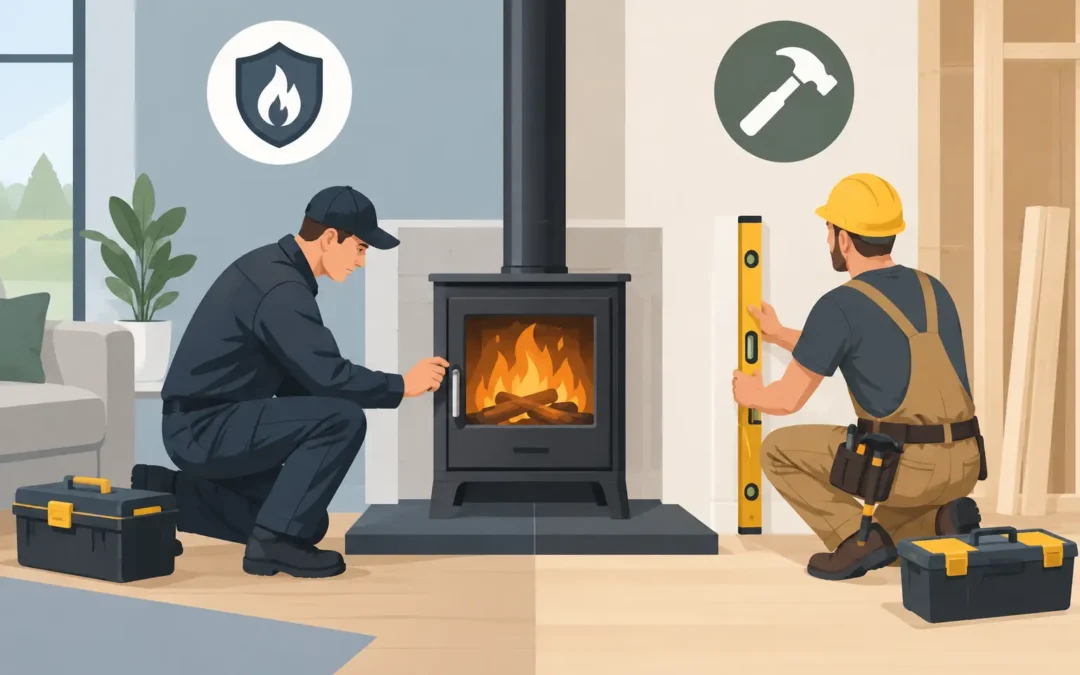
A stove can look straightforward once it is sitting in the fireplace. The work behind it is another matter. When weighing up a HETAS installer versus builder, the right choice depends on what is being done – but the person responsible for the stove and flue installation must understand the safety rules, Building Regulations and manufacturer requirements.
A good builder may be ideal for opening up a fireplace, repairing a chimney breast or creating a suitable hearth. But fitting a solid fuel appliance is a specialist job. It involves combustion, clearances from combustible materials, ventilation, chimney condition and the safe discharge of smoke and gases. Getting one part wrong can lead to smoke entering the home, poor stove performance, a chimney fire or problems when selling the property.
HETAS installer versus builder: what is the difference?
A HETAS registered installer is trained and registered to work on solid fuel and biomass appliances, including wood burners, multi-fuel stoves, flues and liners. In England, a registered installer can normally self-certify eligible work through the competent person scheme. This means the installation is notified correctly and the householder receives the relevant compliance documentation.
A builder is not automatically unqualified to work around a stove. Many experienced local builders do excellent work on fireplace openings, structural alterations, brickwork, plastering, roofing and chimney repairs. The issue is that general building experience does not, on its own, mean they are qualified or registered to install and certify a stove or flue system.
Some builders are HETAS registered themselves, while others work alongside a HETAS installer. That can be a perfectly sensible arrangement, provided everyone is clear about who is doing what and who will take responsibility for the final installation, commissioning and paperwork.
The key question is not simply, “Is this person a builder?” It is, “Who is fitting and signing off the appliance and flue, and how will the work comply with Building Regulations?”
When a builder is the right person to call
A builder can be the right first call when the room or chimney needs preparing before any appliance is fitted. Older homes across Leicestershire often need more than a stove dropped into an existing opening. You may need a fireplace opened up, damaged brickwork repaired, a lintel installed, a chimney breast altered, or a new non-combustible hearth formed.
They may also be needed where the chimney stack requires repair, the fireplace needs replastering, or a room needs making good after a liner has been fitted. These are valuable parts of the job, and a competent builder will understand the practical side of working sympathetically with an existing property.
However, the builder’s work should be planned around the stove specification. The final opening size, hearth dimensions, clearances and access for the flue all need to suit the appliance selected. It is far cheaper to agree this before the building work starts than to alter a newly finished fireplace later.
For more involved projects, the best route is often a coordinated job: a builder handles the structural and cosmetic work, while a HETAS installer assesses the chimney, specifies the flue system and completes the appliance installation.
What a HETAS installer brings to the job
A HETAS installer looks beyond whether the stove physically fits into the room. They consider whether it will operate safely and efficiently in that property.
First comes the chimney or flue. A sound-looking chimney is not necessarily suitable for a new stove. It may be oversized, leaking, blocked, poorly drawing or affected by internal damage. A proper assessment may involve a sweep, a smoke test and, where necessary, a CCTV chimney inspection. If a liner is required, its type and diameter must suit the appliance and the existing flue route.
Ventilation is another area that is easily missed. Modern homes can be well sealed, particularly after replacement windows, insulation work or extractor fan upgrades. Some stoves need a dedicated air vent. Without adequate air, the stove can struggle to burn properly and may spill smoke or fumes into the room.
A competent installer will also check the hearth, the distance between the stove or flue and nearby combustible materials, and the route of any twin wall flue system. These details are not decoration. They are part of keeping heat where it should be and reducing fire risk.
Once fitted, the appliance should be commissioned properly. You should be shown how to use the air controls, what fuel to burn, how to light the stove safely and how often the chimney should be swept. The installer should leave the relevant documentation, including a HETAS Certificate of Compliance where applicable, and ensure the installation is notified as required.
Building Regulations and paperwork are not an optional extra
A stove installation in England must comply with Building Regulations. There are two usual ways for this to happen. A HETAS registered installer can self-certify eligible work and arrange notification through the scheme. Alternatively, the work can go through the local authority Building Control process, with the appropriate application and inspection.
Neither route should be treated as a box-ticking exercise. The paperwork provides evidence that the work has been completed through a recognised compliance route. It can matter to insurers, surveyors and buyers if you later sell your home.
Be wary of anyone who says certification is unnecessary because the stove is small, the property is old, or the appliance is being fitted into an existing fireplace. Existing fireplaces can hide some of the biggest issues, from cracked flue liners and bird nest blockages to unsuitable hearths and inadequate clearances.
If a builder tells you they can fit the stove, ask whether they are HETAS registered for that work. If they are not, ask whether the installation will be completed and certified by a registered installer or handled through Building Control. A straightforward answer is a good sign. Vague assurances are not.
Questions to ask before you accept a quote
Price matters, but a low quote can become expensive if it leaves out necessary safety work or paperwork. Before agreeing to any installation, make sure you understand the scope.
Ask whether the chimney has been assessed and whether a liner is included or recommended. Confirm who is providing the stove, the hearth and any flue components, as these should all be suitable for the appliance. Find out who will commission the installation, issue the compliance paperwork and explain safe operation.
It is also worth asking what happens if the chimney is found to be unsuitable once work begins. A reputable installer will explain likely options before starting, rather than pressing ahead with a compromise. For example, a twin wall flue may be a safer option where an existing chimney cannot be used, but it needs careful design and fitting.
Finally, ask about aftercare. A newly fitted stove still needs suitable fuel, regular sweeping and servicing when required. Burning wet logs, shutting the stove down too hard or ignoring changes in draw can create problems even with a correctly installed system.
The right choice for your home
If the job is purely building work around a fireplace, a capable builder may be exactly what you need. If the work involves connecting a stove to a chimney or flue, selecting a liner, fitting twin wall flue or certifying an installation, use a HETAS registered installer or make sure one is properly involved.
At Thurnby Chimney Sweeps, we regularly see the results of rushed or poorly planned stove work: smoky rooms, stained walls, difficult lighting, damaged liners and installations with no documentation. Most are avoidable when the chimney, appliance and room are treated as one complete system.
A well-fitted stove should give you warmth without worry. Take the time to choose the right tradesperson at the start, keep the paperwork safe, and arrange regular sweeping so your chimney remains safe to use year after year.