
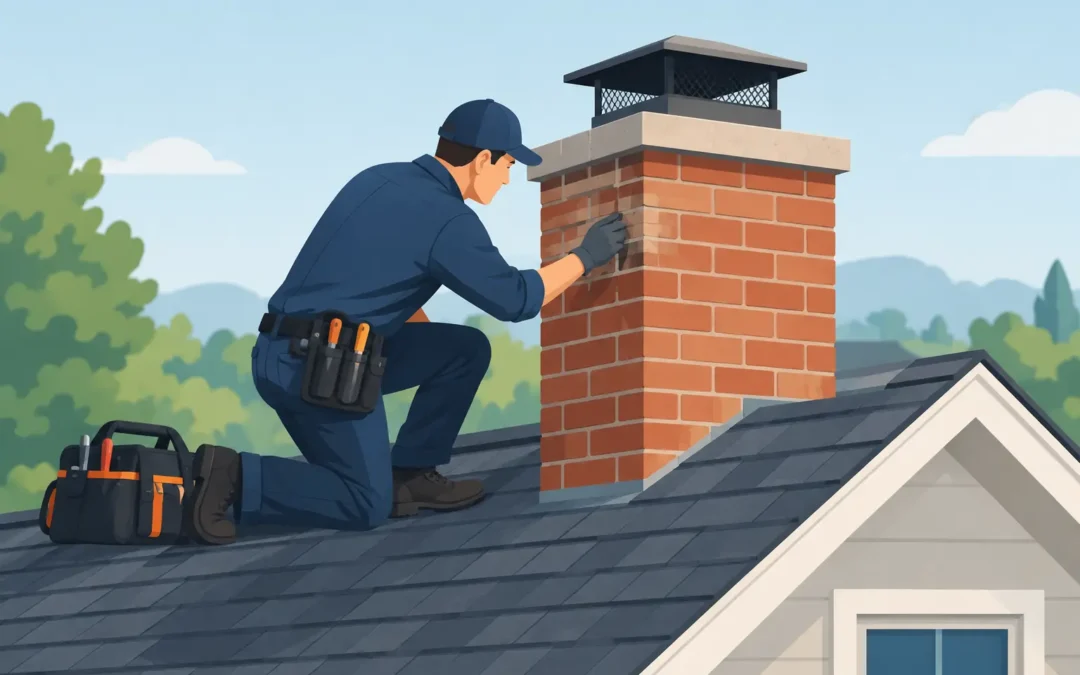
A chimney can look perfectly sound from ground level while a loose pot, failing mortar joint or damaged flue is creating a problem above the roofline. Timely chimney repairs protect more than the appearance of your property. They help keep smoke moving safely out of the home, reduce the risk of water damage and support the safe use of your stove or open fire.
For homeowners across Leicestershire, the first sign is often a stain on a chimney breast, a smoky room or debris in the fireplace. These issues are easy to put off, particularly outside the heating season, but small faults rarely improve on their own. A proper inspection can identify the cause and establish whether a straightforward repair, cleaning or more detailed flue work is needed.
Signs chimney repairs should not wait
Water marks around a fireplace are one of the clearest warnings. Rain can enter through cracked render, damaged flashing, worn pointing, an uncapped chimney pot or deteriorating flaunching – the cement bed that holds chimney pots in place. Moisture may then travel through brickwork and emerge indoors well away from where it entered.
Loose mortar is another common concern. Pointing that is cracked, missing or soft to the touch allows water into the stack. During cold weather, that water can freeze and expand, making the damage worse. Bricks may eventually loosen, which is a safety issue as well as a repair job.
Look out for pieces of tile, mortar or brick in the fireplace, hearth or garden. They can indicate deterioration higher up the chimney. A leaning pot, cracked pot or visibly uneven flaunching also needs attention. Do not climb onto the roof to investigate. Roof work carries obvious risks, and an experienced professional can assess the condition safely.
Inside the house, smoke spilling into the room, an unusual smell from the fireplace, poor stove performance or a persistent draught may point to a flue or ventilation problem. These symptoms do not always mean the chimney stack itself needs rebuilding. The cause could be soot build-up, a bird nest, a failed liner, an unsuitable cowl or downdraught from the position of the property. The right repair starts with finding the actual cause rather than guessing.
Common chimney repairs and what they solve
Chimneys are exposed to wind, rain, frost and heat, so repair work varies from minor maintenance to more substantial restoration. Repointing replaces failed mortar between bricks and helps restore weather resistance. Where individual bricks have spalled or cracked, they may need replacing before new mortar is applied.
Flaunching repairs secure the chimney pots at the top of the stack. If this material is cracked or breaking away, rain can get in and the pots may become unstable. A damaged or poorly fitted pot can also affect draw, particularly where a stove or open fire is in regular use.
Flashing repairs deal with the junction between the chimney and roof. Flashing is designed to direct rainwater away from this vulnerable area. When it lifts, splits or fails, water can enter the loft or chimney breast. The visible damp patch is often the last part of the problem to appear, not the first.
Some faults sit inside the flue rather than on the outside of the stack. A CCTV chimney inspection can show the condition of a liner, identify an obstruction or reveal damage that cannot be seen from the fireplace. This is especially useful when a stove is smoking, a property has changed hands, or an appliance is being installed into an existing chimney.
Where a liner has deteriorated or is unsuitable for the appliance, chimney lining may be recommended. A sound liner helps contain combustion gases and improves the route from the stove to the chimney terminal. It is not a one-size-fits-all job. The appliance, fuel type, chimney size and overall condition all need to be considered.
Sweeping, repair and inspection are different jobs
A chimney sweep removes soot, creosote and loose deposits from a flue. It is essential routine maintenance for wood-burning and multi-fuel appliances, but it cannot repair cracked brickwork, a damaged liner or failed flashing.
Equally, external repairs alone do not confirm that a flue is clear and safe to use. A bird nest may block the chimney, or a build-up of deposits may restrict the flow of gases even when the stack looks tidy from outside. Regular sweeping and a proper inspection work alongside repairs, particularly for homes that rely on a stove through the colder months.
If smoke is entering the room or you suspect a blockage, stop using the appliance until it has been checked. Make sure working carbon monoxide alarms are fitted in the room with a solid fuel appliance. An alarm is not a substitute for maintenance, but it is an essential safeguard.
Why smoke and downdraught need careful diagnosis
Smoke problems can be frustrating because the cause is not always obvious. A chimney may draw poorly because of a blocked flue, but cold air, a very airtight room, nearby buildings, trees, roof shape or wind direction can also affect performance. Fitting a cowl can help in some situations, but the wrong cowl may restrict the flue or fail to solve the underlying issue.
This is why a qualified assessment matters. The condition of the chimney, appliance and ventilation should be considered together. For example, adding an extractor fan or improving draught-proofing can change how air moves through a room. A stove that worked well before may then begin to smoke when another appliance is running.
A practical solution may involve sweeping, removing a nest, fitting a suitable cowl, improving ventilation or repairing the flue. In more complex cases, a CCTV inspection provides a clear view before work is recommended. Paying for diagnosis first can prevent money being spent on the wrong fix.
Choosing the right person for chimney repair work
Chimney work affects fire safety, carbon monoxide safety and the weatherproofing of your home, so it pays to choose carefully. Ask whether the person carrying out the work has relevant training and experience with solid fuel systems, not just general roof repairs. If the job involves a stove, liner or flue installation, suitable registration and knowledge of current requirements are particularly valuable.
A dependable contractor should explain what they have found in plain language, set out the proposed work and be honest if further inspection is needed before a fixed recommendation can be made. Photographs of high-level defects can be helpful, especially where you cannot safely see the top of the stack yourself.
The cheapest quote is not always the best value if it only treats what is visible. For instance, replacing a cracked chimney pot without checking the flue, flaunching and cowl may leave the main problem unresolved. On the other hand, not every worn joint requires a major rebuild. Good advice should be proportionate to the condition of the chimney.
Preventing repeat problems
Most chimney faults develop gradually. Having the flue swept at suitable intervals, checking the stack after severe weather and dealing with small defects promptly will usually cost less than waiting for water damage or loose masonry. Keep an eye on the chimney breast, loft space and fireplace for new damp, staining or debris, particularly after prolonged rain or high winds.
If you have had a new stove fitted, make sure it is serviced and used in line with the manufacturer’s guidance. Burn suitable, dry fuel and avoid treating the appliance as a place to dispose of household waste. Poor fuel creates heavier deposits and can place unnecessary strain on the flue system.
Thurnby Chimney Sweeps can assess both routine and more technical chimney concerns, from sweeping and bird nest removal to CCTV inspections, cowls, flue lining and chimney repairs. The aim should always be the same: a safe, workable chimney and clear advice about what needs doing now and what can be monitored.
A chimney does not need to look dramatic to deserve attention. If something has changed – a damp patch, falling mortar, smoke in the room or a stove that no longer burns as it should – arrange a professional check before lighting the next fire.