
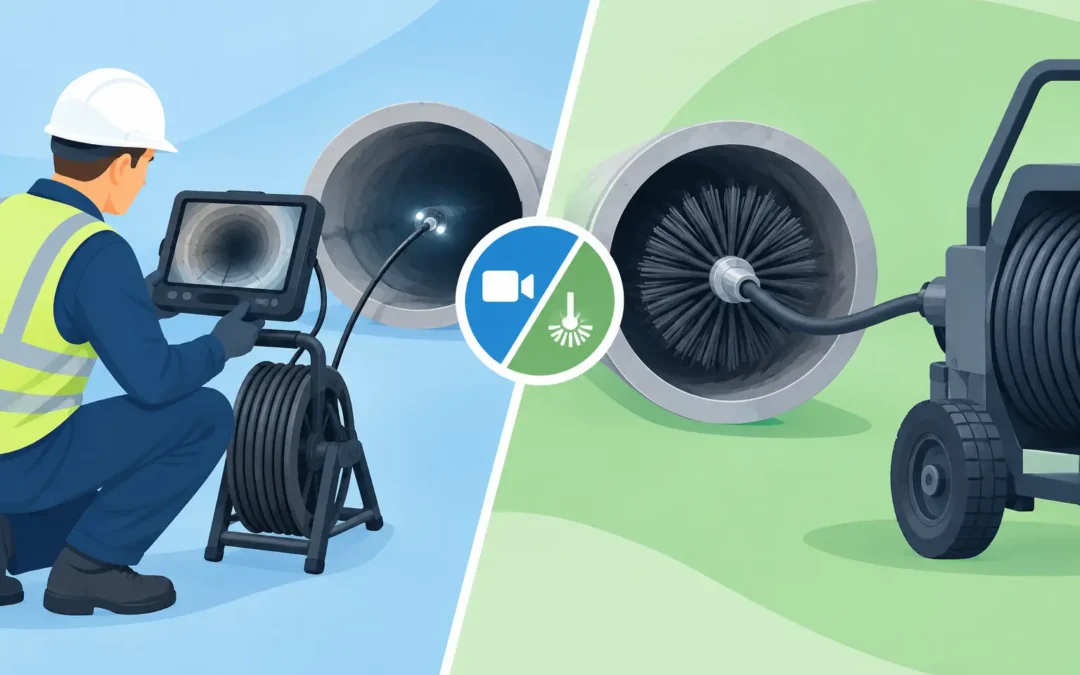
A chimney can look perfectly sound from the fireplace or stove opening while hiding a problem further up the flue. That is why CCTV inspection versus sweeping is not really a choice between two identical services. One cleans the flue. The other helps us see what is happening inside it. Knowing the difference can save time, avoid unnecessary work and, most importantly, help keep your home safe.
For most households, regular sweeping is the starting point. A CCTV chimney inspection is used when there is a reason to investigate more closely, such as ongoing smoke issues, a suspected blockage or concerns about the condition of the flue.
What chimney sweeping does
Chimney sweeping removes soot, ash, tar deposits and creosote from the inside of a chimney or flue. These deposits build up as wood, coal, smokeless fuel or other solid fuels are burned. Left in place, they can restrict the flue, affect how well the appliance draws and increase the risk of a chimney fire.
A proper sweep is practical preventative maintenance. It also gives the sweep an opportunity to check the accessible parts of the fireplace, stove, register plate, flue connection and chimney pot. If we find a bird nest, heavy tar build-up, loose debris or another obvious issue, we can explain what has been found and what needs doing next.
How often your chimney needs sweeping depends on the fuel, the appliance and how frequently it is used. As a sensible guide, wood-burning and multi-fuel stoves commonly need attention at least once a year, while heavier use may call for more frequent sweeping. Open fires can also produce significant soot. The right interval is based on the appliance and its use, rather than a one-size-fits-all date in the diary.
Sweeping is not a substitute for sensible stove use. Burn dry, suitable fuel, keep the appliance maintained and make sure you have a working carbon monoxide alarm in the same room. A sweep can remove deposits, but it cannot correct poor fuel, an unsuitable flue or a fault with the stove.
What a CCTV chimney inspection does
A CCTV inspection uses a specialist camera to look inside the flue. It allows us to inspect areas that cannot be seen from the hearth or the top of the stack. The camera footage can show the internal condition of the chimney and help identify the cause of a fault before recommending repairs.
This is especially useful where a chimney has a bend, where there is a long flue run, or where an old chimney has been altered over the years. Many homes in Leicestershire have original chimney systems that have served several different fires or stoves. What is visible in the room does not always tell the full story.
A camera inspection may reveal cracked or displaced flue liners, narrowing within the flue, nesting material, rubble, failed joints, tar deposits, water damage or an obstruction. It can also help confirm whether a flue is suitable before a stove is fitted, a liner is installed or a chimney is brought back into use.
CCTV is a diagnostic tool. It does not remove soot or clean the flue in the way a chimney sweep does. If the camera finds a blockage or heavy deposits, sweeping or other remedial work may still be needed.
CCTV inspection versus sweeping: the key difference
The simplest way to think about it is this: sweeping maintains a working chimney, while CCTV investigates its internal condition.
If your stove is working well, there are no signs of trouble and it is due its regular maintenance, a sweep is usually the correct service. It removes the by-products of burning fuel and helps keep the flue clear.
If something is wrong, or you need clear evidence of what is inside the flue, a camera inspection is often the better first step. It can prevent guesswork. Rather than assuming that smoke entering the room is caused by soot, for example, the inspection can help establish whether the issue is a blockage, damaged liner, poor chimney design, downdraught or something else entirely.
In some cases, the two services work together. A sweep may be carried out first so the camera can get a clearer view. In other cases, CCTV is used before sweeping because there is concern about a serious obstruction or damaged flue. The right order depends on the symptoms and the condition of the chimney.
When a sweep is likely to be enough
A routine chimney sweep is generally appropriate if your appliance is operating normally and you simply need regular maintenance. Signs that point towards booking a sweep include a stove or fire that has been used through the season, visible soot around the fireplace, or an overdue service interval.
It is also a good time to have a sweep before the colder months, rather than waiting until you want to light the first fire. That gives any issues a chance to be dealt with before the appliance is needed daily.
A good sweep should be clean, careful and honest about what has been found. If there is no evidence that you need a camera inspection, you should not be pushed into one. Equally, if something does not look right, an experienced sweep should explain why further investigation would be sensible.
When to consider a CCTV inspection
A camera inspection is worth considering when there is a specific concern that sweeping alone may not answer. Persistent smoke or fumes coming into the room, a weak draw, repeated blockages and unexplained debris are all reasons to investigate further.
You may also need CCTV if a chimney has been unused for a long period, particularly before fitting a new stove or reopening an old fireplace. Old flues can contain fallen mortar, historic nesting material or internal defects that are impossible to confirm from ground level.
Other common reasons include a chimney fire, a suspected liner issue, damp staining around the chimney breast, or a recent property purchase where the flue history is unknown. A survey is also useful after building work close to the chimney, as movement or debris can affect the flue.
Do not ignore warning signs simply because the appliance still lights. A stove may appear to work but be venting poorly, or a partial obstruction may become worse as the heating season continues. If you smell fumes, see smoke entering the room or a carbon monoxide alarm sounds, stop using the appliance and seek professional advice straight away.
Can a camera inspection find every problem?
CCTV gives valuable information, but it has limits. Thick deposits can obscure the picture, which is why a sweep may be recommended before or after the inspection. A camera also cannot replace a full assessment of the appliance, chimney stack, terminal, ventilation and fuel being used.
Some faults are best identified by combining camera footage with practical checks. For example, downdraught may be affected by the chimney height, nearby buildings, trees, the type of cowl and airflow within the home. A camera can confirm that the flue is clear, but it will not by itself solve an airflow problem.
The important point is that a reputable chimney professional should use the findings to recommend proportionate work. A clear flue does not need unnecessary repairs. A damaged liner should not be dismissed with a routine sweep.
Choosing the right service for your home
Start with the purpose of the visit. If you need ongoing maintenance for a chimney or stove that is working as it should, book a sweep. If you need answers about a fault, are planning an installation, or have concerns about what lies inside the flue, ask about a CCTV inspection.
At Thurnby Chimney Sweeps, the aim is to give homeowners a clear explanation rather than a vague diagnosis. As a family-run, trained and registered local service, we can carry out routine sweeping and investigate more complex chimney concerns without sending you from one contractor to another.
Whether you are in Leicester, Oadby, Wigston, Oakham, Uppingham or the surrounding area, do not wait for a small concern to become a smoke-filled room or an unusable stove. A straightforward sweep or a properly targeted camera inspection can give you the confidence to use your fire safely when you need it.