
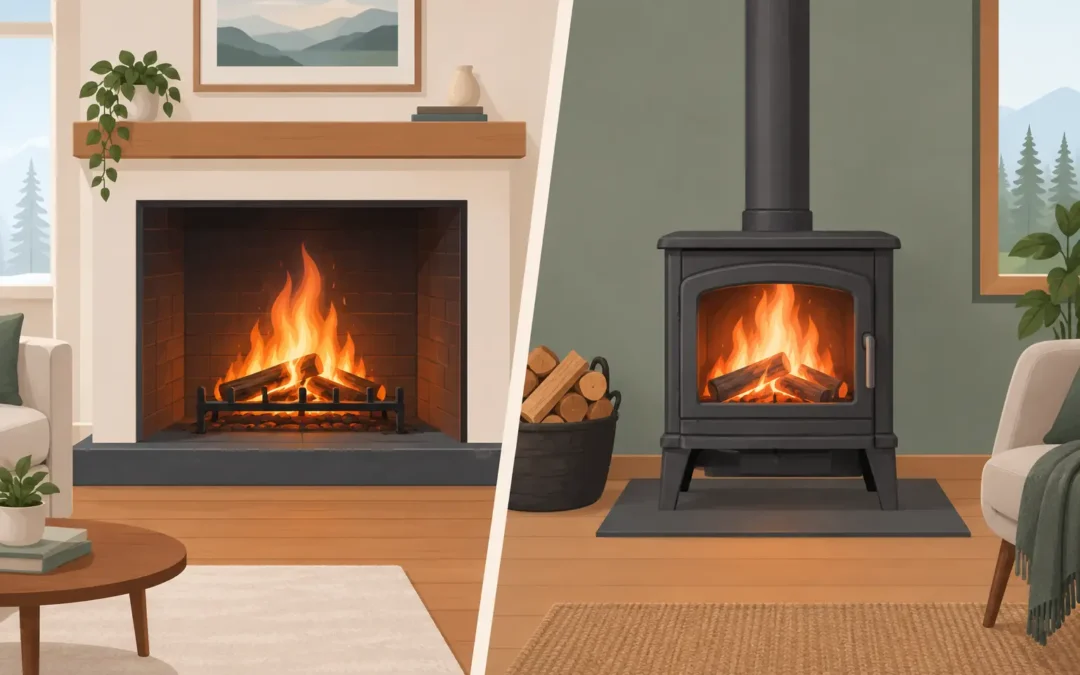
A glowing fire can make a living room feel like the heart of the house, but an open fire or wood stove is not simply a style choice. The appliance you choose affects how much heat reaches the room, how often the chimney needs attention, the fuel you use and the work involved in fitting and maintaining it safely.
For many Leicestershire homeowners, a wood-burning stove is the more practical option. That does not mean an open fire has no place. Period properties, occasional-use fireplaces and homes where the look of a real hearth matters most can still suit an open fire well. The right answer depends on how you plan to use it and whether the chimney system is up to the job.
Open fire or wood stove: the main difference
The biggest difference is efficiency. An open fire sends a large proportion of its heat up the chimney. It can provide a pleasant radiant warmth when you are sitting nearby, but it will usually heat the room less effectively than people expect. It can also draw warmed air from other parts of the house towards the fireplace, particularly in an older, draughty property.
A modern wood stove is a closed appliance designed to control the burn. More heat is retained and released into the room, while less is lost through the flue. Many modern stoves are capable of converting well over half of the fuel’s energy into usable heat, whereas an open fire can be far less efficient.
That difference matters if you plan to light your fire regularly through autumn and winter. A stove generally uses less wood to achieve the same level of warmth, so the higher upfront installation cost may be balanced by lower fuel use over time.
When an open fire is the right choice
An open fire offers something a stove cannot fully replicate: the sound, scent and open view of the flames. In a period home with an original fireplace, it can preserve the character of the room. If the fire will only be used on special occasions, efficiency may not be the deciding factor.
It can also be a sensible route where there is an existing sound fireplace and the owner does not want to alter the opening or install a stove. However, the chimney still needs to be checked before use. A fireplace that has stood unused for years may have loose debris, a bird nest, deteriorated mortar or a flue that is not suitable for regular solid-fuel burning.
Open fires need more care in day-to-day use. Sparks can escape, so a proper fireguard is essential where children or pets are present. Ash needs removing safely, logs need storing close by, and the fire should never be left unattended. Smoke entering the room is not something to put up with either. It can point to a blockage, poor draw, an unsuitable fuel or a downdraught issue that needs investigating.
Why many homes suit a wood-burning stove
A wood stove is usually the better choice for dependable room heating. Because the firebox is enclosed, you have greater control over airflow and burn rate. You can load the stove, bring it up to temperature and enjoy steady heat for several hours, rather than continually adding fuel to maintain an open flame.
The glass door also gives you the visual appeal of a fire while providing a physical barrier against sparks and embers. A properly specified and fitted stove can be particularly useful in a larger lounge, an open-plan kitchen-diner or a home where the fire is used most days in colder weather.
Modern stoves are also designed to burn more cleanly when operated correctly. That does not mean every stove is suitable for every property. The stove output must match the size and heat loss of the room. An oversized stove can make a room uncomfortably hot and encourage owners to shut the air controls down too far, which leads to a dirtier, less efficient burn.
Choosing the correct stove size
A stove should be selected on heat requirement, not just how large the fireplace opening looks. Room size, insulation, ceiling height, glazing and whether doors are usually left open all affect the required output.
A small, well-insulated sitting room may only need a modest stove. A larger older property with high ceilings and single glazing may need more heat, but that should be assessed carefully. A qualified installer can help establish a suitable output and advise whether a liner, hearth alteration, ventilation or a twin-wall flue is needed.
Fuel, smoke and running costs
Whichever option you choose, dry fuel is essential. Wood should be properly seasoned or kiln dried, with a moisture content of 20% or below. Wet wood wastes heat, blackens stove glass, produces more smoke and encourages tar and soot deposits inside the flue.
It is worth buying wood by quality rather than simply choosing the cheapest load. Dense hardwood logs can offer a longer burn, but the important point is that the wood is dry and stored under cover with good airflow. Avoid burning treated timber, painted wood, old furniture, pallets or household waste. These materials can release harmful fumes and create damaging deposits in the chimney.
If you live in a smoke control area, you may need to use an authorised fuel or a DEFRA-exempt stove. Rules can vary by location, so check the requirements for your address before choosing an appliance or fuel. This is particularly relevant for homeowners in and around Leicester, where built-up areas may be subject to controls.
Installation is about more than putting a stove in a fireplace
A stove installation should begin with the flue, not the appliance. The chimney needs to be swept and inspected to check its condition, route and suitability. In many older chimneys, fitting a correctly sized liner gives the stove a safer, more reliable flue path and can reduce leakage through defective brickwork or mortar joints.
The hearth must meet current requirements, and the stove needs the correct clearances from combustible materials. Timber beams, plasterboard, flooring and nearby furniture all need consideration. Some installations require permanent ventilation to provide sufficient combustion air, especially in newer, more airtight homes.
Where there is no usable chimney, a twin-wall insulated flue may be an option. This can allow a stove to be fitted in an extension, conservatory or room without a traditional fireplace, provided the route and clearances are designed properly. Building Regulations apply, and a carbon monoxide alarm should be fitted in the room as part of a safe solid-fuel installation.
Maintenance should influence the decision
Both an open fire and a stove need regular chimney sweeping, but a stove is not maintenance-free. Ash should be removed as needed, door seals and fire bricks checked, and the flue swept at an interval that reflects how often it is used and what fuel is burned.
An open fire may create more loose ash and soot around the fireplace, while a stove needs occasional servicing to keep controls, seals and internal components working as intended. In either case, do not wait for a problem before arranging a sweep. A chimney can be partially blocked without obvious signs until smoke starts entering the room or the fire performs poorly.
Look out for smoke spillage, a strong tar smell, black marks around the fireplace, poor draw, excessive soot, falling debris or a carbon monoxide alarm sounding. Stop using the appliance and have it checked if any of these occur. CCTV chimney inspections can be useful where the cause of a recurring problem is not visible from the fireplace or chimney pot.
Making a choice you will be happy with
Choose an open fire if the atmosphere and original character of the room matter most, the fire will be used occasionally and you accept that it will not be the most economical way to heat the space. Choose a wood stove if you want more controllable heat, better fuel efficiency and a practical fire you can use regularly.
The condition of your chimney may make the decision clearer. A sound, well-sized flue could suit either option. A damaged or oversized chimney may need lining before a stove can be fitted safely, while a blocked, damp or unstable chimney should be repaired before any solid-fuel appliance is used.
Before spending money on a stove or reopening an old fireplace, have the chimney assessed by a qualified local professional. Thurnby Chimney Sweeps can help homeowners understand what their existing flue can safely support, rather than selling a one-size-fits-all answer. A well-chosen appliance, dry fuel and regular sweeping will give you the warmth you want without taking chances with your home.