
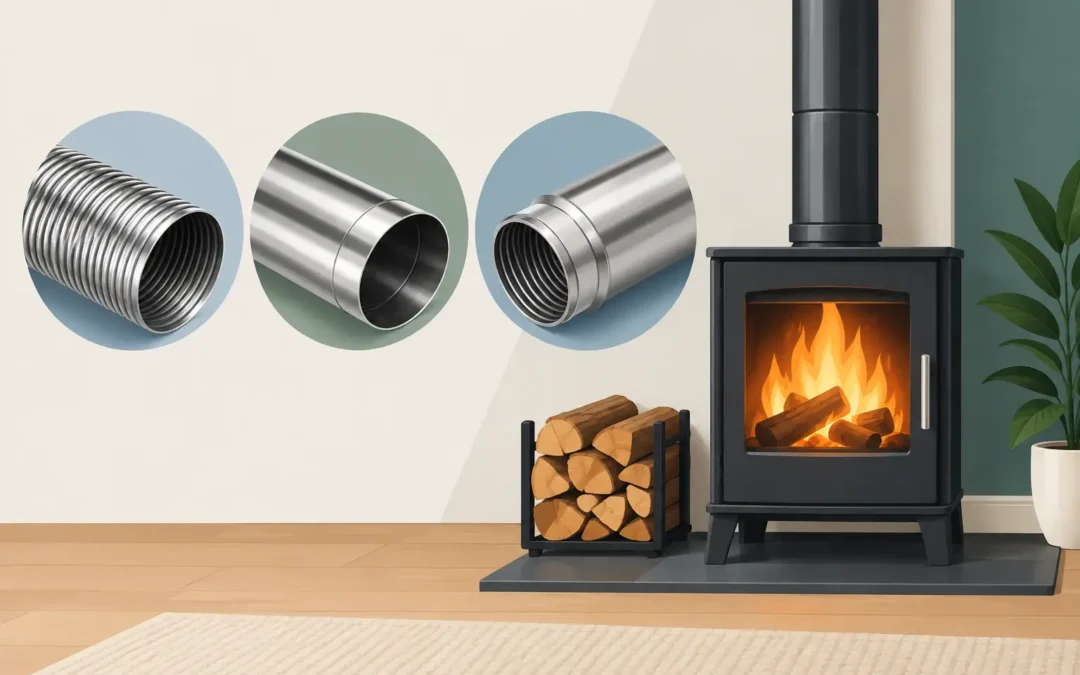
A stove can be perfectly good, the chimney can look sound from outside, and yet smoke still leaks into a room or tar builds up inside the flue. In many cases, the answer is not simply fitting any liner that will pass down the chimney. This stainless liner comparison explains the choices that matter when lining a chimney for a wood-burning or multi-fuel stove.
The right liner protects the chimney structure, gives combustion gases a clear route outside and makes future sweeping more effective. The wrong grade, diameter or installation method can lead to poor draw, premature corrosion and an expensive job to put right. For homeowners in Leicestershire, a proper survey before work starts is money well spent.
What a stainless steel chimney liner does
A flexible stainless steel liner is installed inside an existing masonry chimney. It creates a continuous flue from the stove connection to the chimney pot, helping contain smoke, soot and condensates that could otherwise escape through gaps or damaged mortar joints.
Older chimneys were not always built for the high flue-gas temperatures and controlled combustion of a modern stove. Their inner surfaces may be rough, oversized or cracked. A correctly specified liner improves the passage of flue gases and can reduce the amount of soot settling in ledges and defects within the old chimney.
It is not a cure for every chimney problem. Severe structural damage, water ingress, an unsuitable route, or inadequate ventilation must be dealt with as part of the installation. A liner also needs insulation in some situations to help the flue stay warm enough to draw properly and limit condensation.
Stainless liner comparison: 316L or 904L?
For most domestic solid-fuel installations, the comparison usually comes down to 316L and 904L stainless steel. Both are corrosion-resistant grades, but they are designed for different levels of exposure to acidic deposits.
316L stainless liner
A 316L flexible liner is commonly used for wood-burning appliances. When dry, seasoned wood is burned correctly, it produces fewer corrosive deposits than coal and some other fuels. In a suitable wood-only installation, a quality 316L twin-skin liner can be a sensible, cost-effective choice.
That does not mean 316L is a budget shortcut. The liner must still be approved for the appliance and fuel, installed in the right direction, connected correctly at both ends and swept regularly. Burning wet logs or allowing a stove to slumber for long periods creates cool, damp, tar-laden conditions that shorten the life of any liner.
904L stainless liner
A 904L liner offers stronger resistance to the aggressive acids associated with coal, smokeless fuel and mixed-fuel use. It is normally the preferred option for a multi-fuel stove where coal or authorised smokeless fuel may be used, even if wood is also burned.
It costs more than 316L, but the extra outlay is often justified where the fuel choice demands it. Fitting a 316L liner because the stove currently burns logs, then changing to coal-based fuel later, can leave the flue with a liner that is not suitable for its working conditions.
The simple rule is this: wood-only appliances may suit 316L, while multi-fuel use generally calls for 904L. However, the stove manufacturer’s instructions, the liner manufacturer’s designation and the findings of the chimney survey always take priority. The fuel you intend to use, rather than the fuel you use on the first week, should guide the decision.
Flexible liner versus rigid flue system
Flexible liner is designed for relining an existing chimney. It can follow gentle bends in a masonry flue and is often the least disruptive route when the chimney stack and flue path are otherwise suitable. It should be a proper twin-skin product made for solid fuel, not a thin single-skin duct intended for ventilation or gas work.
A rigid insulated flue system is a different product and a different job. It is often used where there is no usable chimney, such as a stove installation in an extension, open-plan room or property with an external flue route. Rigid sections can also be appropriate where a chimney is being rebuilt or where the route is accessible and needs a purpose-designed system.
Neither option is automatically better. Flexible lining preserves the appearance of an existing chimney and can be very effective. Twin-wall insulated flue provides a controlled, visible route where no chimney is available. The property layout, appliance position, clearances from combustible materials and the condition of the original chimney decide which approach is safe.
Diameter matters as much as steel grade
A liner that is too small can restrict the stove and cause smoke to spill into the room, particularly when lighting the appliance. One that is oversized may cool gases too quickly, reducing draw and encouraging condensation and soot deposits. It is not safe to select a diameter simply because it matches the stove outlet.
The required flue size depends on the appliance instructions, fuel type, stove output and the overall flue arrangement. Building Regulations set requirements, but the appliance manufacturer may require a larger diameter than the minimum. Bends, chimney height and the condition of the stack can also affect performance.
This is why a chimney camera inspection can be useful before quoting for a liner. It identifies offsets, restrictions, old debris and defects that may prevent the chosen liner from passing safely through the flue. It also avoids the unpleasant surprise of starting an installation only to find a blockage partway down.
Installation details that should not be overlooked
A chimney liner is a complete system, not just a length of stainless steel. The connection at the stove, closure plate, register plate, adaptor, insulation where needed, top plate, clamp and weathering arrangement all have a job to do. Poor finishing at either end can allow debris, cold air or water into the system.
The liner should be fitted according to the manufacturer’s instructions, including its intended direction of installation. It must be properly supported at the top and protected from rainwater entering around the chimney pot. A suitable cowl may be needed, but a cowl should solve a particular issue, such as rain entry, birds or downdraught, rather than be added as a guess.
After installation, the system should be tested, commissioned and recorded correctly. A competent, HETAS-registered installer can assess compliance with the relevant requirements and provide the right documentation for notifiable stove work. This matters for safety, household insurance and when selling a property.
Lifespan: what really affects a stainless liner
No responsible installer should promise that every liner will last a fixed number of years. Its lifespan depends less on shiny steel at the point of fitting and more on how the stove is used afterwards.
Burning properly seasoned logs with a moisture content below 20 per cent helps the flue run cleaner. Running the stove at a suitable temperature, rather than constantly starving it of air, reduces tar and acidic condensate. Regular sweeping removes soot and deposits before they hold moisture against the liner.
A liner can also suffer from chimney leaks. Water entering through damaged pointing, flaunching or a failing pot can mix with combustion deposits and create a corrosive environment. If a sweep finds unusual tar, signs of water or a sudden change in stove performance, it is worth investigating early rather than waiting for the next heating season.
Choosing a liner with confidence
The best starting point is an honest assessment of the chimney and a clear answer to three questions: what appliance is being fitted, what fuel will be burned, and what does the flue route allow? From there, the correct grade, diameter and installation method can be specified rather than guessed.
At Thurnby Chimney Sweeps, we recommend treating chimney lining as safety work, not an off-the-shelf purchase. A proper inspection and installation may cost more than the cheapest option, but it gives your stove the safe, workable flue it relies on every time you light it.
A well-chosen stainless liner should fade into the background: no smoke smells, no recurring draw problems and no doubt about whether your chimney is doing its job.