
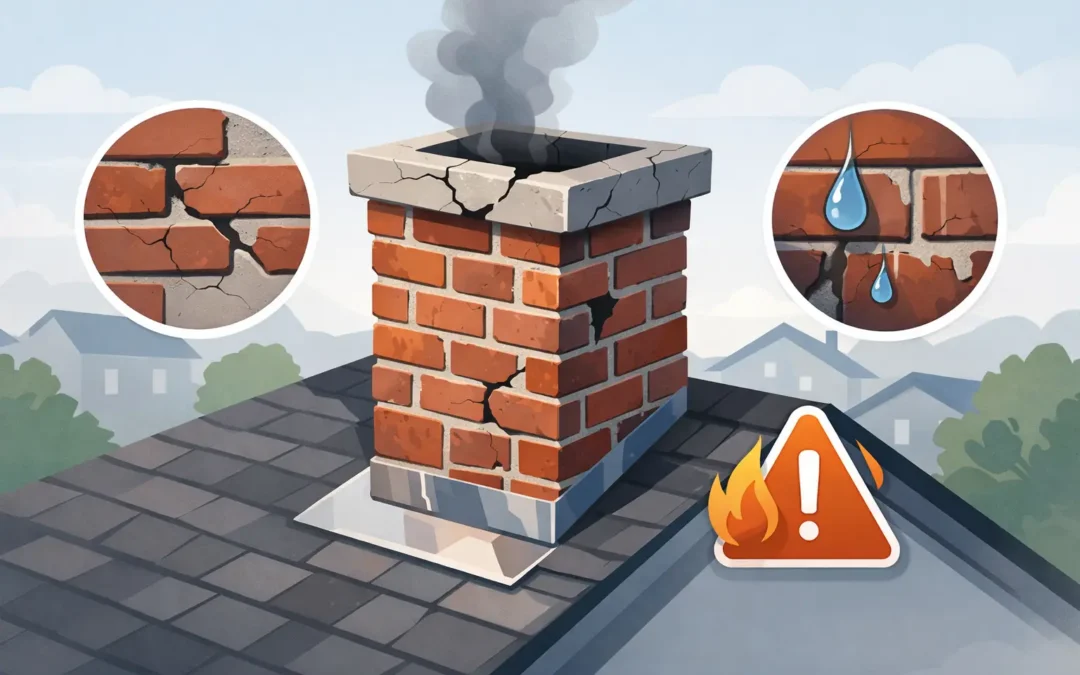
A chimney can look sound from the garden while a small fault is allowing water, smoke or combustion gases to cause trouble inside the home. Chimney defects are not always dramatic at first. A faint damp patch, a stove that suddenly struggles to draw, or a few grains of mortar on the ground can be the first warning that something needs attention.
For homeowners with open fires, wood burners or multi-fuel stoves, the chimney is part of the appliance. It needs to be kept clear, weatherproof and structurally sound to work safely. Catching faults early is usually simpler and less costly than waiting for smoke to enter the room, masonry to become loose, or a flue to deteriorate further.
Common chimney defects and what they mean
Chimneys are exposed to rain, frost, wind and heat year after year. The most common problems tend to develop around the parts that take the hardest weather, particularly the stack above the roofline, the chimney pot and the junction where the stack meets the roof.
Damaged brickwork and failing mortar
Bricks can crack, spall or become soft after repeated frost damage. Mortar joints may erode, leaving gaps between the bricks and reducing the stack’s strength. You might spot small fragments of brick or mortar below the chimney, visible cracks from ground level, or staining on an outside wall.
A little weathering does not always mean urgent rebuilding is needed, but loose masonry should never be ignored. Falling material is a risk to people and property, while gaps in the brickwork can let rain into the chimney structure. Once water gets in, frost can widen the damage during colder weather.
Cracked or loose flaunching
Flaunching is the mortar bedding around a chimney pot. Its job is to secure the pot and shed water away from the top of the stack. When it cracks or breaks down, water can run into the chimney and the pot may become unstable in high winds.
This is one of those defects that is often missed from ground level. A professional inspection can establish whether the flaunching needs local repair or whether the pot and surrounding area require more extensive work. Do not climb onto a roof to investigate it yourself.
A damaged chimney pot or cowl
A cracked pot, poorly fitted cowl or missing rain cap can affect how the chimney performs. Pots can split through age or frost, and a cowl can loosen if it has not been fitted correctly. In some cases, a cowl is not the right solution at all. The best type depends on the appliance, flue size, chimney position and the particular problem being dealt with.
For example, a home affected by wind-related downdraught may benefit from a suitable anti-downdraught cowl. But fitting one without first checking the flue and ventilation may simply mask the real cause. A cowl should improve the chimney’s operation, not restrict it.
Failed flashing and water ingress
Flashing seals the point where the chimney stack meets the roof. If it lifts, cracks or separates, rain can get into the roof space or down internal walls. Damp patches near a fireplace breast, peeling wallpaper, a musty smell or staining in an upstairs room may point to a problem around the chimney, although the source needs to be properly diagnosed.
Water can also enter through defective pointing, cracked render, failed flaunching or an uncapped pot. The visible damp area is not always directly below the fault, so guessing can lead to unnecessary work. A careful inspection is the sensible starting point.
Blocked, damaged or unsuitable flues
Not every chimney defect is visible outside. Soot deposits, bird nests, fallen masonry and debris can obstruct a flue. A flue may also be damaged internally, poorly lined or unsuitable for the stove now connected to it.
Warning signs include smoke spilling into the room, a smell of soot when the appliance is not in use, poor draw, black staining around the fireplace opening, or a carbon monoxide alarm sounding. If a carbon monoxide alarm activates, leave the property, get to fresh air and follow the alarm manufacturer’s emergency advice. Do not use the appliance again until it has been checked by a competent professional.
A sweep removes soot and helps identify obvious concerns, but a CCTV chimney inspection is particularly useful where there is a recurring smoke problem, suspected internal damage, an unknown flue route or a blockage that cannot be confirmed from either end. It gives a clear view of what is happening inside the flue before repairs or lining are recommended.
When chimney defects need urgent action
Some issues can be booked in for assessment, while others need the appliance taken out of use immediately. Stop using the fire or stove if smoke or fumes enter the room, if you suspect a blockage, if the chimney pot or masonry appears loose, or if there has been a chimney fire.
A chimney fire can be noisy and frightening, but it is not always obvious. Loud roaring, a hot chimney breast, sparks or flames from the chimney, and an unusual burning smell are all possible signs. Call the fire service if there is an active fire or immediate danger. Once the situation is safe, the chimney should be inspected before the appliance is used again. Sweeping alone may not be enough if the flue liner or stack has been damaged.
It is also wise to act promptly after severe storms. Strong winds can dislodge cowls and pots, while driving rain can expose weaknesses in flashing and brickwork. A quick visual check from the ground is sensible, but roof work should be left to an appropriately qualified professional.
Why a chimney may smoke even when it looks sound
A smoking stove is often blamed on the fuel, but chimney performance is rarely down to one factor alone. Wet wood, a cold flue, poor ventilation, an undersized or oversized flue, a blockage and local wind conditions can all play a part. Modern, draught-proofed homes can be especially affected if there is not enough replacement air for the appliance.
The timing of the problem offers useful clues. If smoke happens only when the wind is in a certain direction, downdraught may be involved. If it happens every time the stove is lit, the flue, fuel, installation and ventilation all need consideration. If the problem has appeared suddenly after years of reliable use, a nest, debris, damaged cowl or internal flue issue is more likely.
The right remedy depends on the cause. This is why a proper assessment matters more than a quick fix. Thurnby Chimney Sweeps can sweep, inspect and diagnose the wider chimney system, helping homeowners avoid paying for work that does not solve the problem.
Preventing defects from becoming expensive repairs
Regular sweeping is one of the most practical ways to look after a working chimney. It removes combustible soot and creosote, helps keep the flue clear, and gives the sweep an opportunity to flag signs that need further investigation. How often you need sweeping depends on the appliance and fuel used, but solid fuel appliances generally need regular attention during their period of use.
Good fuel makes a difference too. Burn properly seasoned or kiln-dried wood with a suitable moisture content, and avoid burning household waste, treated timber or painted wood. Poor fuel produces more deposits, makes the appliance harder to run cleanly and can accelerate flue problems.
External checks are equally worthwhile. From a safe position on the ground, look occasionally for cracked pots, leaning chimney stacks, damaged pointing, missing cowls and signs of staining. Inside, keep an eye out for damp around the chimney breast, smoke staining and changes in how the appliance draws. These are observations, not a substitute for an inspection, but they can help you act before a minor issue grows.
Choosing the right help for a chimney problem
A chimney fault may involve sweeping, inspection, masonry repairs, a cowl, lining work or changes to the stove installation. The person assessing it should be able to explain what they have found in plain language, what work is necessary, and why. Be wary of anyone who recommends major work without inspecting the flue or who cannot explain the effect the proposed repair will have on safety and performance.
For stove and flue work, relevant registration and training matter. Ask about the scope of the work, whether the existing flue is suitable, and what checks will be carried out once the job is complete. A clear quotation and straightforward advice are good signs that the work is being approached properly.
If your chimney has started behaving differently, do not wait for the next cold spell to see whether it settles down. A timely sweep or inspection can turn an uncertain problem into a clear plan, leaving you safer and more comfortable when you next light the fire.