
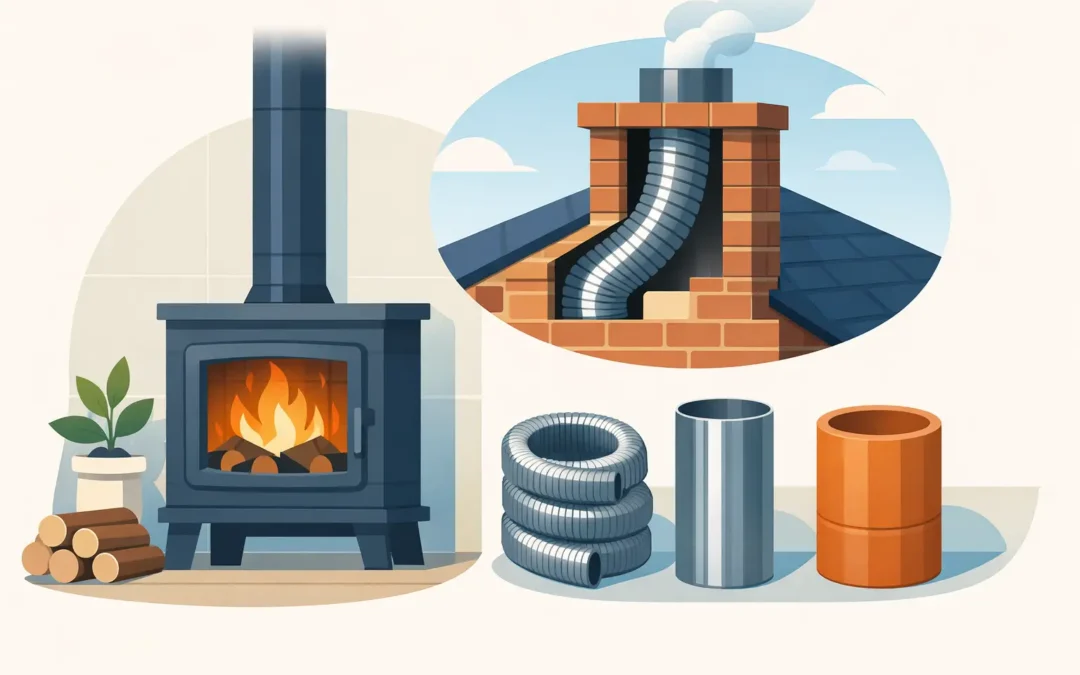
A chimney liner is hidden once the work is complete, but it has a major job to do. It carries smoke and combustion gases safely out of your property, helps the appliance draw correctly and protects the chimney structure from heat, moisture and corrosive deposits. If you are wondering how to choose chimney liner for a stove or open fire, the answer is not simply to buy the biggest or cheapest option available. The right choice starts with the appliance, the existing chimney and a proper survey.
Why a chimney liner may be needed
Many older properties in Leicestershire have brick chimneys that were built for open fires. Over years of use, the mortar joints inside can deteriorate, liners can crack, and tar or soot can build up in places that cannot be seen from the fireplace opening. A chimney may look sound from outside while the flue inside is no longer suitable for a modern wood burner or multi-fuel stove.
A new liner creates a continuous route from the stove to the top of the chimney. This can improve the draw, reduce the chance of smoke leaking through the chimney breast and make sweeping more effective. It is particularly useful where a flue is oversized, damaged, leaking, or has previously been used with a different fuel.
That said, lining is not automatically required for every chimney. A sound flue that has been tested and is appropriate for the appliance may not need one. This is why a CCTV chimney inspection and smoke test are worthwhile before deciding on any installation.
How to choose chimney liner: start with a survey
The first decision should be made after the chimney has been swept and inspected, not before. A professional survey establishes the flue’s condition, its approximate size, route, height and any restrictions such as bends, ledges or old debris.
The survey should also identify issues that affect the finished system. These can include a bird nest, a damaged chimney pot, poor flaunching, an unsuitable cowl or signs of water entering the stack. Fitting a new liner without addressing the cause of a problem can leave you with an expensive installation that still performs badly.
For a stove installation, the installer will also assess the hearth, fireplace opening, ventilation and distance to combustible materials. The liner is one part of the full flue system, not a stand-alone product.
Match the liner to the appliance and fuel
Your appliance manufacturer’s instructions come first. They state the approved flue diameter, permitted configuration and fuel types. A wood-burning stove, multi-fuel stove, gas appliance and open fire all have different requirements, so one liner specification does not suit every situation.
The fuel matters because the gases produced inside the flue are different. Wood that has not been properly seasoned can create excess moisture and tar. Smokeless fuels and coal can create more corrosive conditions. Burning household waste, treated timber or wet logs can quickly damage a liner and is unsafe as well as unsuitable for your appliance.
For most domestic solid-fuel relining work, a flexible stainless-steel liner is used inside an existing masonry chimney. The grade of stainless steel should be chosen for the fuel and appliance. A 316L-grade liner is commonly specified for some wood-burning applications, while 904L offers greater resistance where multi-fuel use or more demanding conditions are involved. The correct grade still depends on the manufacturer’s guidance and the installer’s specification.
Get the diameter right
Diameter has a direct effect on how well a stove performs. A liner that is too small can restrict the flow of flue gases, leading to poor draw, smoke entering the room and an appliance that is difficult to light or control. A liner that is far too large can allow gases to cool too quickly, which may increase condensation and tar deposits.
As a general principle, the liner should not be reduced below the appliance outlet unless the appliance manufacturer specifically permits it and the installation meets the relevant requirements. Some stoves have a 125 mm outlet, while others require 150 mm or more. Open fires often need a larger flue because of the volume of smoke they produce.
It is tempting to select a narrower liner because it may be easier to get down a tight chimney. That is not a safe shortcut. If the chimney route cannot accept the required liner size, the installation needs another solution, such as altering the fireplace opening, using a different appliance or considering an external twin-wall flue.
Consider the length, route and insulation
A liner should run continuously from the appliance connection to the chimney terminal. Joints, unsupported sections and poor connections are weak points that can leak fumes or collect soot. The liner also needs to be properly secured at the top and connected to a suitable register plate and stove pipe at the bottom.
Chimneys on outside walls tend to run colder than central chimneys. In a cold or very large chimney void, insulation around the liner may help keep flue gases warmer. This supports a better draw and reduces condensation. Insulation is not necessary in every case, but it can be a sensible part of the specification where the survey shows a higher risk of cooling.
The chimney height and terminal matter too. A liner cannot correct every downdraught issue on its own. Nearby trees, roof shapes, taller adjoining buildings and exposed locations can all affect the draw. Sometimes a correctly selected chimney cowl or a change to the terminal is needed alongside the liner.
Check the condition of the existing chimney
Before relining, the chimney should be swept thoroughly. This removes soot, loose material and old nests that could damage the liner as it is lowered. It also gives the installer a clearer picture of what is inside the flue.
A CCTV inspection is particularly useful in older or altered properties. It can reveal cracked liners, sharp offsets, protruding mortar, voids and previous installation work that is not visible from below. If the chimney is badly damaged, it may need repair before it is lined. In some cases, a rigid system or twin-wall flue may be more suitable than forcing a flexible liner through an unsuitable route.
Water ingress should be dealt with as well. A liner is designed to carry flue gases, not solve a leaking chimney stack. Damaged pots, cracked flaunching and failed pointing can allow rainwater into the chimney, increasing corrosion and affecting the life of the new liner.
Avoid the common liner selection mistakes
The most costly problems usually begin with assumptions. Choosing solely on price, copying a neighbour’s installation or ordering a liner before the chimney is surveyed can all lead to the wrong specification.
Keep these points in mind:
- Do not choose a liner grade without confirming the fuel you will actually burn.
- Do not reduce the flue size just to make installation easier.
- Do not rely on an old chimney being suitable because it has been used in the past.
- Do not overlook the terminal, cowl, chimney condition and ventilation around the appliance.
A quality liner also needs quality components. The top plate, clamp, cowl, adaptor, register plate and connecting flue pipe should all be appropriate for the system. Saving a small amount on these parts can compromise a much larger job.
Use a competent installer for the final specification
Chimney lining is safety-critical work. The finished installation must comply with the appliance instructions and the relevant Building Regulations, including Approved Document J. It should be installed and certified through the correct route, either by a registered competent person or through local authority building control where required.
A competent installer will measure the job, explain the recommended liner grade and diameter, and tell you where there are genuine choices. For example, you may be able to choose between a standard wood-only specification and a more corrosion-resistant option if you expect to use authorised smokeless fuel. They should also explain what is included, rather than quoting for a liner while leaving essential chimney repairs or terminal work as an afterthought.
Once fitted, the system still needs regular care. Burn dry, suitable fuel, have the chimney swept at the appropriate interval for your use, and arrange an inspection if you notice smoke smells, staining, poor draw or changes in stove performance.
For homeowners, the best chimney liner is the one that matches the appliance, fuel, chimney and property rather than a one-size-fits-all product. A careful survey and a properly specified installation give you the confidence to enjoy your fire or stove knowing the hidden part of the system has been given the same attention as the appliance in the room.